  1. Home
  2. Cars
  3. News

Nissan is charged up about giving your electric car’s battery pack a new life

Add as a preferred source on Google
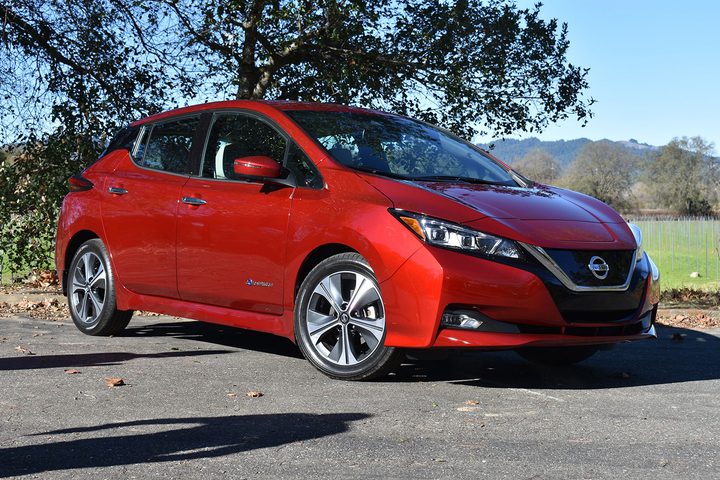
2018 Nissan Leaf review
Stephen Edelstein/Digital Trends

On the eve of the 2018 Los Angeles Auto Show, Nissan announced a program called Nissan Energy, designed to help individuals and communities make the transition to electric vehicles and smart power grids. An important part of the Nissan Energy program involves reusing electric car batteries after vehicles reach the end of their life cycle.

“This is the future we want to build,” stated Denis Le Vot, the chairman of Nissan’s North American division, during a media event in Los Angeles.

Recommended Videos

The Nissan Energy program has three main parts, starting with energy supply. Nissan will promote the installation of appropriate charging stations in homes and businesses, and it will encourage increasing the number of available charging stations on public property. De Vot added Nissan will also include charging station location information in its navigation systems, meaning Leaf drivers will know exactly where to charge even if they’re traveling in a city they’ve never been to before.

Secondly, De Vot described greater integration with smart grids and smart charging systems that use fully charged electric cars as energy sources during peak demand periods. With a full charge, an electric car can provide power to the owner’s home or feed it directly into the grid when electricity is in high demand, such as early in the evening, and then recharge itself overnight during off-peak hours. Called bi-directional charging, this practice reduces the strain placed on the electricity grid while saving electric car owners money; it’s a win-win situation.

Finally, De Vot described how Nissan is refurbishing used Leaf batteries for use as energy storage systems for stationary requirements. He mentioned that the Amsterdam Arena — a gigantic soccer stadium in Holland — has a backup power system built from a bank of used batteries salvaged from Leaf models that are now off the road. The system has 4 megawatts of storage capacity. These systems don’t need to be stationary, however; Nissan can also use Leaf battery packs to power electric forklifts, for example.

Similar projects are underway in Japan and in China, and Nissan is looking at powering some of its North American facilities with Leaf batteries. These initiatives provide a second life for electric car batteries and solve the problem of recycling them once a vehicle reaches the end of its life cycle.

Jeff Zurschmeide
Jeff Zurschmeide is a freelance writer from Portland, Oregon. Jeff covers new cars, motor sports, and technical topics for a…
Citroen is bringing back the iconic 2CV as an electric car priced under $18,000
The iconic Citroën 2CV is returning as a sub-$18,000 electric car
The beloved Citroen 2CV is getting an EV reboot

Affordable EVs have become weirdly hard to find. But Citroën is reaching deep into its own history for a fix. The company has recently confirmed that the beloved Citroën 2CV is coming back as a fully electric car, more than three decades after the original ended production. Citroën CEO Xavier Chardon announced the revival at a Stellantis investor event in Michigan, saying the new 2CV will be 100% electric, built in Europe, and priced below €15,000, or about $17,400.

The people’s car goes electric

Read more
Xiaomi’s new $34,500 electric SUV goes farther than a Tesla Model Y and costs less
Xiaomi's cheapest YU7 yet offers more range than a Tesla Model Y at a meaningfully lower price.
Transportation, Vehicle, Car

Xiaomi CEO Lei Jun had a straightforward reason for why the YU7 wasn't outselling the Tesla Model Y in China: the base model wasn't cheap enough. 

At just 10,000 yuan ($1,450) less than Tesla’s Model Y, the price gap simply wasn't compelling enough. On the evening of May 21, at Xiaomi's "Human x Car x Home" launch event, Lei did something about it (via CarNewsChina).

Read more
Chinese researchers claim solid-state EV battery can charge in just minutes
Imagine charging your EV faster than ordering coffee
EV Charger

Chinese researchers claim a new solid-state battery can survive ultra-fast charging while delivering dramatically higher energy density, potentially reshaping the future of electric vehicles. Researchers at the Chinese Academy of Sciences claim they have developed a new solid-state lithium-metal battery capable of delivering extremely high energy density while surviving ultra-fast charging conditions - a combination the global EV industry has been chasing for years.

According to the research paper published in the Journal of the American Chemical Society, the prototype battery achieved an energy density of 451.5 Wh/kg while maintaining stable cycling performance for 700 charge cycles under a 20C charging rate. In practical terms, that theoretically translates to charging and discharging in roughly three minutes.

Read more