  1. Home
  2. Cars
  3. Legacy Archives

Tech-heavy 2014 Range Rover Sport won’t drive itself (but comes close)

Add as a preferred source on Google
Range Rover Sport 1
Image used with permission by copyright holder

Check out our full written review of the 2014 Land Rover Range Rover Sport.

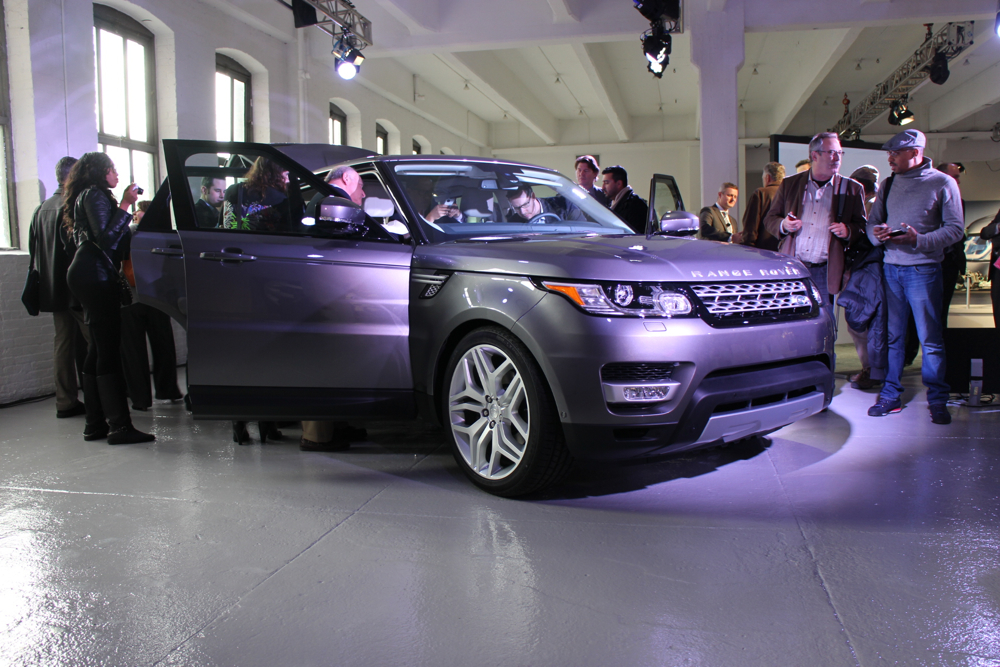
At a private event held the day before the 2013 New York Auto Show, Land Rover removed the velvety curtain off its all-new 2014 Range Rover Sport.

Recommended Videos

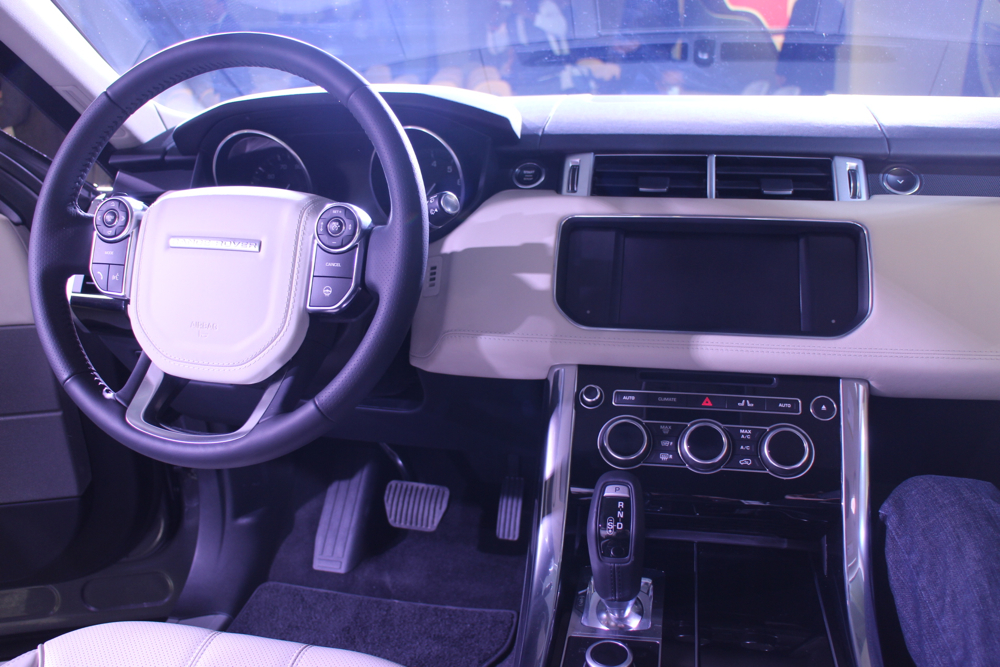
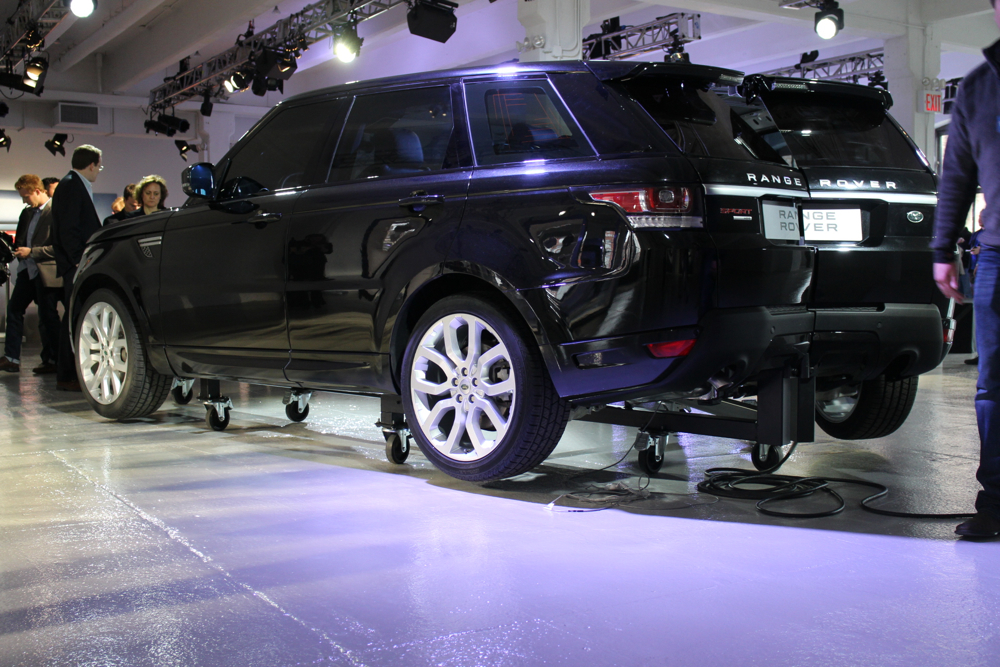
The iconic SUV has been completely revamped for the 2014 model year, with Land Rover talking up a number of enhancements including an improved power train, body and interior design, a drastic weight reduction (800 lbs worth!) and a host of new customer-oriented onboard tech.
Range Rover Sport 3
Image used with permission by copyright holder

The 2014 Sport has been imbued with a number of driver assistance technologies including enhanced park assist, blind spot monitoring, and active lane departure warnings.

A new traffic sign recognition system will also makes its way into the new Range Rover Sport, which utilizes a forward facing camera and front-mounted sensors to inform the driver of the current speed limit, road closure signs, and passing regulations, all through a high-res LCD display nestled between the instrument cluster.

Land Rover will also introduce an enhanced version of its adaptive cruise control system in the 2014 Range Rover Sport. Drivers will be able to set the desired speed and following distance. The Range Rover Sport will even come to a complete stop during traffic, with the driver needing only to tap the accelerator to resume cruise functions.
Range Rover Sport 4
Image used with permission by copyright holder

Finally, a new reverse traffic detection system called Flank Guard will up the luxury SUVs’ distance sensor count from four to six. These sensors will be able to detect potential side impacts during tight maneuvering, such as in parking garages, near pillars, and other physical obstacles.

Flank Guard will warn the driver via an audible beep and works in conjunction with the vehicle’s central cluster display to indicate proximity of objects and hazards.

Drivers will have a choice between 340 horsepower supercharged V6 or a 510hp supercharged V8.
Range Rover Sport 2
Image used with permission by copyright holder

Land Rover says the V6 will scoot from 0-60 mph in 6.9 seconds and pumps out 375 horsepower, while the V8 will make the same dash in less than five seconds.

Base price for 2014 Range Rover Sport SE will start at $63,495 with that figure rising to $79,995 for the supercharged V8 version.

Amir Iliaifar
Former Associate Automotive Editor
Associate Automotive Section Editor for Digital Trends, Amir Iliaifar covers the ever increasing cross-section between tech…
Tesla launches the six-seat Model Y Long Wheelbase in the US
The stretched electric SUV brings more space, more comfort, and up to 325 miles of range.
Tesla Model Y Long Wheelbase Featured

Tesla is giving the Model Y a little more breathing room. The company has officially launched the Model Y Long Wheelbase in the United States and Puerto Rico, introducing a stretched version of its best-selling electric SUV with a three-row, six-seat layout that's designed to make family road trips a lot more comfortable.

A bigger Model Y with a focus on comfort

Read more
A stolen Kia reveals the hidden limits of connected car technology
Kia can see where your stolen car is. GDPR means it won't share that in real time. That is the entire problem.
Kia EV3 design

If you’re buying a car with connected car technology, thinking it would help you to recover it in the event of theft, you might want to recalibrate your expectations. 

A recent incident in the UK, in which a car owner had three tracking devices installed in his car and still couldn’t recover it, led the carmaker to state that connected-car technology isn’t a “certified security vehicle tracker” (via the BBC).

Read more
Cambrige experts find utterly simple fix for longer lasting EV batteries. Just put some pressure on it.
Scientists found a way to make EV batteries last longer without reinventing the battery
EV Charging

EV battery breakthroughs typically involve new chemistry, exotic materials, or faster charging/higher capacity. But a new study reveals that you can skip all the fancy stuff and go with a very simple solution, Researchers from the University of Cambridge found that putting the battery under the right amount of pressure actually helps.

The study was about how physical pressure affects lithium-ion battery life, which found that keeping cells under constant pressure could double their lifespan. The work was published in Nature Energy, and the team says the improvement came without changing the active materials, electrolyte, or basic battery chemistry.

Read more