
California-based Singer Vehicle Design is one of the best-known names in the world of Porsche enthusiasts and collectors. The work it performs on classic air-cooled 911s is second to none. After mastering design, it is rolling up its sleeves and reinventing the Porsche engine that has helped make the 911 an icon over the past five decades.
The company explains three of its clients were looking for a lightweight, high-performance engine to put in their newly restored car, but they didn’t want to use a modern water-cooled Porsche engine like the one in the 911 GTS. Never one to shy away from a challenge, Singer teamed up with a British firm named Williams Advanced Engineering to develop an engine that meets its customers’ exact requirements. Of course, they made it absolutely gorgeous to look at.
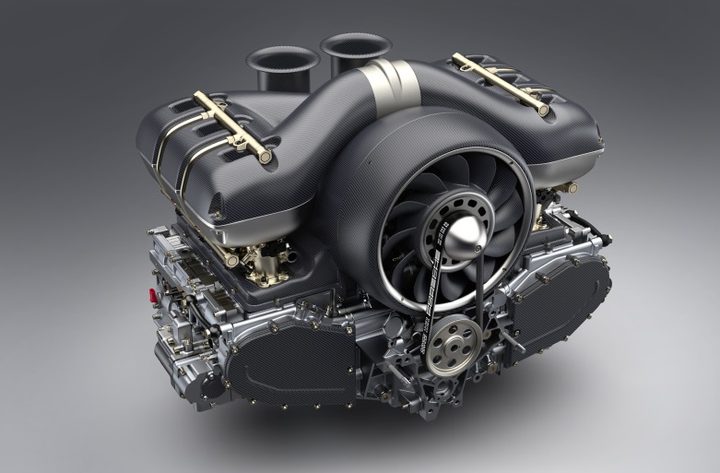
Hanz Mezger, the 87-year-old engineer who designed the very first Porsche flat-six engine, was coaxed out of retirement and brought in as a technical consultant. He helped develop a 4.0-liter flat-six engine that makes 500 horsepower the old-fashioned way: with displacement. It’s naturally-aspirated, meaning it is not equipped with a turbocharger or a supercharger, and it’s air-cooled. It’s as powerful as the 911 GT3‘s flat-six, and it’s capable of revving beyond 9,000 rpm.
Because reducing weight was such a high priority, Singer incorporated the use of lightweight materials like aluminum, carbon fiber, and titanium whenever possible. The connecting rods are made out of titanium, and the air box is crafted out of carbon fiber.
“Having had the opportunity to consult with Hans Mezger — the “father” of the iconic air-cooled flat-six — about the development of the engine, our team was pleased to be able to provide a solution to Singer’s clients’ requirements and of course, to be a part of this iconic vehicle’s continued evolution,” said Paul McNamara, Williams Advanced Engineer’s technical director, in a statement.
The first example of the engine will be installed in a 1990 911 currently being restored for one of Singer’s most loyal customers. Full specifications will be announced next month when the car is finished and unveiled to the public. The response to the announcement has been overwhelmingly positive, so Singer and Williams Advanced Engineering plan on expanding their collaboration in the coming months. They’ll offer services to customers who want to incorporate lightness and dynamism into their restoration. It’s yet another reason to lust after a Singer-modified 911.


