
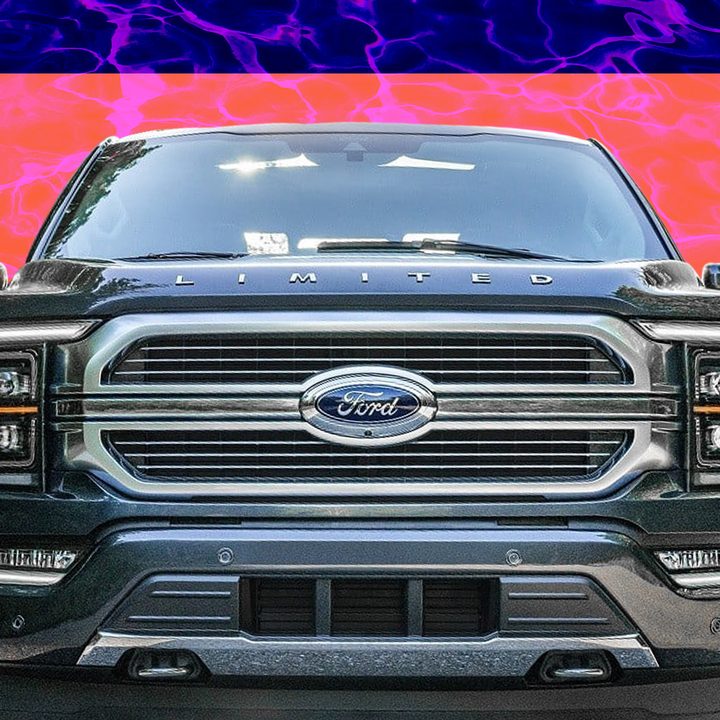
There’s no doubt that 2020 has been the year of electrification.
Motivated by looming government regulations and shifting consumer demands, carmakers from all over the automotive spectrum announced significant investments in electric and hybrid technology. The number of electrified cars due out in the early 2020s approaches the surreal, but it’s important to remember that, unless you live in Norway, battery-powered models remain in a niche. They represented about 1.6% of America’s new car sales in 2019.
Trucks still rule the sales chart, which is why the 2021 Ford F-150 PowerBoost is our pick for the biggest automotive release of the year. It’s the most significant hybrid model released since the original Toyota Prius made its debut, because it fast-tracks the technology to the heart of the market. It doesn’t get more mainstream than the F-150. Ford’s F-Series line (which the F-150 is part of) recorded its 43rd straight year as America’s bestselling vehicle in 2019.
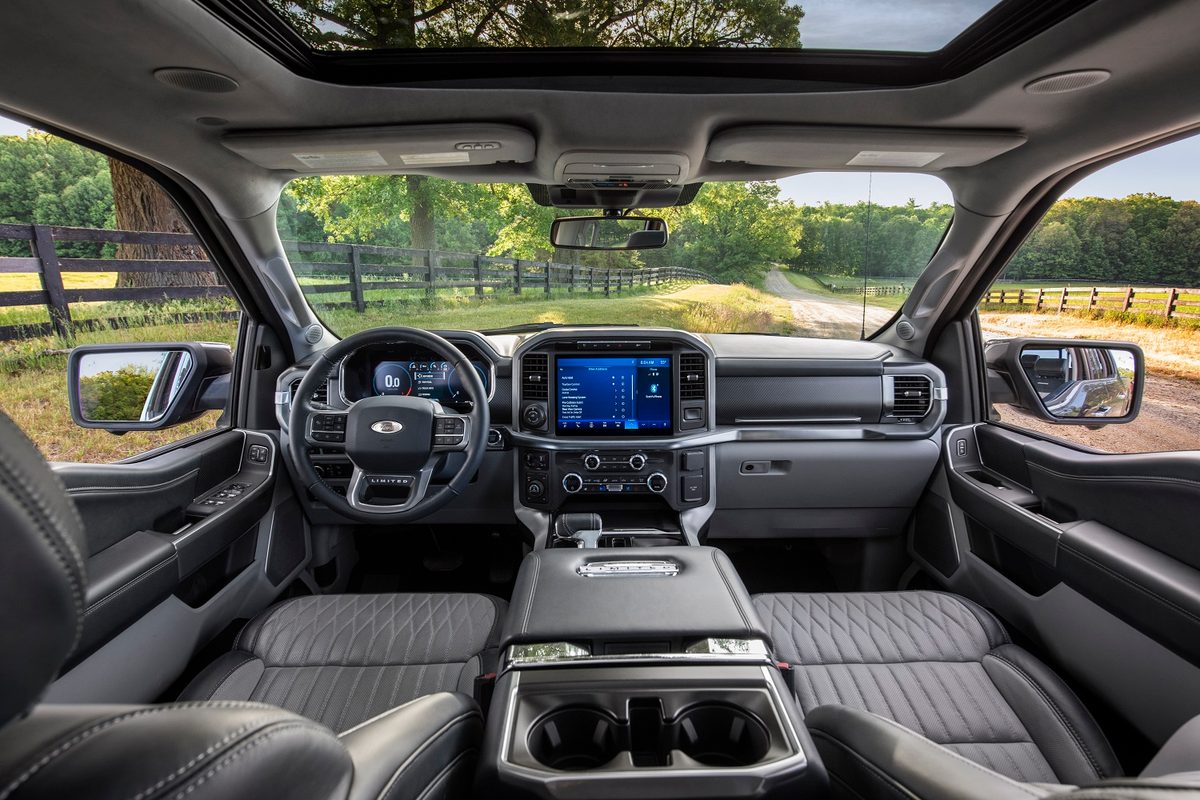
Visually, the PowerBoost looks almost exactly like the nonelectrified variants of the 14th-generation pickup, which is new for 2021. It’s a different story under the body, where it receives a hybrid system that consists of a twin-turbocharged 3.5-liter EcoBoost V6, a small electric motor, and a 10-speed automatic transmission. Its total output checks in at 430 horsepower and 570 pound-feet of torque, figures that give it a 2,120-pound payload and a 12,700-pound towing capacity. Ford notes the battery pack also lets users run power tools via outlets in the cargo box.
It returns 24 mpg in the city, 24 mpg on the highway, and 24 mpg combined, according to the Environmental Protection Agency (EPA). For context, the turbodiesel-powered truck posts 21, 29, and 24, respectively.


Ford isn’t shy about the fact that it’s developing a fully electric version of the 14th-generation F-150 that will compete in an increasingly crowded arena against the GMC Hummer and the Rivian R1T, among several other hopefuls. The truck is expected to make its debut by the end of 2021. It’ll undoubtedly wear a snazzy design (we’ve seen part of its LED-festooned front end already), and be loaded with cool, headline-grabbing tech features. But it will land as more of a technology demonstrator positioned on the segment’s fringes than as an epoch-shaping alternative to the nonelectrified F-150, unless Ford pulls off a magic trick and prices it on par with gasoline-burning models.
The PowerBoost system is offered on all SuperCrew versions of the F-150, ranging from the work site-spec XL to the luxury car-like Limited, and pricing varies between $4,500 and $1,900 depending on the trim level selected. Buyers can go hybrid whether they’re fleet operators or wealthy ranchers. Adopting hybrid technology allows Ford to keep manufacturing costs in check, and it guarantees that range anxiety never enters the equation.
Countless companies talk about sending electrification to the mainstream. Ford just did it, quietly, skillfully, and without resorting to made-for-Twitter theatrics. We’re looking forward to hearing the market’s verdict.


