The Tesla Model Y is the most popular electric vehicle in America, and it’s finally headed for its first major refresh in the form of the Model Y Juniper. The Model Y Juniper has to go up against other electric vehicles that are highly popular and have launched over the past few years. The Ford Mustang Mach-E is one such EV, offering a similar crossover size, a sleek and stylish design, and more.
So, in 2025, how does the Tesla Model Y Juniper compare with Ford’s go-to EV? Is one better than the other, or is it really down to personal preference?
Note, the Tesla Model Y Juniper is in the middle of its rollout and only the launch edition new Model Y is currently available in the US. We have some details about other iterations of the vehicle from its China launch. However, there are still some things we don’t know about it. Still, we can compare what we do know about the Model Y Juniper with the most recent version of the Ford Mustang Mach-E.
Here’s a look at how the two vehicles stack up.
Design
Both the Tesla Model Y Juniper and the Mustang Mach-E are sleek-looking vehicles, and they’re a similar size too. That said, there are some key differences in the designs of the two vehicles.
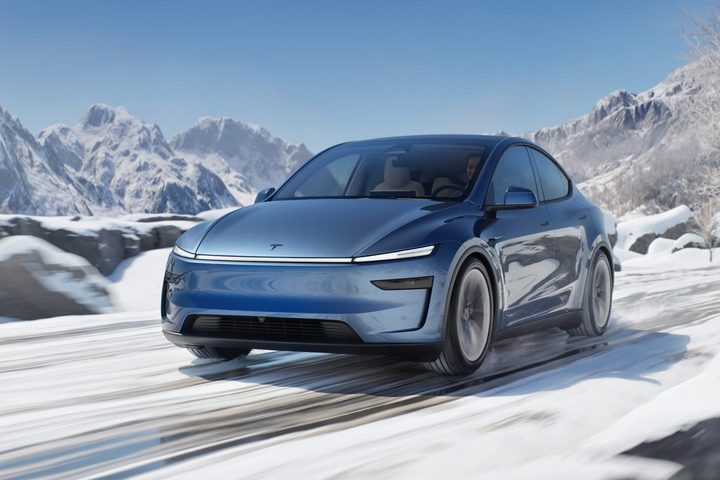
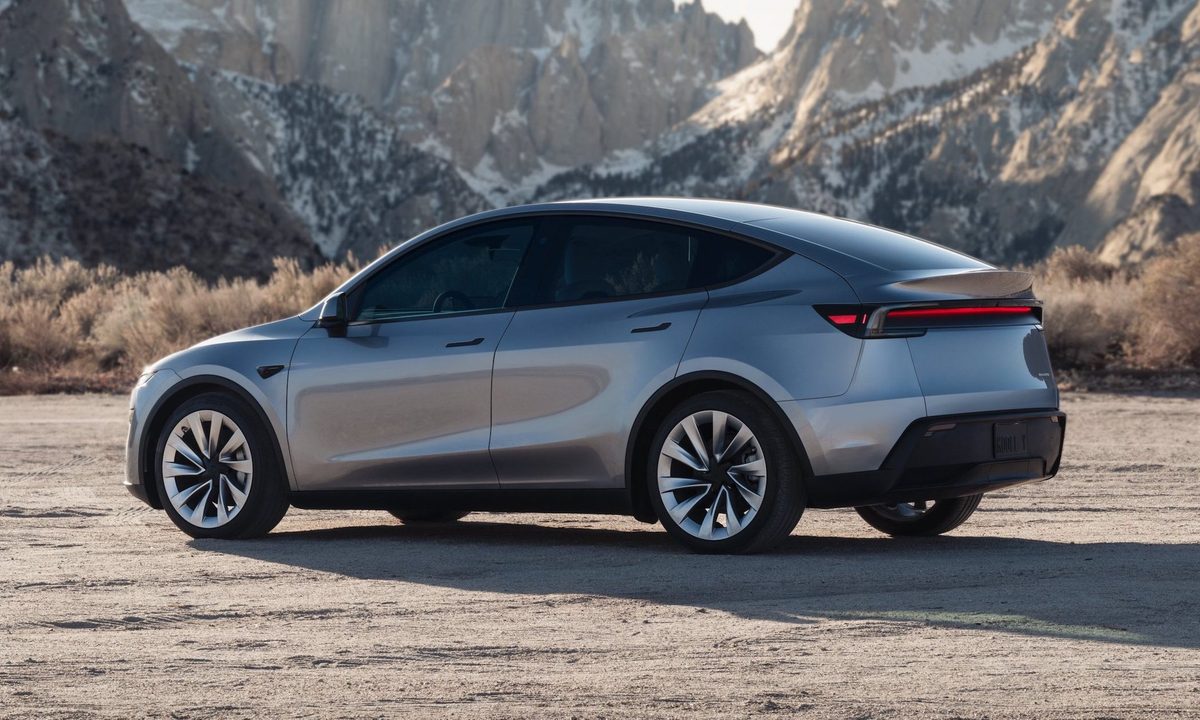
The Model Y Juniper brings some fresh design tweaks to the table compared to the previous generation. Up front, the headlights are now built into a long light bar that’s divided into three sections, a departure from the two separate headlights of the earlier model. This streamlined design carries through to the rear, where a light bar now serves as the taillight. It doesn’t completely change the look of the Model Y, but it does bring some fresh design touches to it.
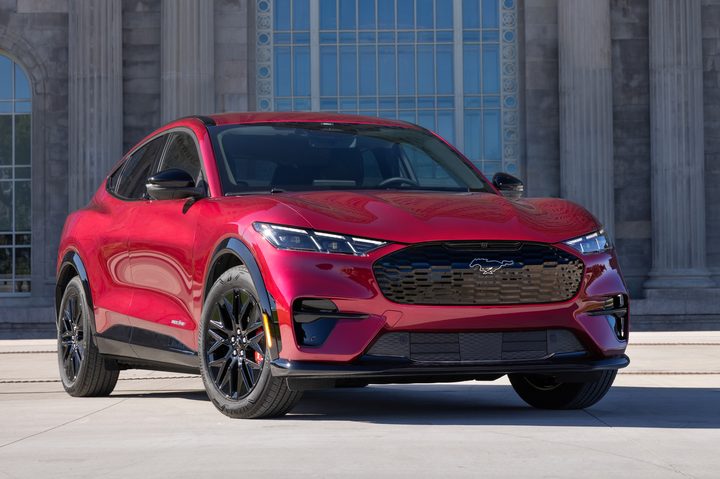
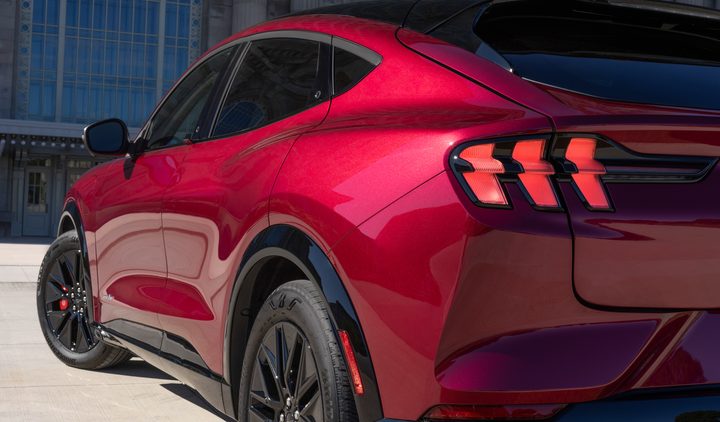
The Mustang Mach-E is relatively sleek and stylish too, though. Ford says that the vehicle offers a sportier design for 2025, especially for buyers of the Premium model, which now offers Mach-E GT styling at a lower price point. These include things like the grille shield and painted red Brembo brake calipers. On the front of the vehicle, you can find slim, slanted headlights. On the rear, you’ll get those famous Mustang tail lights. Like the Model Y, it has a curved roofline that ensures there’s plenty of space inside the vehicle.
The dimensions of the two vehicles are similar. The Model Y Juniper measures 188.6 inches long, 78 inches wide, and 63.9 inches tall. The Mustang Mach-E is slightly smaller at 186 inches long, 74 inches wide, and 64 inches tall. It’s a minor difference thought.
Ultimately, design is subjective, so you’re going to have to decide for yourself which vehicle you like the look of more. This category is a tie.
Winner: Tie
Interior and tech
The approach to interior design is pretty different, too. Tesla vehicles are known for having a minimalistic interior design, and the latest Model Y refresh sticks to that philosophy. At the front, there’s a single large display that handles everything from infotainment to essential information like driving speed. Notably, there’s no separate display behind the steering wheel for the driver. With the Model Y Juniper, Tesla has added more accent lighting to the interior of the vehicle, giving the interior a more modern feel.
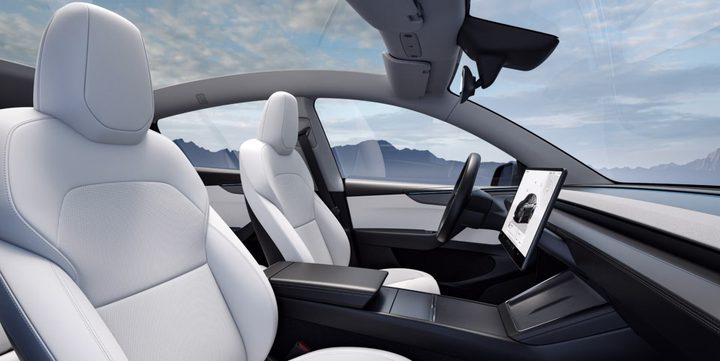
Previous generations of the Model Y have had an option for a third row of seating. However, we don’t yet know if the Model Y Juniper will have that same option. We assume that it will once Tesla rolls out more models in the U.S., but for now, if you want the Model Y Juniper, you’ll have to get one with five seats.
That, of course, is true of the Mustang Mach-E too, though. The Mach-E may not be as minimalistic as the Model Y when it comes to interior design, but it’s still a nice-looking vehicle with comfortable seating and a modern look. The Mach-E has become known for its large vertically aligned infotainment display with a volume knob interrupting the bottom portion of the screen. It’s a different approach, but it’s relatively easy to get used to. Thankfully, that display is only there for infotainment, and the Mach-E does have an instrument display behind the steering wheel to allow the driver to monitor things like driving speed and other settings.
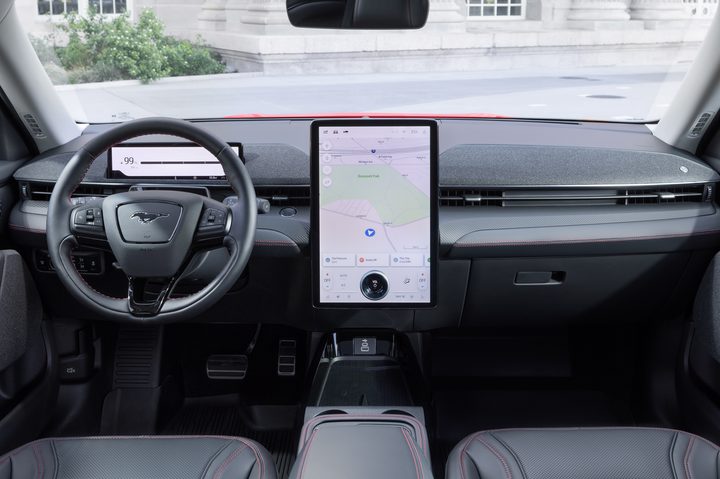
One notable difference between the two vehicles comes in the form of software. The Tesla Model Y has Tesla’s self-designed infotainment software, which many consider to be among the best software systems for vehicles. The software built into the marque isn’t quite as well-designed or as intuitive, but the marque does support Apple CarPlay and Android Auto, unlike the Model Y.
Ultimately, again, this category is a tie. Do you prefer a minimalistic interior or access to additional physical controls? Are you into Tesla’s own software, or would you prefer to simply stick with CarPlay?
Winner: Tie
Performance
Next is performance, and again, it’s a point of difference between the two vehicles. Before diving into numbers, however, there are a few things to note. In China, both rear-wheel drive and all-wheel drive versions of the Model Y Juniper are currently available. However, in the US, you can only get a special edition version of the AWD model. In the US, we rate acceleration from 0 to 60 mph — but in China, it’s rated from 0 to 100 km/h. 100 km/h is close to 60mph (it’s 62 mph), but not exactly the same. So, when the Model Y Juniper does roll out in the U.S. on a wider scale, the numbers will likely be slightly different. For now, we’ll have to use the China numbers for the RWD Model Y Juniper.
The RWD Model Y Juniper can accelerate to 100km/h in 5.9 seconds, which is an increase in performance over the previous generation’s time of 6.6 seconds. The Launch Edition New Model Y, which is a special version of the AWD Model Y Juniper, can hit 60mph in 4.1 seconds, which is again an increase over the previous generation’s acceleration time of 4.8 seconds.

The Mustang Mach-E is no slouch either, however Ford doesn’t really advertise 0-60 mph numbers except with its most powerful models, and we don’t have official numbers for the 2025 model just yet. That said, Edmunds says that it hit 60 mph in 5.2 seconds with the Mach-E Premium AWD, or 6.5 seconds with an RWD Mach-E model.
Both the Model Y and the Mach-E are still rolling out. There’s still a lot we don’t know about performance — but based on what we do know, the Model Y gets the win. That could change as we learn more though.
Winner: Tesla Model Y
Range and charging
Details about the Model Y Juniper’s range are still somewhat unclear, mainly because the Chinese versions are measured using the China Light Duty Vehicle Test Cycle (CLTC), which is less rigorous than the Environmental Protection Agency (EPA) standards used in the U.S. However, we can compare the CLTC figures of the new Model Y Juniper to its predecessor.
According to the CLTC, the RWD Model Y Juniper achieves a range of 593 km, marking a 39 km (24 mile) increase over the previous generation. In the U.S., the AWD Model Y Juniper boasts an estimated range of 320 miles, which is 9 miles more than the 311-mile range of the earlier AWD version.
The Mustang Mach-E has a decent range too. Ford says that the 2025 iteration of the Mach-E will have a range between 250 and 320 miles, depending on the model you go for. For 2025, all versions of the vehicle have a new heat pump too, which should help extend range in colder climates.
So what about charging speed? Well, that’s a point of difference between the two vehicles. The Mustang Mach-E can only charge at up to 150kW, which is not as fast as most top-tier competitors out there. The Tesla Model Y Juniper can charge at up to 250kW, which means that it should charge quite a bit faster at fast public chargers. Unfortunately, the 2025 Mustang Mach-E does not have Tesla’s NACS connector, but it will come with an adapter to allow for charging at NACS stations, like Tesla Superchargers.
While the range reaches similar heights, the Model Y’s ability to charge faster makes it the winner in this category.
Winner: Tesla Model Y
Price and availability
Neither the Mustang Mach-E nor the Tesla Model Y Juniper are widely available just yet, at least in their refreshed and updated forms. The Model Y Juniper has been announced in China and Australia, but while there is a version of it available in the US called the Launch Edition New Model Y, it’s more expensive than we expect future models to be, and even if you order it now, you won’t get it until March at the earliest. The Launch Edition New Model Y comes at $59,990.
The 2025 Mustang Mach-E isn’t widely available yet either, though. You can get the 2024 model if you want, and most of what we discussed above will be true for that model too, but not everything. If you’re interested in the 2025 model, you’ll have to wait a little. We do know how much it costs though, with the base price starting at a relatively low $38,490. It does range up to $57,990 depending on the trim and options, but that base price is pretty compelling.
Regardless, with neither of these two vehicles widely available right now, this one’s another tie.
Winner: Tie
Overall winner: Tesla Model Y Juniper
There’s still a lot we don’t know about the Model Y Juniper and the 2025 Mustang Mach-E, but based on what we do know, the Tesla Model Y Juniper is probably a slightly better vehicle. It performs a little better and can charge faster, which is a big deal. That said, that doesn’t necessarily make it the better choice for every single customer. Some will prefer the design of the Mach-E, while others may be put off by controversies around Tesla. Rest assured that whether you buy the Model Y or the Mach-E, you’re getting a great electric vehicle.