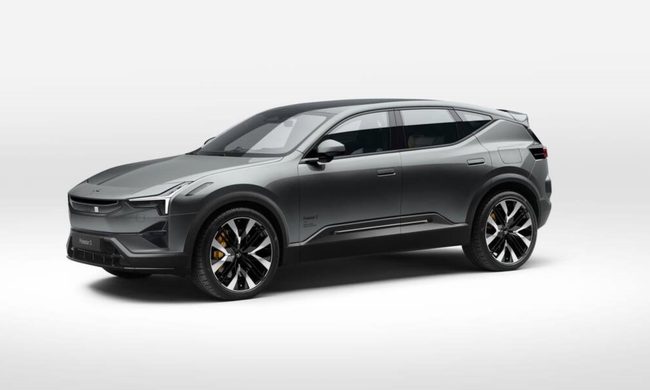
The long-awaited Volvo EX90 is finally here, bringing that Scandinavian design to the world of electric SUVs. But the new electric SUV has some serious competition — especially at its reasonably high price. Chief among the competition is the Rivian R1S, which is largely considered to be the best electric SUV out there right now.
The EX90 has a lot going for it, though, including a stylish design, minimalistic interior, and more. Is the electric SUV from the legacy automaker good enough to beat the new kid on the block?
Design
Both the Volvo EX90 and the Rivian R1S are stylish and modern, but the designs of the two vehicles are pretty different. The Volvo EX90 could be described as a little more iterative in terms of design, at least compared to other Volvo vehicles.
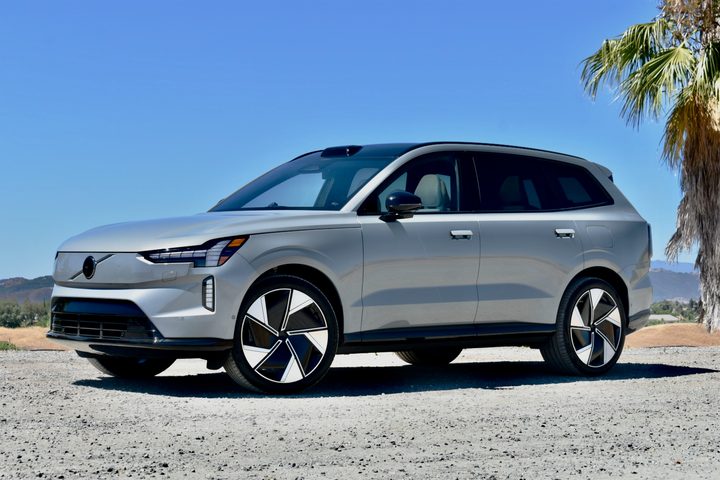
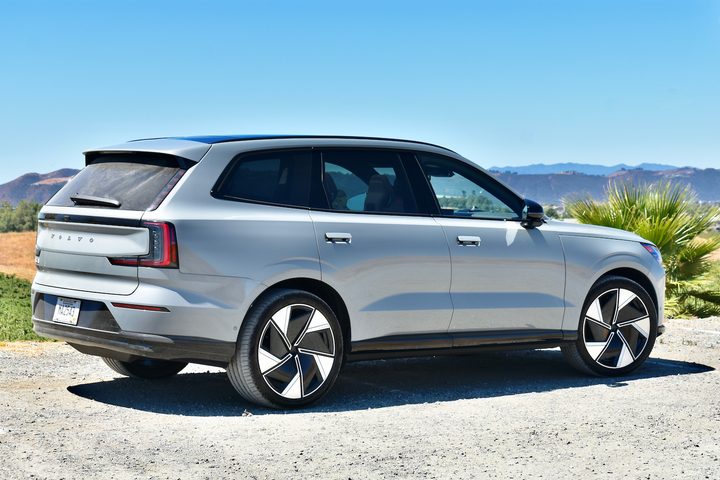
That, of course, isn’t a bad thing. Volvo vehicles look great, and the EX90 is no exception to that rule. It’s relatively large, though not quite as boxy as the Rivian R1S. It has Volvo’s angled headlight design on both the front and the back, with a slightly angled roofline and a small cluster of sensors on the top. The Volvo EX90 measures 198 inches long, 77 inches wide, and 69 inches high.
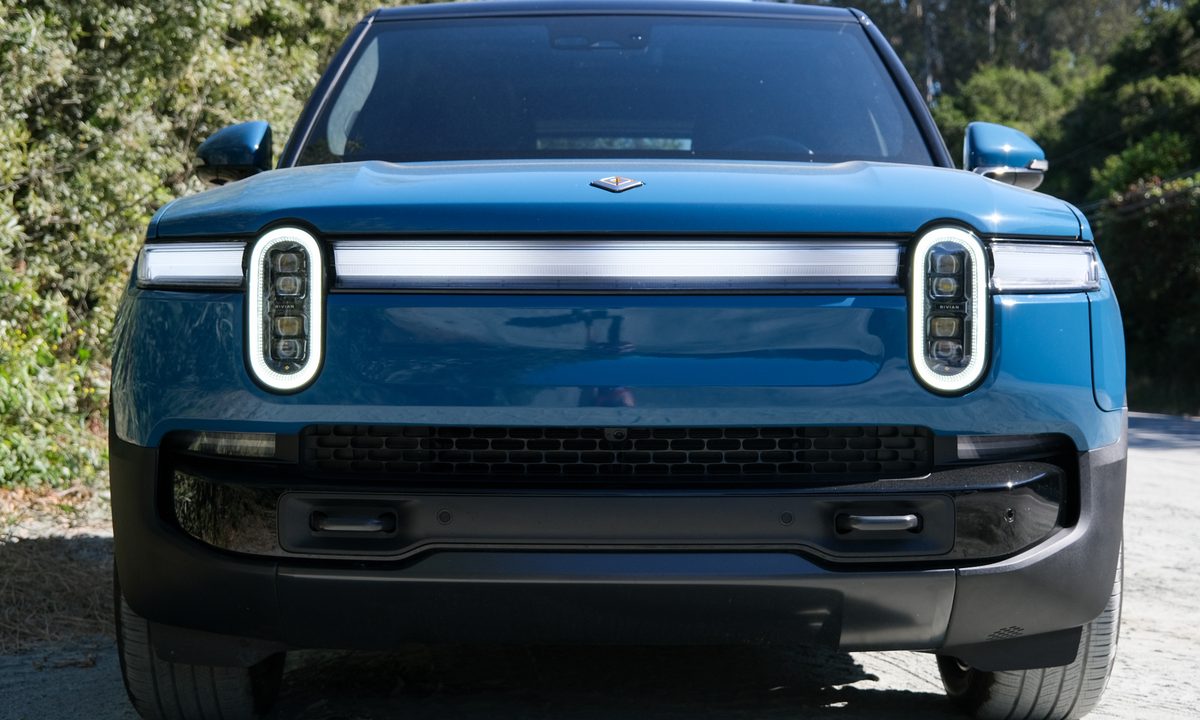
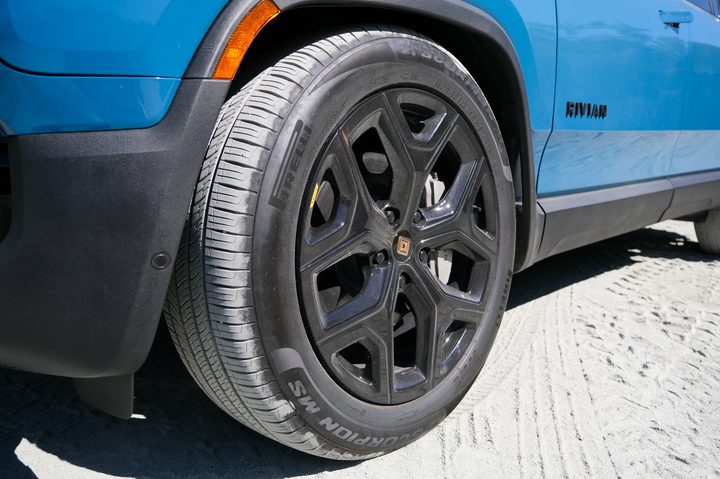
The Rivian R1S is a little bigger and boxier than the EX90. It measures 201 inches long, 82 inches wide, and 77 inches high, and is a little more angular. It has Rivian’s now-iconic oval headlights on the front, with a long lightbar as the taillight.
Both the Volvo EX90 and the Rivian R1S look excellent, but design is subjective. This one’s a tie.
Winner: Tie
Interior and tech
The design of the interiors of the vehicles is different too. Again, both are modern and high-tech, though.
First, seating. Both vehicles are designed for larger families. The Rivian R1S is only available with three rows of seating, with two front seats, a second row bench seat for three passengers, and a third row bench seat for two more passengers — bringing the total to seven seats. The Volvo EX90 has more options for seating — it’s available in either a six- or seven-seat configuration, with the six-seater having captain’s chairs in the second row, instead of the bench seat that comes in the seven-seater.

The larger Rivian R1S has more cargo space too. While the EX90 has 10.9 cubic feet of cargo space behind the third row or 23.1 cubic-ft behind the second row, the R1S steps that up to 17.6 cubic-ft with the third row up or a huge 46.7 cubic-ft with it down. Safe to say, if lots of cargo space is important to you, the Rivian is the way to go.
The interior materials take a slightly different approach. The Volvo EX90 is built for minimalism and comfort, while the Rivian R1S is built to be a little more rugged. One isn’t necessarily better than the other, but you may have a preference.
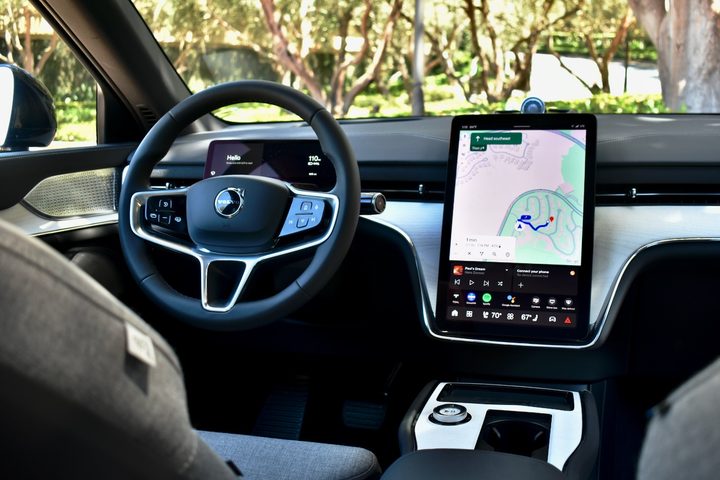
Both the Volvo EX90 and the Rivian R1S take a dual-screen approach at the front. Both vehicles have one display behind the steering wheel for instrument monitoring, along with a second display for infotainment. In the EX90, that infotainment screen is vertically aligned, while in the Rivian R1S, it’s horizontal. The EX90 has Android Automotive built into it, and while it doesn’t support CarPlay just yet, Volvo says it will get updated with CarPlay support down the line. The R1S, on the other hand, has Rivian’s own software built into it, which is largely considered to be among the best out there. However, the vehicle doesn’t support CarPlay or Android Auto. Having used Rivian’s software quite a bit, I think most users will get used to Rivian’s software and won’t necessarily miss CarPlay all that much.
Both vehicles have some helpful driver assistance features like lane centering and adaptive cruise control, helping make the cars feel almost self-driving on highways. The EX90 also has the sensors necessary for more advanced self-driving technology, however, that technology isn’t available just yet, and it’s unclear exactly when it will roll out to EX90 drivers.
Both the EX90 and the R1S are modern and spacious, with helpful tech. You’ll have to decide which one you prefer.
Winner: Tie
Performance
Performance is one area where one of these vehicles wins out a little more than the other. The Volvo EX90 is only available with two powertrain configurations, but thankfully both options are all-wheel drive. The base model has 402 horsepower that can get the vehicle from 0 to 60 mph in 5.7 seconds. The step-up from that is the Twin Motor Performance model, which has 510 horsepower and an acceleration time of 4.7 seconds.

The R1S has more options. The base model is the R1S Dual Standard, which has two motors that deliver 533 horsepower and can get the vehicle to 60 mph in 4.5 seconds. From there, you can choose from a range of configurations, including so-called Performance Upgrades that unlock a little more juice. The fastest R1S currently available is the R1S Tri-Motor AWD, which has 850 horsepower and can accelerate to 60 mph in 2.9 seconds. There’s an even faster model coming at some point this year: the R1S Quad. This variant will offer 1,025 horsepower through four motors and will accelerate from 0 to 60mph in 2.5 seconds.
The Volvo EX90 isn’t slow by any means, but the Rivian R1S is simply more powerful, even when you compare the fastest EX90 to the slowest R1S.
Winner: Rivian R1S
Range and charging
The range and charging options offered by these vehicles are also different. The EX90 only comes with one battery pack, which is a 111-kilowatt-hour battery that Volvo says will offer between 300 and 310 miles of range, depending on which configuration you buy. The car can charge at up to 250 kilowatts, and if you reach those speeds, you’ll be able charge the car from 10% to 80% in around 30 minutes.
The base Rivian R1S has a slightly lower range than the EX90 at 270 miles. That said, upgrade from the R1S Dual Standard to the R1S Dual, and you get 329 miles. Plus, you can upgrade to the Max battery pack for 410 miles. That’s about 100 miles more than the EX90. Other configurations offer somewhere between 329 and 420 miles. For example, the R1S Tri with the Max battery pack has a range of 371 miles. The R1S’s top charging speed is a little slower than the EX90, at 200kW.
Despite the slightly lower charging speed, the fact that the R1S has options for a higher range than the EX90 makes it the winner in this category.
Winner: Rivian R1S
Pricing and availability
Both the Volvo EX90 and the Rivian R1S are available right now, and you can order one if you want. The Rivian R1S, however, comes at a lower price than the EX90, with the base model costing $75,900. The base model of the Volvo EX90 costs $81,290, which is a lot to pay for a vehicle that doesn’t quite offer the same performance.
Both vehicles can be configured to a much higher price point, but given the lower base price of the Rivian R1S, it gets the win in this category.
Winner: Rivian R1S
Overall winner: Rivian R1S
The winner here is pretty clear. The Rivian R1S offers better performance, as well as options for a much higher range, and comes at a lower price in its base model. That’s not to mention the fact that it has more cargo space and better stock software. If you’re deciding between these two vehicles, then the Rivian R1S is probably the better choice. That’s not to say that the Volvo EX90 is a bad vehicle. On the contrary, it looks great, and many people will find it to be an excellent option for their needs. However, at least on paper, the Rivian R1S remains the electric SUV king.