  1. Home
  2. Cars
  3. Emerging Tech
  4. News

Digital Trends may earn a commission when you buy through links on our site. Why trust us?

The Tesla Supercharger network is expanding again

Add as a preferred source on Google
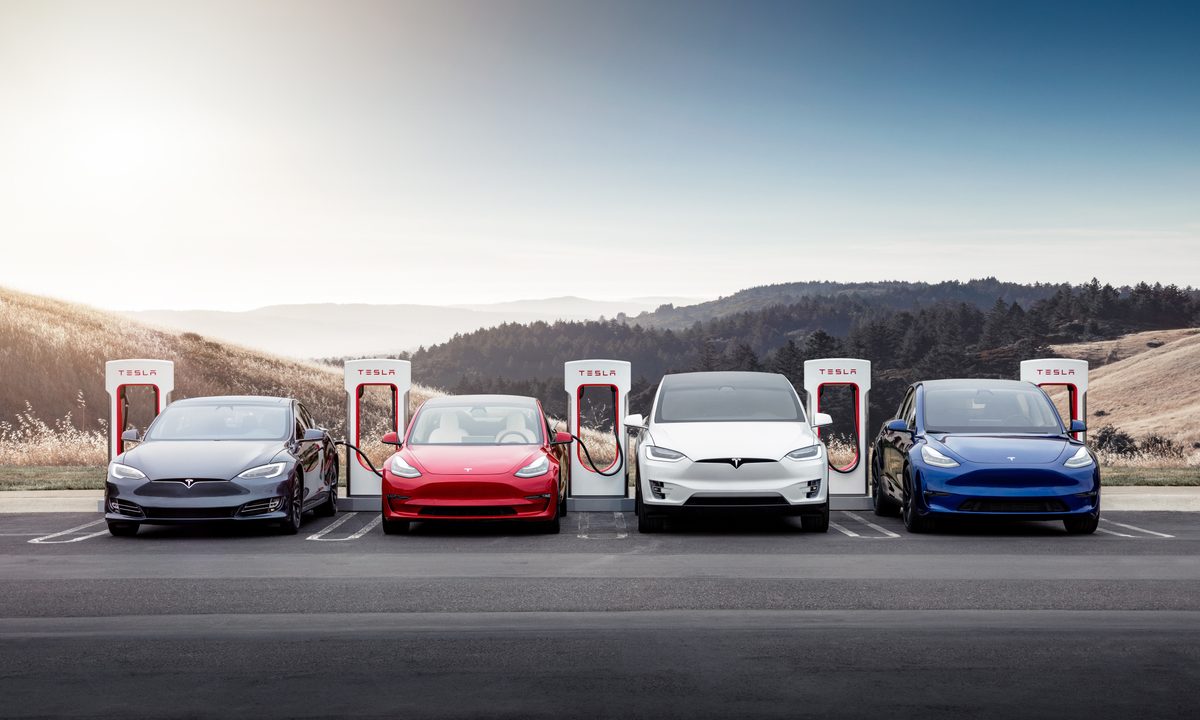
The Tesla range of vehicles connected to four supercharging stations.
Tesla

EV owners worried about getting stranded before their next charge may breathe a bit easier now: The Tesla Supercharger network has resumed its expansion over the last three months, after massive layoffs at Tesla had led to a slide in new stalls earlier this year.

Tesla opened 2,800 new Supercharger stalls globally during the three-month period ending September 30, an increase of 23% from the year earlier, according to the company’s official Tesla Charging account on X (formerly Twitter).

Tesla also delivered 1.4 terawatt hours (TWh) of energy during the third quarter, which translates to 27% year-over-year growth. The Tesla Charging account said the amount of energy delivered enabled Tesla owners to save over 150 million gallons of gasoline, offsetting more than 3 billion pounds of CO2.

According to the website Supercharge.info, which relies on user contributions to track the opening of new stalls, there were 2,677 Supercharger stations in North America at the end of September, 125 more than at the end of the third quarter.

The additions of new stalls, however, comes in the wake of a 31% slide in the second quarter, after a massive round of firings at the company removed 500 employees from the Supercharger team in April.

The third-quarter expansion should still go some ways to appease the concerns of Tesla and non-Tesla electric vehicle (EV) owners, as EV manufacturers are lining up in droves to be able to use the Supercharger network.

In September, General Motors electric vehicles made by Chevrolet, GMC and Cadillac joined the growing list of vehicles to have adopted Tesla’s North American Charging Standard (NACS). The network already allows access, via adapters, to EVs made by Ford, Rivian, Honda and Volvo. The likes of Nissan, Hyundai, Toyota, BMW, Volkswagen, Volvo and Jaguar have also signed agreements to start allowing access in 2025.

The Tesla map of Superchargers across the U.S. reveals they are concentrated in major cities and across East-West transit corridors.

According to Tesla, a Supercharger can add up to 200 miles of range in 15 minutes.

Nick Godt
Former Freelance reporter
Nick Godt has covered global business news on three continents for over 25 years.
Tesla launches the six-seat Model Y Long Wheelbase in the US
The stretched electric SUV brings more space, more comfort, and up to 325 miles of range.
Tesla Model Y Long Wheelbase Featured

Tesla is giving the Model Y a little more breathing room. The company has officially launched the Model Y Long Wheelbase in the United States and Puerto Rico, introducing a stretched version of its best-selling electric SUV with a three-row, six-seat layout that's designed to make family road trips a lot more comfortable.

A bigger Model Y with a focus on comfort

Read more
A stolen Kia reveals the hidden limits of connected car technology
Kia can see where your stolen car is. GDPR means it won't share that in real time. That is the entire problem.
Kia EV3 design

If you’re buying a car with connected car technology, thinking it would help you to recover it in the event of theft, you might want to recalibrate your expectations. 

A recent incident in the UK, in which a car owner had three tracking devices installed in his car and still couldn’t recover it, led the carmaker to state that connected-car technology isn’t a “certified security vehicle tracker” (via the BBC).

Read more
Cambrige experts find utterly simple fix for longer lasting EV batteries. Just put some pressure on it.
Scientists found a way to make EV batteries last longer without reinventing the battery
EV Charging

EV battery breakthroughs typically involve new chemistry, exotic materials, or faster charging/higher capacity. But a new study reveals that you can skip all the fancy stuff and go with a very simple solution, Researchers from the University of Cambridge found that putting the battery under the right amount of pressure actually helps.

The study was about how physical pressure affects lithium-ion battery life, which found that keeping cells under constant pressure could double their lifespan. The work was published in Nature Energy, and the team says the improvement came without changing the active materials, electrolyte, or basic battery chemistry.

Read more