
Electric vehicles may have become a whole lot more popular over the past five years or so, but that’s despite some issues they still face regarding things like limited range and slow charging speeds. The result of these issues is that plenty of buyers are unsure about whether an EV might be for them. But there’s one technology that has been hailed as a savior for all of the EV issues related to batteries, and that’s solid-state battery tech.
This technology has been so hyped for so long that, at this point in time, it seems not only almost mythical, but as if we might never actually see it in the real world. So, what’s the state of solid-state batteries right now, and how far are we from finally seeing them and reaping their rewards? Here’s a look.
What are solid-state batteries?
What is a solid-state battery in the first place? Solid-state batteries keep the fundamentals of traditional battery design, offering an anode and a cathode with a porous separator in the middle, and a substance through which electrons flow from one side to the other. This, in turn, creates a circuit. But while a conventional battery is built with a liquid electrolyte solution on the inside, a solid-state battery instead makes the separator between the anode and the cathode the electrolyte itself.

The end result? The battery is much more energy-dense, allowing manufacturers to fit more energy in the same size package or build batteries of a similar energy level that are much smaller. Another big advantage is the fact that solid-state batteries are much faster to charge, so in the case of an EV, you won’t have to spend as long at a charging station, provided the charger itself can deliver enough power.
Solid-state battery tech isn’t necessarily new, but it has so far been very difficult to manufacture and very expensive to implement, which has prevented solid-state batteries from being widely used. That’s where innovation comes in. Manufacturers have been working on making solid-state batteries cheaper to manufacture, so they can be used on a much more widespread level.
“Cons currently include higher manufacturing costs associated with the way the solid electrolyte is made and pressurized into the cells,” said Dr. Reeja Jayan, associate professor of mechanical engineering at Carnegie Mellon University. “Additionally, the solid electrolyte is not very good at conducting lithium ions, which lowers overall capacity and durability, stability. With R&D, these concerns will soon be solved.”
The not-too-distant future
But we’ve been hearing about these new innovations for many years now and have yet to see them in EVs. So, how far are we from finally getting electric vehicles with solid-state batteries? Well, they’re not quite right around the corner, but we may only have to wait a few more years.
“Almost all automotive [manufacturers] are actively participating in the solid-state battery race with varying strategies, such as in-house research, strategic partnerships, and direct investments in solid-state battery companies,” said Stephanie Valdez Streaty, Cox Automotive’s industry insights director. “However, the commercialization of solid-state batteries is still a few years away. Based on commitments and progress, we might begin to see commercialization of solid-state batteries at the end of the decade. The general consensus from people in the industry is that solid-state will hit the market by 2030.”
Much of that seemingly comes down to competition. While Toyota made some pretty big solid-state battery announcements last year, the likes of BMW, Mercedes-Benz, and others have made announcements regarding the tech too. Not only that, but Toyota has actually created a coalition with Nissan and Panasonic that is aimed at boosting production of solid-state batteries in Japan in an effort to keep Japanese companies competitive in the battery space — which is dominated by China and South Korea. Basically, the race is on.
But there are still some kinks to iron out before solid-state batteries are viable for consumers.
High expectations
But what about the hype? Is it truly likely that we’ll end up seeing EVs with a range approaching 1,000 miles? Well, that largely remains to be seen.
Some companies still claim massive improvements in EV range, and Toyota thinks it can deliver an EV range of around 900 miles on a single charge. That, however, is on the very high end and likely with a very large battery that’s very expensive to make. The end result, according to Jayan, is that we’ll first see the new battery tech in luxury vehicles from the likes of Mercedes.
“Over time, we will see prices drop,” she says.

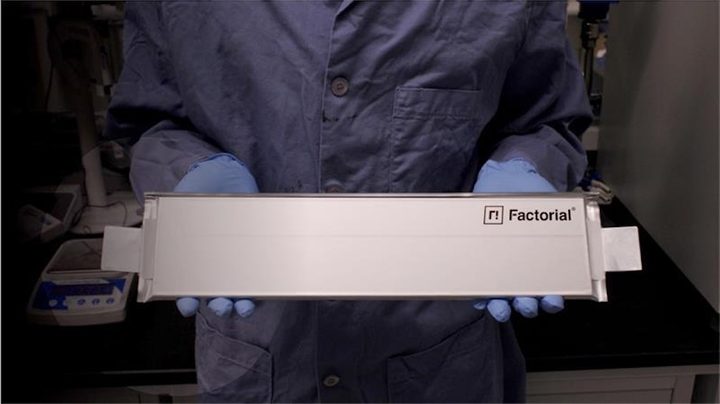
Indeed, Mercedes has been making strides in solid-state battery tech — and even recently announced that its next-gen vehicles will use solid-state batteries that can extend range by “up to 80%.” That’s through its investment into battery tech company Factorial — which also received investments from Hyundai and Stellantis.
Factorial says its goal is to unlock over 600 miles of driving range for next-gen EVs, while reducing weight by 40%. Weight savings not only help improve range, but also reduces wear on tires, and make EVs easier on our roads.
And, there are even safety benefits to solid-state battery tech.
“These batteries use solid electrolytes, which are generally nonflammable and more stable at high temperatures, reducing the risk of fires and chemical leaks,” said Valdez Streaty.
The next generation
Simply put, we may well finally be at the tipping point of consumer-ready vehicles with solid-state batteries.

Experts seem to agree. These batteries are very close to being ready for prime time, but they’re still expensive, which means we’ll first see them in luxury vehicles with high price tags. However, simply getting them out into the real world will help reduce their manufacturing costs. The more that companies like Factorial build these batteries, the more it will improve manufacturing and lower costs, allowing solid-state batteries to be used for cheaper vehicles.
It seems increasingly likely that we’ll start to see luxury vehicles with extremely long ranges in the years leading up to the next decade. At the same time, however, we may still see solid-state battery tech used in cheaper EVs — simply in the form of smaller solid-state batteries that offer a similar range to the EVs currently on the roads.
According to Jayan, “solid-state batteries offer a promising path toward achieving safe, affordable, and long-range electric vehicles that also address all of the needs of a consumer trying to move away from gasoline cars.”


