

Welcome to Digital Trends’ weekly recap of the revolutionary technology powering, connecting, and now driving next-gen electric vehicles.
“I’m gonna listen to some good music and don’t offer any suggestions! I’ll choose my own,” a peeved Michael Knight tells KITT, his ‘smart’ car, in the very first episode of the iconic series Knight Rider, which aired in September 1982.
“As you wish, Mr. Knight,” KITT replies. “But since you are still recovering from your ordeal, and I detect we’re in a slightly irritable mood caused by fatigue, may I suggest you put the car in the Autocruise mode for safety’s sake?”
“No, you may not! And that’s final,” Knight says.
As the car speeds off on a California highway, Take it Easy by The Eagles starts playing on the car’s audio, with the song’s memorable advice: “Don’t let the sound of your own wheels drive you crazy.”
Forty-three years ago, most of KITT’s features – voice control, self-driving, being summoned by a remote device, or connection to a global network – seemed like something straight out of science fiction.
In 2025, we increasingly take this tech for granted. But, with the exchange above in mind, at least one of KITT’s features remains a work in progress: Full emotional personalization.
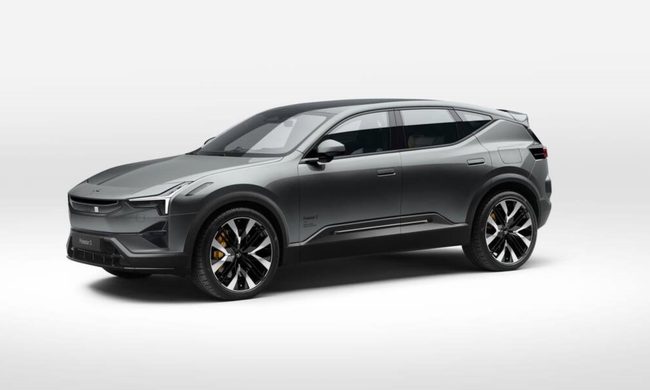
This makes last week’s announcement by EV startup Perseus all the more timely. The British firm intends to launch a compact premium SUV by 2027 that aims to get drivers as close as possible to that KITT-style interaction:

“The car will dynamically learn the owner’s driving style and adjust itself to their emotional state to improve safety,” Perseus says in a statement. “It will also learn their driving routines and preferences, proactively adapting and fine tuning itself to reduce the driver’s cognitive load in their busy day-to-day lives.”
To deliver this, Perseus is partnering with London-based SODA.Auto, a software-defined vehicle (SDV) technology company providing the AI-driven tools.
Adding credibility to the project, the firm’s leadership includes former execs from the likes of JaguarLandRover, Lotus, and Bentley.
Of course, Perseus isn’t the only EV-maker working on turning our cars into sensitive Amazon Alexas on wheels.
Volvo, BMW, Mercedes and Audi began experimenting with SDV in the early 2010s. Tesla then popularized the concept with integrated centralized computing, over-the-air-updates, and its Full Self-Driving software.
Among other notable manufacturers, Volkswagen and its software unit, CARIAD, are working on a unified software architecture for future vehicles, while existing ones are already starting to integrate advanced voice assistants connected to the cloud. Hyundai is making a big SDV push that includes AI integration. Rivian’s integrated software allows for customizable user profiles for many vehicle settings.
But, with all these, it does seem that adaptation to our emotional states, our driving styles and routines, is not yet in the cards. The closest attempt might have been Toyota’s Concept-i, a project for an emotionally-atuned vehicle, which seems to have been shelved 5 years ago. That would make Perseus project, if it does pan out, the first to deliver KITT-like driver-to-vehicle interaction.
Next question: How would this work?
While Perseus has released few details on this, a 2024 joint British-Italian study gives strong clues on how researchers are approaching this.

The research, titled ‘Emotion-aware in-car feedback” studied how various feedback mechanisms, such as visual, auditory, and vibrotactile helped drivers regulate their emotions, with the aim of creating a serene environment and improving road safety.
Using non-disruptive sensors, such as cameras monitoring facial expressions and body language as well as microphones detecting changes in voice tone and volume, the research assessed the emotions of drivers and passengers: The results ranged from negative to positive on one axis, and arousal level on the other. The researchers then tested the various feedbacks mechanisms to assess their impact on emotions.
The results showed that vibrotactile feedback (such as a vibrating steering wheel to signal a lane shift), was preferred during negative and neutral states, while auditory signals were preferred during positive states. A combination of light and music proved most effective to promote positive emotions and engagement.
However, while participants reported that the emotionally-atuned feedback helped them to maintain a calmer state, they expressed varying preferences for different feedbacks. The results highlighted “the importance of personalized feedback options”, the research concluded.
There’s no official word yet on which type of music or which songs will be prescribed to support safe driving. But we do know that forty-three years ago, KITT did not override that one song.