

The biggest question first-time buyers have when buying an EV relates to range. “How far can I go in this thing?”
It makes sense. While making it 300 miles or so isn’t bad for a modern EV, it does mean that you have to stop at a charging station more regularly than you have to fill a tank on a gas-powered car, and charging can be a little time-consuming. So what’s the fix? Either better range or faster charging — and Toyota says that it has cracked the code for the former.
At a technical briefing in early July, Toyota announced that it has made a breakthrough in battery technology that will allow it to eventually create batteries that offer a whopping 745 miles of range on a single charge — and that it’s aiming to create a battery that would give an electric car 900 miles of range.
But don’t put off that Prius Prime purchase just yet. As with all new technologies, there are still hurdles to clear and a long road ahead. Here’s everything you need to know about Toyota’s solid-state battery tech, and what it means for EVs going forward.
What is a solid-state battery?
The way a conventional battery works is quite simple. It has a cathode on one side and an anode on the other. Generally, batteries create a reaction by causing electrons to flow from one side to the other, which in turn creates a circuit and powers your device.

To date, EVs have used essentially the same kinds of batteries as those used in our phones, smartwatches, and so on. In these batteries, the cathode and anode live right next to each other, separated by a porous plastic membrane that allows the liquid electrolyte solution to flow from one side to another, generating current.
A solid-state battery keeps the fundamentals — it has an anode and a cathode, and it causes electrons to flow from one side to the other. But in a solid-state battery, the separator between the anode and the cathode is also the electrolyte.
The end result? A more energy-dense battery that allows manufacturers to fit more energy in smaller packages. Solid-state batteries are also much faster to charge — so you’ll spend less time waiting at electric car charging stations.

The tech has actually existed for some time now, but solid-state batteries have been expensive and difficult to manufacture, preventing them from being used widely. Toyota says that it has simplified the production of solid-state batteries, which could be a huge development for the vehicles they’ll power.
What does it mean for EVs?
If the tech truly does live up to its potential, it will be game-changing for electric cars. For Toyota, this means that it could produce cars that offer a range of up to 900 miles or more. The company says that it plans to release electric cars with this new battery tech by 2028 — so we will have to wait a while to take advantage of it.
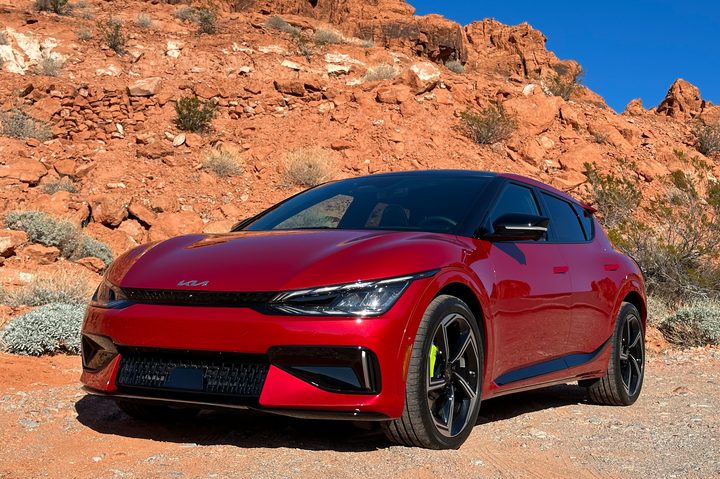
What would a car with a solid-state battery perform like? As mentioned, Toyota says that its first generation will reach a range of around 740 miles, and be able to charge in around 10 minutes. They’ll also be safer — since solid-state batteries don’t have the same flammable liquid solution found in current batteries.
Will other companies use this tech?
If this looks like a trump card that will allow Toyota to dominate EVs after dragging its feet on them for years, think twice. We know for a fact that companies other than Toyota are heavily invested in solid-state battery tech, so even if Toyota is the first to deploy it in a car, other companies surely won’t be far behind. For example, Mercedes-Benz has entered a partnership with ProLogium, an energy company focused on solid-state battery tech. Volkswagen is partnered up with QuantumScape, and BMW has partnered with the U.S. company Solid Power.
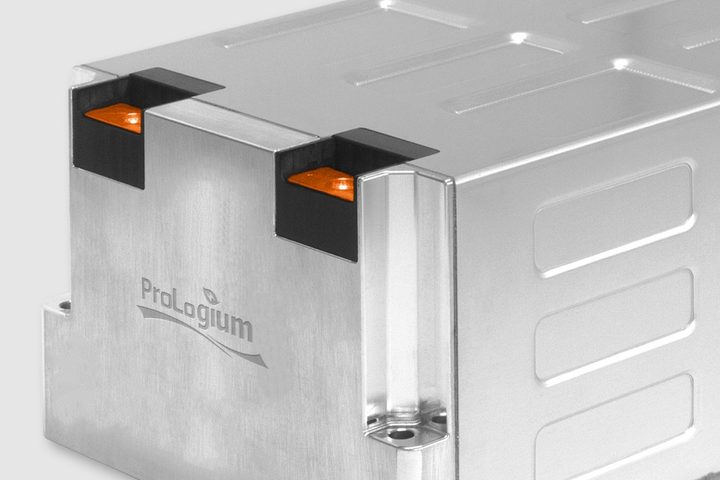
So, while Toyota has certainly made headlines for its breakthroughs, don’t expect it to be the only company with longer-range, faster-charging cars. These solid-state cars will take some time to come to market — but when they do, they’ll likely make for a much better EV experience overall.
Supply shortages
There is one issue that could hamper the production of solid-state batteries though — lithium supply. Solid-state batteries could end up using a lot more lithium than traditional batteries. Some research suggests that solid-state batteries could use five to 10 times as much lithium as current-gen batteries. There’s already a lithium shortage, so that’s a major issue.
So what’s the solution? Right now it’s hard to say. EV battery recycling could play an important role, but even then it’s unlikely we’ll be able to recycle enough lithium to supply materials for new battery tech. We’ll have to wait and see how battery manufacturers address this. But with at least five years before we expect to see this tech in production vehicles, it’s possible that the supply question could look quite different by the time they’re ready for the road.


