  1. Home
  2. Cars
  3. News

US Senator labels Chinese cars as cancer, promising a strict ban on imports

Americans want affordable Chinese EVs. A republican senator wants to make sure that never happens.

Add as a preferred source on Google
Xiaomi SU7 EV in blue
Xiaomi SU7 EV Xiaomi

A new survey found that US consumers support Chinese auto brands entering the market, thanks to their lower costs, better performance, battery tech, and modern features. With the average new US EV car now costing close to $50,000, it’s not hard to see why. However, a new bill, if passed, will ensure Americans never get that option.

The Biden administration imposed a sweeping regulation in January 2025, blocking all Chinese automakers from selling passenger vehicles in the US, citing national security concerns around data collection. Now, republican Senator Bernie Moreno has announced that he will introduce legislation next month to go well beyond the existing ban on Chinese automakers. 

His proposed legislation would seal off the US entirely, covering hardware, software, and even partnerships with Chinese automakers. “There will not be a Chinese automobile here,” he said at an Automotive Forum event ahead of the New York Auto Show.

Is this about safety or competition?

According to a Reuters report, Moreno compared Chinese automakers to Huawei, the Chinese telecom company that US rules bar from the country’s telecommunications infrastructure. “We’re going to prevent the cancer from coming into our market,” he said, adding that he hopes Latin America, Mexico, Canada, and Europe adopt the same standards.

The Chinese Embassy in Washington pushed back, calling the legislation “typical protectionism and economic coercion” that violates fair competition. While there might be some truth to the safety concerns, President Trump’s “America First” policy is also playing a big role here. 

What does this mean for buyers?

As always, it is the consumer who suffers the most. Healthy competition is essential for innovation and for prices to decline. Policies that curb competition in the name of security or reviving domestic manufacturing will likely impact consumers financially and technologically, at least in the short term.

Rachit Agarwal
Rachit is a seasoned tech journalist with over seven years of experience covering the consumer technology landscape.
Volvo’s parent just launched a $16,000 EV that looks shockingly luxurious
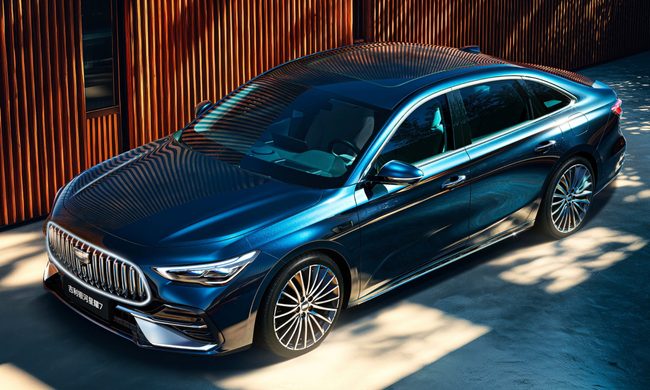
This $15,600 Geely EV has no business looking this premium
Geely Galaxy Starshine 7 Promo Image

Geely, the Chinese auto giant that also owns Volvo, has just unveiled a new RV that really does not look like it belongs anywhere near the budget end of the market.

The company has just kicked off the presales in China for the Galaxy Starshine 7, with its pricing starting at 112,900 yuan or about $16,550. For that money, buyers get a midsize electric sedan with a sleek fastback silhouette, full-width lighting, a richly trimmed cabin, and even an available dual-motor all-wheel-drive setup that can hit 0 to 100 km/h in 5.4 seconds.

Read more
Xiaomi makes dirt-cheap gadgets, but its CEO just ruled out cheap EVs
Xiaomi is staying out of the bargain EV fight
Xiaomi SU7 EV in blue

Xiaomi has been known for building some surprisingly cheap gadgets that still feel a little more premium than they should. But that philosophy apparently does not extend to electric cars.

According to ITHome, Xiaomi CEO Lei Jun said during a livestream for the company's SU7 endurance challenge on April 17 that Xiaomi will not make vehicles priced below 100,000 Yuan. That works out to be just under $15,000. Lei explained that if consumers expect an electric car to deliver strong intelligent features, software, and overall capability, the cost is harder to squeeze down that far.

Read more
The new electric Mercedes C-Class puts its giant screen front and center
Mercedes previews a richer electric C-Class interior with a dash-wide display, upgraded comfort features, and a stronger push to make the cabin feel like the main event
Car, Transportation, Vehicle

Mercedes-Benz is using the cabin to make its first electric C-Class feel like a bigger step than a normal model update. Ahead of the car’s April 20 world premiere, it has shown an interior centered on a sweeping digital display, extra space, and a more upscale finish that leans hard into comfort and theater.

The key visual is the new MBUX Hyperscreen, with Mercedes also offering a Superscreen setup. Both are designed to stretch the digital interface across the front of the car and blend the center console into the instrument panel, giving the dashboard a cleaner and more dramatic shape than the current C-Class.

Read more