
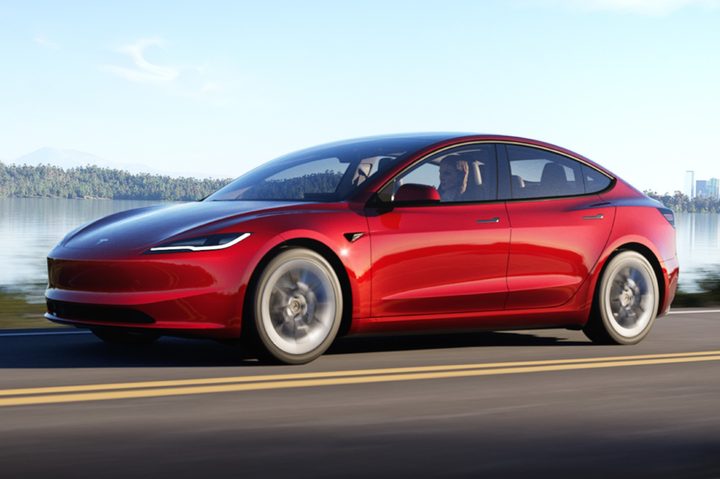
It looks like Tesla’s federal tax credit status could change pretty significantly in the near future.
On the order page for the Tesla Model 3, the company says that “all new Model 3 vehicles currently qualify for a federal tax credit for eligible buyers. [The] $7,500 tax credit will reduce to $3,750 for Model 3 Rear-Wheel Drive and Model 3 Long Range on Jan 1, 2024.”
That’s not good news for those that might be interested in buying a Tesla in 2024. It gets worse though — only 10 electric cars will qualify for the full $7,500 tax credit in 2024, meaning that even if you didn’t want a Tesla, it would be much harder to get the full credit.
But why is this happening? And how could it change in the future? Here’s what you need to know.
Basics of the tax credit
There are a few requirements for a vehicle to qualify for the full EV tax credit for new cars. Actually, the tax credit is split in half — and the first half, or $3,750, has to do with the minerals that are used in making a battery. To qualify for the $3,750, currently, 40% of the battery minerals have to come from the U.S., or a country with a free trade agreement with the U.S. That’s rising to 60% in 2024, 70% in 2026, and even higher further down the road.
The other half also has to do with the battery — and in 2023, 50% of the battery has to be assembled in the U.S., with that figurre rising to 60% starting in 2024, 70% in 2026, and so on.
There are also income requirements for the tax credit. When buying a new car, income can’t exceed $150,000 for single filers, $225,000 for heads-of-household, and $300,000 for couples filing jointly.
So why is this changing?
Seemingly, car manufacturers are going to start having trouble meeting the battery requirements. The fact is that many car manufacturers source battery parts from China, and while that may change as time goes on, for now, that means that car buyers won’t be able to take full advantage of the EV tax credit.
That includes Tesla, which is working toward moving battery manufacturing to the U.S. But for now, it still uses some batteries from China, and as such, certain Model 3 and Model Y variants won’t qualify.

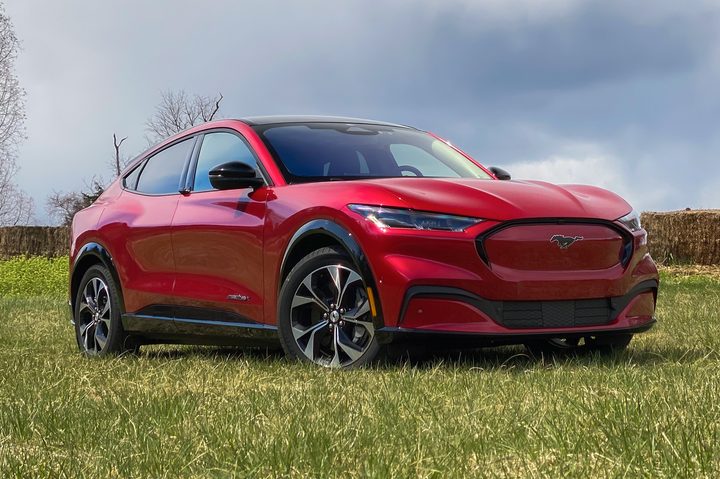
Other popular electric cars will struggle too. The Ford Mustang Mach-E won’t qualify for the full amount, for example.
Thankfully, for now, it seems like most of the cars that qualified for the full amount previously will still qualify for half of it. It’s also possible that some cars will go from full qualification to no qualification.
Which cars will still qualify?
There’s a very short list of electric cars that will still qualify for the full federal EV tax credit. Here’s the current list, according to The Street.
- Chevrolet Bolt EV
- Chevrolet Equinox EV
- Ford F-150 Lightning
- Tesla Model 3 Performance
- Chevrolet Silverado
- Tesla Model Y Performance
- Chrysler Pacifica PHEV
- Chevrolet Blazer EV
- Cadillac Lyriq
- Tesla Model X
As you may be able to tell, some variants of the most popular EVs, the Model 3 and Model Y, will still qualify for the full amount — so if you were planning on buying a Performance model, you’re in luck.
Of course, it’s anyone’s guess as to how long they’ll keep the full credit. The requirements will continue to change over the next few years, making it harder and harder to qualify — unless companies really move battery sourcing and manufacturing into the U.S.
The future of buying an EV
The federal EV tax credit has been a massive driver for electric car sales — effectively knocking the price of new electric cars down by up to $7,500. But, of course, the tax credit will become rarer and rarer over the next few years — meaning that you may not be able to rely on that money.

Car manufacturers have other ways to drive more electric car sales, including by cheaper cars. This is happening naturally, of course. The technologies associated with building electric cars are getting cheaper, and car companies are able to recycle the techniques and technologies used on their more expensive cars for cheaper cars. Not only that, but the longer electric cars have been out, the easier it’ll be to get a used one.
It is a little unfortunate that the list of electric cars that qualify for tax credit status is shrinking, and it will likely directly impact car sales. Electric cars are getting cheaper over time, but this won’t happen overnight. Hopefully in 2024, better cheap electric cars will continue to roll out, giving customers options to buy more affordable EVs without having to rely on a tax credit.


