
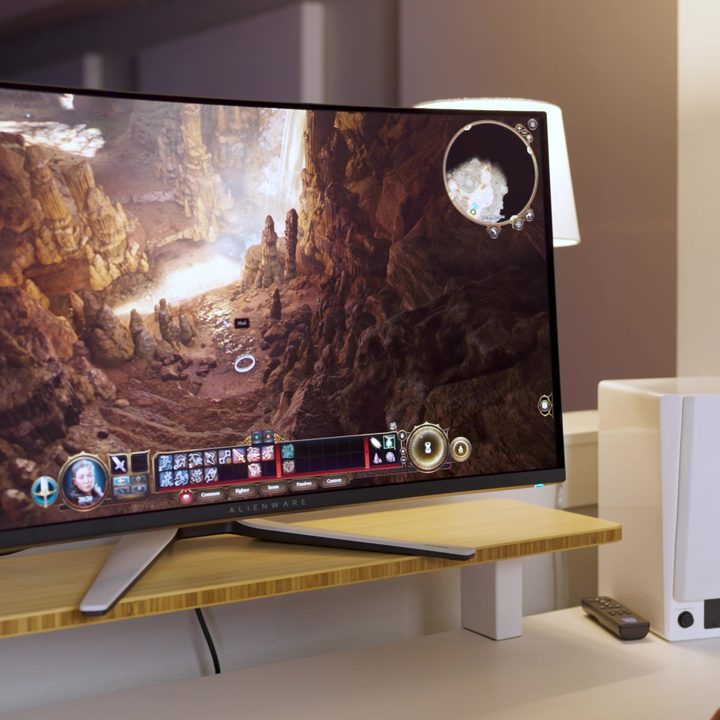
It’s no secret that Alienware makes some of the best gaming monitors, but it’s not alone. After it shook up the market with the Alienware 34 QD-OLED two years ago, a slew of competing monitors popped up from brands like Asus, LG, MSI, Samsung, and countless others. Two years and a generation of OLED monitors later, though, Alienware still remains the champ of OLED gaming monitors.
A lot of that comes down to the big fear new buyers have when picking up an OLED monitor: burn-in. The risk of burn-in is real, even if it’s not as a big of a deal as some would make it out to be, and most buyers naturally want some peace of mind. And that’s where Alienware has a big lead over the competition.
Market-leading warranty
Alienware has three OLED gaming monitors — the 34 QD-OLED, 32 QD-OLED, and 27 QD-OLED — all of which use a QD-OLED panel from Samsung Display. The critical component isn’t the monitor itself, especially now that we have half a dozen other displays running around with the same panel. It’s that Alienware treats burn-in seriously.
All three monitors come with a three-year warranty that explicitly covers burn-in. As with any warranty coverage, the goal is that you’ll never need to use it. And if you do need to use it, warranty claims aren’t always a smooth process, regardless of the company in question. With an Alienware OLED monitor, however, you at least have some sort of recourse should your display develop burn-in. Parent company Dell even says it will send a replacement with next-day shipping.
That’s in stark contrast to the warranty coverage on other OLED panels. Here’s a quick breakdown of warranty coverage for the major brands selling OLED gaming monitors at the time of this writing:
| Warranty period | Burn-in covered? | |
| LG | Two years | Yes |
| Asus | Two years | Unknown |
| Corsair | Three years | Yes |
| Samsung | One year | Unknown |
| Gigabyte | One year | No |
| Acer | Three years | Unknown |
| MSI | One year | Unknown |
| Alienware | Three years | Yes |
Keep in mind that these terms and time frames are only applicable to the U.S. at the time of this writing. It’s possible terms can change over time, so make sure to check up on the warranty if you’re looking to pick up an OLED gaming monitor down the line.
Only two brands offer a three-year warranty that explicitly covers burn-in: Alienware and Corsair. I’ll get to the dynamic between those two brands in a moment, but every other major monitor brand selling OLED panels right now is behind. Either the warranty period is shorter, or it doesn’t cover burn-in, and usually it’s both.
I’m being careful here, too. For the brands listed as “unknown” for burn-in coverage, I couldn’t find any explicit mention of burn-in protection in the official warranty information. There’s a good chance that means burn-in isn’t covered. If it’s not clearly listed, it’s safer to assume that burn-in isn’t covered. A great example of that is MSI’s warranty. It doesn’t mention burn-in one way or the other, but it says that “MSI monitors do not have a 0 pixel defect warranty” and that the warranty doesn’t apply if “the MSI OLED Care function that is always on by default has been delayed, turned off, or otherwise rendered inoperable.”
Many brands offer less protection for OLED monitors compared to other types of monitors, too. Asus, for example, offers a three-year warranty on all of its monitors except for OLED panels, which are only covered for two years. Similarly, Gigabyte offers three years of coverage on LCD monitors under 40 inches, but it only offers one year of protection for OLEDs. The situation used to be worse, too. LG excluded burn-in protection from its warranty until the company was bullied into offering burn-in protection by The Verge.
Even with some companies offering burn-in protection, far too many ignore the potential problem for OLED monitors. Warranty information carves out time exceptions for OLED panels, but conveniently bypass any details about burn-in. It’s a big factor in a buying decision, and that’s where Alienware has a big lead.
It’s forthcoming with warranty details, which are vital for emerging tech that carries some risk of failure. None of the brands I listed above sell bad OLED monitors. The Asus ROG Swift PG27AQDM is one of the most impressive OLED displays I’ve reviewed, and the Samsung Odyssey OLED G9 is second to none when it comes to immersive gaming. But when Alienware offers the same level of quality and a much better warranty, the buying decision becomes pretty clear.
A solid head start
I need to get back to Corsair, though. Corsair matches Alienware’s warranty, and that’s fantastic for a company that isn’t primarily known for making gaming monitors. However, Alienware excels over a lot of other brands with its OLED gaming monitors in another way: availability.
The Alienware 34 QD-OLED enjoyed almost a full year on the market before we saw another OLED gaming monitor. Similarly, the Alienware 32 QD-OLED and Alienware 27 QD-OLED, which launched during CES, are available to purchase now. There are a ton of other displays packing the same panel on the way, but who knows when they’ll actually be here.
The dynamic could change in the future, but for the last two waves of OLED gaming monitors, Alienware has been the first on the scene. That’s great if you’re anxiously awaiting a flashy new monitor, but it also helps with pricing.
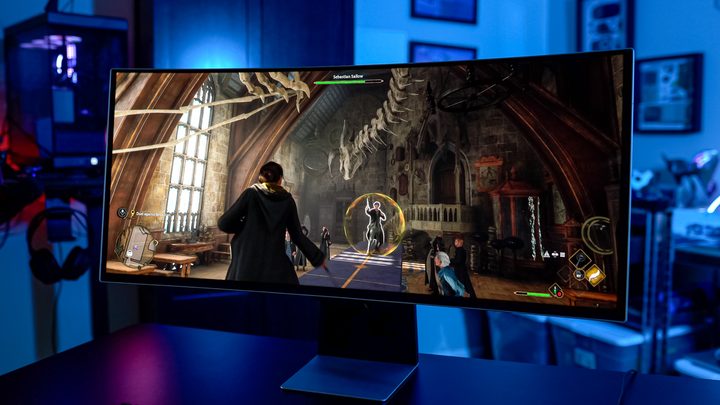
We saw that with the Alienware 34 QD-OLED. The monitor released for $1,400, but by the time Samsung released its competing Odyssey OLED G8, Alienware had already dropped the price to $1,200, with frequent sales knocking it down to $1,000. We could see a similar situation this year. We don’t have any release dates for monitors packing the QD-OLED panel that Alienware debuted with its 27-inch and 32-inch models, but if they release in the second half of the year, there’s a good chance Alienware will have already slashed prices on its displays.
We’re still in the Wild West for OLED gaming monitors, and I’m sure there’s plenty of shifting with availability, warranty support, and pricing ahead. Alienware already has a strong foundation, though, and it’s coming out of the gates swinging in 2024. Will that be the same case next year? We’ll just have to wait and see.


