  1. Home
  2. Computing
  3. News

AMD confirms plans to not play ‘king of the hill’ with Nvidia

Add as a preferred source on Google
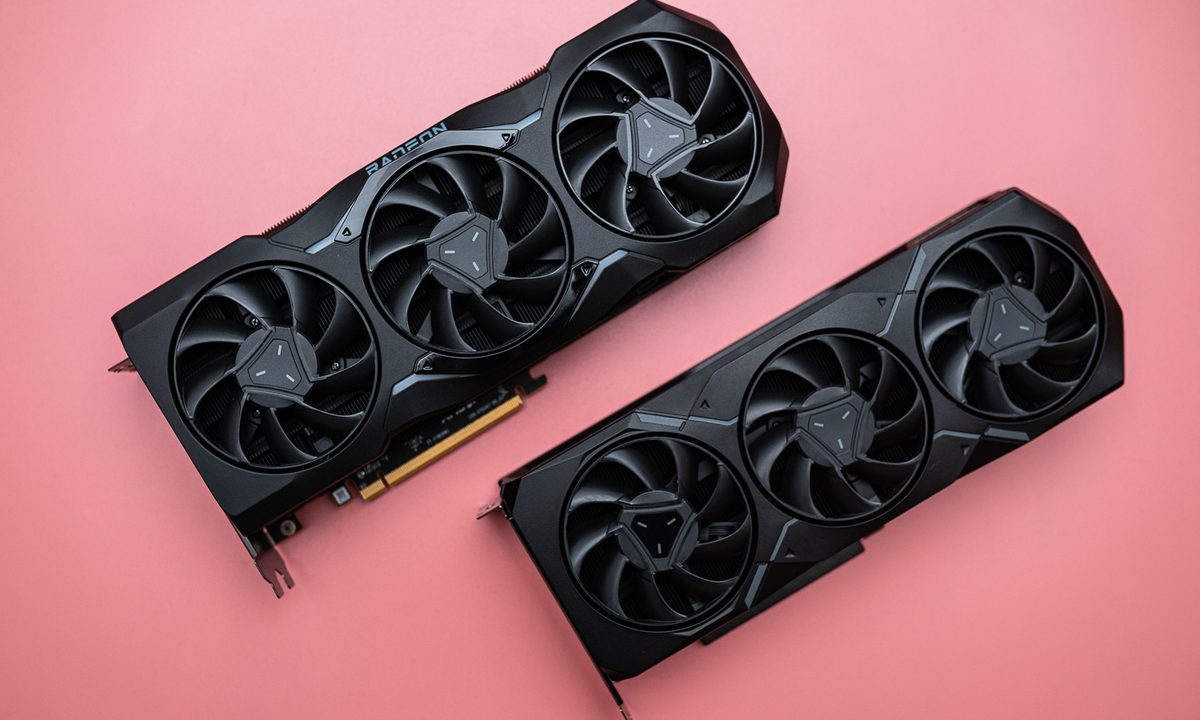
Two AMD Radeon RX 7000 graphics cards on a pink surface.
Jacob Roach / Digital Trends
IFA 2025
This story is part of our coverage of IFA Berlin 2025

There’s been lots of reports about AMD’s changing strategy around its desktop graphics cards, but we finally have something a bit more definitive.

When asked directly at a press Q&A at IFA 2024, Jack Huynh, AMD’s senior vice president and general manager of Computing and Graphics, discussed how the company’s upcoming approach to competing with Nvidia would change moving forward. The goal is still to achieve higher market share against Nvidia, but that may not involve releasing the high-end flagship tier that some PC enthusiasts want.

Recommended Videos

The last time AMD released a flagship desktop GPU was at the end of 2022, when it launched the Radeon RX 7900 XTX.

Specifics on AMD’s future plans weren’t provided, of course, but Huynh made it pretty clear that the near future of AMD graphics didn’t involve trying to compete with something like the Nvidia RTX 5090 — if that GPU is indeed in the works as it’s reported to be. Huynh, proudly claiming to be a gamer himself, however, restated how important gaming was to the future of AMD. His goal didn’t appear to be backing down from Nvidia as a whole, but to take an approach that leans on AMD’s strengths at offering better mid-tier options. On that note, Huynh said there’s plenty to be excited about in the future for AMD graphics cards.

The current reporting on when the next-gen RDNA 4 discrete GPUs will launch is oscillating between late 2024 or early 2025.

Hearing that will no doubt frustrate some AMD fans. We all want to see Nvidia have some proper performance competition, and that feels impossible without a GPU that can compete with Nvidia’s best. Huynh’s position is that “playing king of the hill” is fun, but it didn’t end up increasing AMD’s market share last time around. It wasn’t ruled out entirely in the long term, but it’s not likely anytime soon.

Lastly, Huynh remained enthusiastic about the idea of bringing neural processing units to desktop chips. NPUs are increasingly becoming an important part of AMD’s latest mobile chips and have even showed up in the company’s desktop APUs. But Huynh said that NPUs are also on their way to the company’s flagship gaming chips in the future.

It might not seem like NPUs would serve much purpose there, especially if it means having to reduce gaming performance, but Huynh says AMD is committed to doing the legwork required to help developers actually utilize them. There’s even a gaming application, according to Huynh, particularly in freeing up the GPU from some tasks to increase frame rates. He stated his strong commitment to not letting the NPU result in less CPU performance for gamers, even if it meant AMD eating the cost.

Huynh says AMD has already been in active talks with major developers like Epic and Activision, and while he says there’s been some hesitancy from developers, he seemed confident that the NPU will eventually take.

Luke Larsen
Former Senior Editor, Computing
Luke Larsen is the Senior Editor of Computing, managing all content covering laptops, monitors, PC hardware, Macs, and more.
In a market where Mac has been aspirational, it’s somehow a better deal than windows machines now
Windows Laptops became so expensive that MacBooks look sensible now
Computer, Electronics, Laptop

For a long time, the laptop buying advice was simple enough. Windows had a more versatile portfolio that brought you affordable, mid-range, high-end, and even gaming options, while MacBooks were known as the easy premium recommendation.

But owing to the pricing circus caused by memory shortages and component price hikes, the equation makes no sense anymore.

Read more
HP’s new RTX 5070 laptop feels like the sweet spot between thin and bulky
The new HyperX Omen 15 combines AMD and Intel and targets portability without fully sacrificing performance.
HP HyperX OMEN 15 Gaming Laptop

Modern gaming laptops have largely drifted toward two extremes lately: massive 16-inch and 18-inch desktop replacements, or ultra-compact 14-inch machines that still feel slightly cramped for serious gaming sessions. That’s exactly why HP’s new HyperX Omen 15 feels refreshing, because it brings back the familiar 15-inch gaming laptop formula with a chassis that still feels portable without sacrificing proper gaming hardware underneath.

HP’s compact HyperX Omen 15 packs RTX 5070 graphics with AMD and Intel options

Read more
Corsair is putting Chinese RAM in mainstream market. It won’t quite end the crisis though
A cheaper DDR5 supplier could shake up the market, but it is not a magic fix
Samsung DDR4 RAM in hand

After months of painfully expensive RAM and SSD prices, the memory market may finally be showing signs of pressure from an unexpected direction: China. New reports suggest that Chinese memory manufacturers are rapidly expanding production of DRAM and NAND chips, and that major hardware brands are starting to take notice. The most notable example so far is Corsair, which has reportedly tested DDR5 memory modules using chips from Chinese DRAM giant ChangXin Memory Technologies, better known as CXMT.

This feels inevitable. Memory prices have remained frustratingly high across PCs, laptops, and storage devices for months. So when Chinese suppliers began offering RAM at nearly half the cost of some global competitors, manufacturers were always going to at least explore the option. According to market reports, some CXMT DDR5 modules are reportedly being sold near the $150 range, while equivalent products from larger global suppliers can hover between $300 and $400.

Read more