  1. Home
  2. Computing
  3. News

AMD’s new desktop processors could launch in October as Ryzen 5000

Add as a preferred source on Google
 

Following AMD’s announcement that it will launch new Ryzen processors on October 8, we’re now hearing leaks that the company’s next-generation Zen 3-based silicon could debut under the Ryzen 5000 branding.

Recommended Videos

This would be a departure from early rumors that suggested that the Ryzen 4000 family would include both Zen 2 and Zen 3 processors, and the new Ryzen 5000 branding could help eliminate consumer confusion in the market as it would help distinguish between the two microarchitectures.
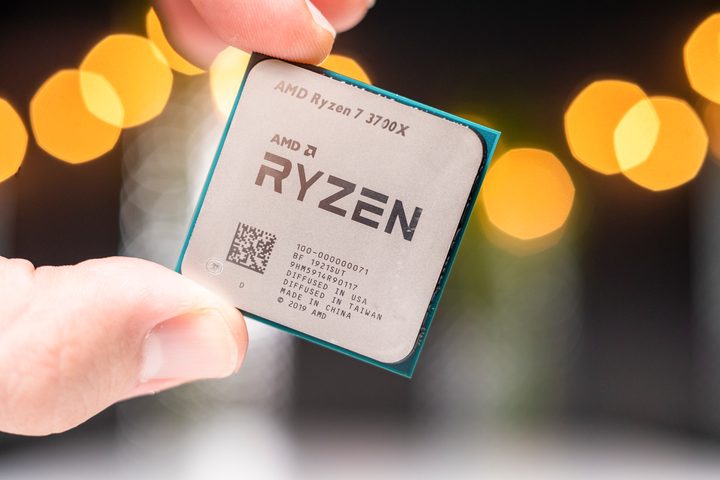
AMD Ryzen 9 7900x
Dan Baker/Digital Trends

Rumors of the Ryzen 5000 branding comes by way of Twitter user Patrick Shur, a software engineer, who tweeted that the Ryzen 9 5900X processor will ship with 12 cores while the Ryzen 7 5800X CPU will contain eight cores, Videocardz reported.

This means that AMD’s code-named Vermeer desktop processor will launch under the Ryzen 5000 branding. The new Ryzen 5000 family will then include Vermeer as well as Cezanne, the APU that will be headed into notebooks and desktops as the successor to Renoir (Ryzen 4000). At this point, it’s unclear if AMD will also launch a 10-core version, despite earlier rumors suggesting that the new Zen 3-based desktop lineup could include such a variant.

AMD’s Zen 3 architecture will be based on a 7nm+ node, the company had previously revealed, which will deliver 10% reduced power consumption and 20% more density when compared against Zen 2, according to Wikichips.

Prior to AMD’s announcement, there were speculations that the company may be planning to delay the launch of its Zen 3 products to 2021 as part of an effort to get more return out of its investments in developing Zen 2, a claim that the company had refuted. With AMD’s planned announcement, it appears that those rumors were false.

Image used with permission by copyright holder

The debut of Zen 3 and RDNA 2 will mark an exciting period for AMD. The Zen 3-based Ryzen 5000 processors will take on Intel’s 11th-gen processor series, while RDNA 2-based graphics will not only be headed into PCs to take on Nvidia’s new GeForce RTX 3000 series, but the architecture will also power next-generation Microsoft Xbox Series X and Sony PlayStation 5 consoles.

RDNA 2 is expected to arrive as the Radeon RX 6000 GPU for PC gamers.

Chuong Nguyen
Silicon Valley-based technology reporter and Giants baseball fan who splits his time between Northern California and Southern…
Windows 11 is testing a low-latency mode and it visibly speeds up app launch
Windows 11’s new performance trick lets your CPU go all out for a moment
Windows 11 Laptop

Even on powerful hardware, you have probably noticed that Windows 11 can feel less responsive than it should. Tiny delays in basic actions like opening the Start menu or navigating File Explorer can make the system feel heavier and less polished than rivals like macOS.

Microsoft appears to know this is an issue and may finally be working on a fix. After speeding up right-click menus and Quick Settings, improving File Explorer, and making broader under-the-hood changes, the company is now reportedly testing a new feature called Low Latency Profile to make Windows 11 feel more responsive overall.

Read more
Chuwi’s CoreBook Air wants to be the rare ultra-light Copilot+ laptop without an outrageous price
The CoreBook Air 226V's specs would be impressive from Lenovo or Dell; coming from Chuwi at $800, they're either a genuine breakthrough or a reminder that price isn't the only thing that matters when buying a laptop.
Chuwi new lightweight option.

Chuwi has never been the brand you associate with top-tier hardware: it built its name on budget laptops that punched above their weight at entry-level prices. 

The new CoreBook Air 226V is a deliberate step away from the brand’s comfort zone. It’s a sub-1kg Copilot+ PC built around Intel’s Lunar Lake processors, and at $800, it’s asking buyers to trust it with something that it has never before: a premium Windows laptop. 

Read more
Bots now account for over half of the internet traffic and they’re raising all kinds of hell
Humans are now the minority on the web, thanks to bots
Isometric Ai assistant and bubble speech, 3D illustration

While humans built the internet, actual people aren't the ones roaming the online space the most. A new report from Thales says bots accounted for more than 53% of all web traffic in 2025, up from 51% the previous year. Meanwhile, human activity has fallen by 47%, which means automated traffic has now become the dominant force online. And that's not even the bad news.

How AI is making the bot problem worse

Read more