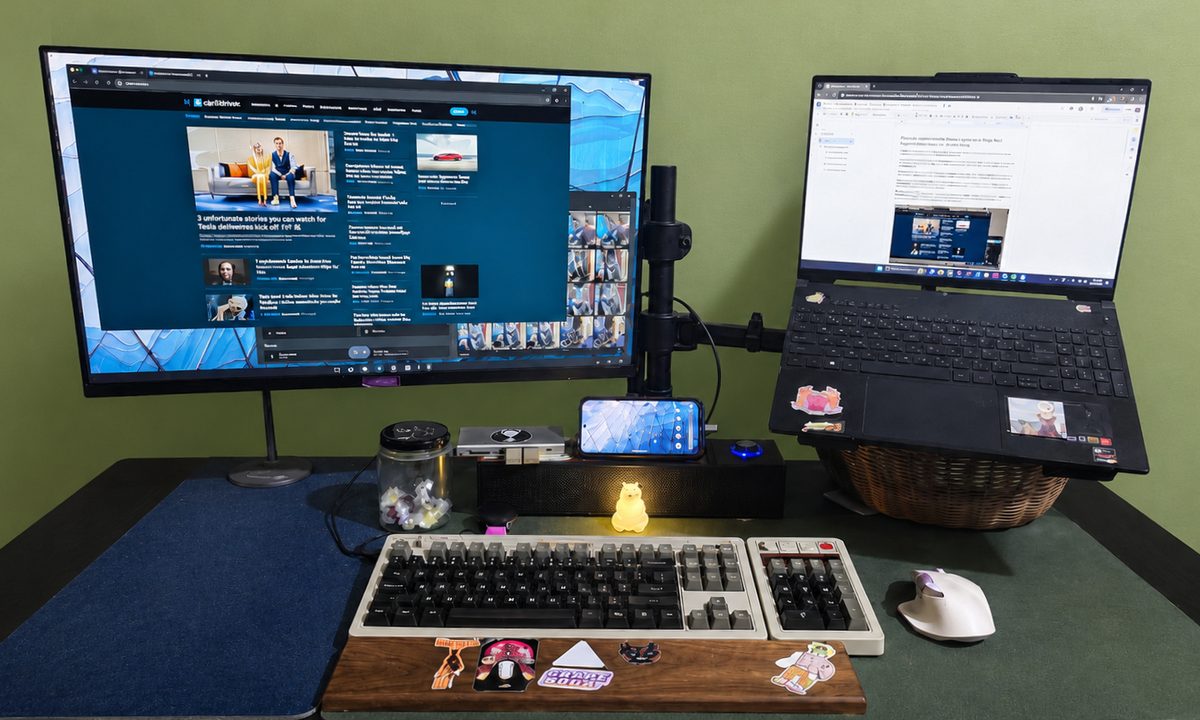
Android 17 desktop mode has a very simple pitch. Plug your phone into a monitor, add a keyboard and mouse, and watch the slab in your pocket pretend to be a computer. I wanted to give that pitch a fair shot, so I tried using it for an actual workday instead of a cute demo.
The goal was boring on purpose: write an article, edit it, build the page in WordPress, upload whatever needed uploading, and publish the thing without running back to my laptop like a coward.
For a little while, the illusion held together. That’s where the trouble starts.
When almost starts to look convincing
The first hour wasn’t a disaster, which somehow made the whole thing more suspicious. With a monitor, keyboard, mouse, and USB-C hub attached, Android desktop mode looked close enough to the real thing. I had browser tabs open. I could type in a document. I could jump into messaging apps.
For a few minutes, I could even accept the clean little fantasy people have been promising since phones became more powerful than the laptops many of us used in college.
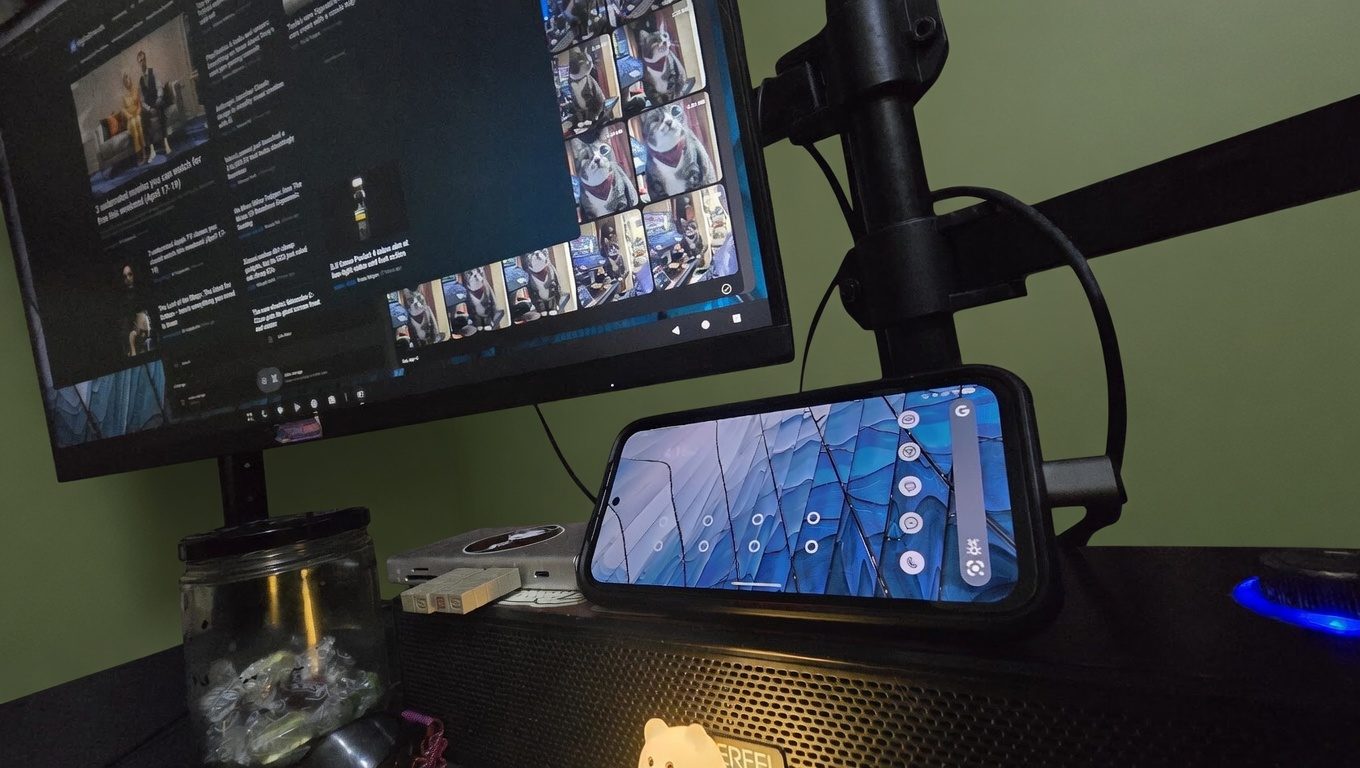
The catch is that desktop mode only feels convenient after you’ve rebuilt half a desk around it. My phone needed a hub so the monitor, charger, keyboard, mouse, and HDMI connection could all behave like members of the same household. Bluetooth can cut down the cable mess, but then you’re juggling pairing, batteries, and the quiet uncertainty of whether everything will reconnect before your patience files a complaint.
When portable stops meaning portable
The portability argument is where things started falling apart. In theory, I could use a hotel TV as a monitor and turn my phone into a tiny newsroom. In practice, that means carrying a small nest of accessories and pretending that still counts as traveling light. Desktop mode solves the problem of not having a laptop by asking me to recreate everything around a laptop except the laptop.
At that point, the obvious question becomes hard to dodge. Why didn’t I just bring the machine with the screen, keyboard, trackpad, ports, battery management, and operating system already built around this exact job?
The annoying answer is that Android desktop mode can still get the job done. I was able to write. I was able to build the page in WordPress. I was able to move through the web tools that make up too much of modern work now. That’s partly because everything is browser-based anyway, so the phone mostly needs to render a pile of web services without giving up.
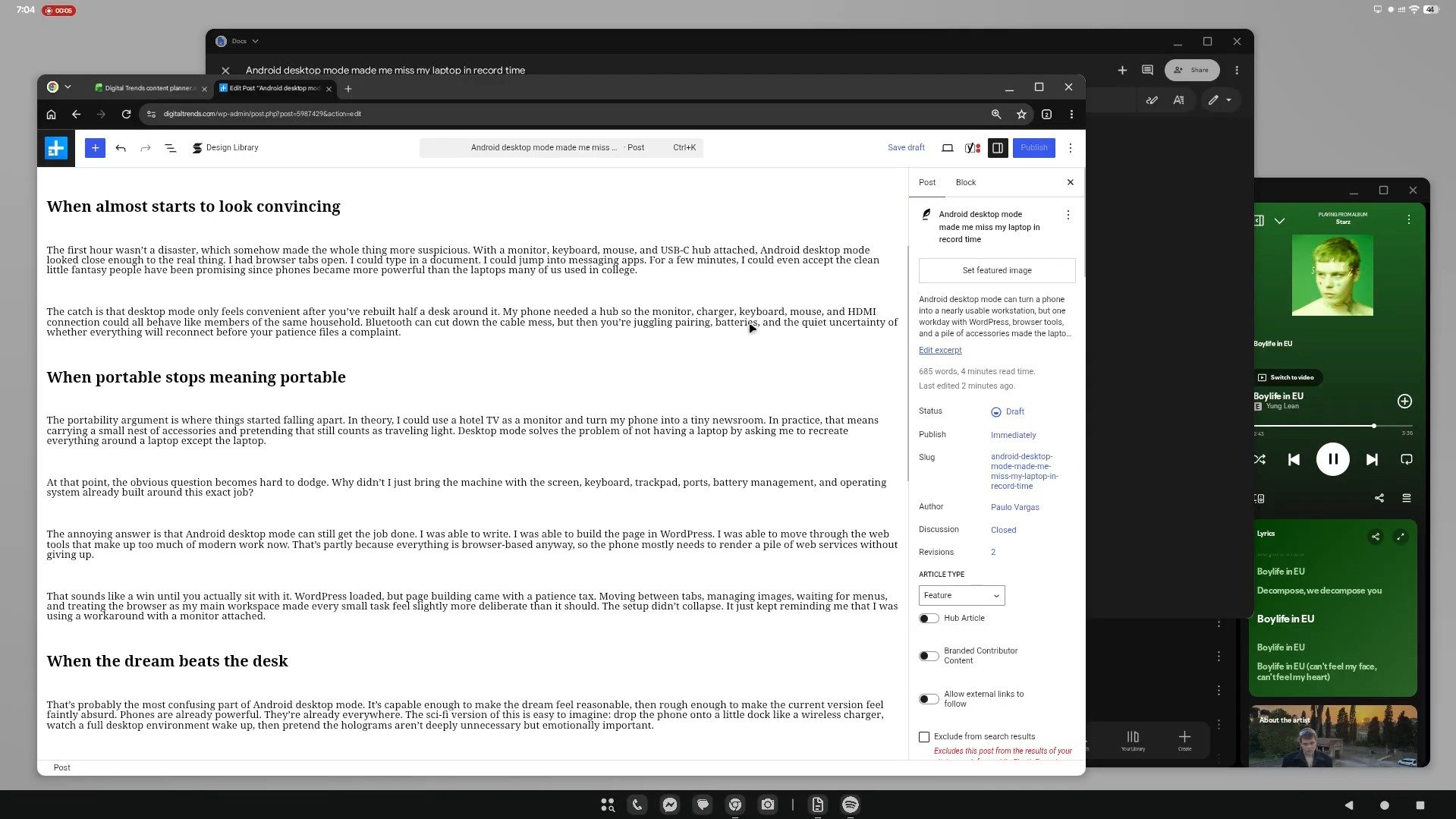
That sounds like a win until you actually sit with it. WordPress loaded, but page building came with a patience tax. Moving between tabs, managing images, waiting for menus, and treating the browser as my main workspace made every small task feel slightly more deliberate than it should.
The setup didn’t collapse. It just kept reminding me that I was using a workaround with a monitor attached.
When the dream beats the desk
That’s probably the most confusing part of Android desktop mode. It’s capable enough to make the dream feel reasonable, then rough enough to make the current version feel faintly absurd. Phones are already powerful. They’re already everywhere.
The sci-fi version of this is easy to imagine: drop the phone onto a little dock like a wireless charger, watch a full desktop environment wake up, then pretend the holograms aren’t deeply unnecessary but emotionally important.

That future still sounds great to me. I’d love a world where the phone becomes the computer, not a compromised laptop impersonator surrounded by dongles. Android desktop mode feels like a step toward that, but a step isn’t the destination, no matter how many cables are involved.
So yes, I wrote and built an article from my phone. I could even do it again, which may be the most annoying admission here. The harder question is why I would, unless something had already gone wrong.
If the most honest use case is still some version of “I guess, in an emergency,” who is Android desktop mode actually for?