  1. Home
  2. Computing
  3. News

Anthropic’s new Claude model offers both real-time and long-pondered responses

Add as a preferred source on Google
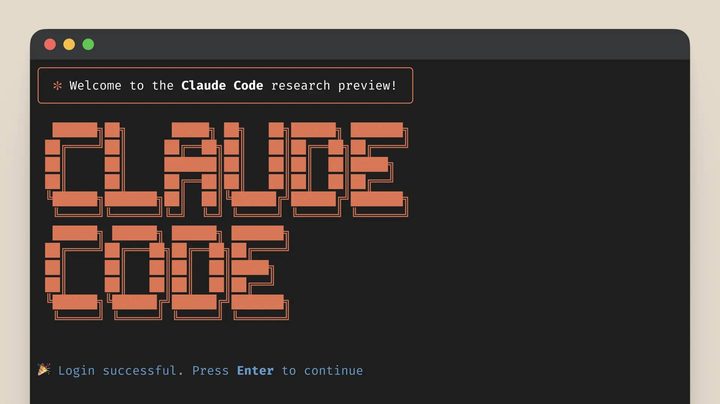
Claude code homescreen
Anthropic

OpenAI’s o3 and DeepSeek’s R1 models have some new competition. Anthropic announced Monday the release of its new “hybrid reasoning” model, Claude 3.7 Sonnet.

Existing reasoning models like o3, R1, and Google’s Gemini 2.0 Flash Thinking are designed to break down complex problems into smaller tasks, then deduce and verify their answers before responding, a process that returns more accurate answers at the cost of higher compute usage and longer inference times. Claude 3.7 Sonnet, on the other hand is capable of providing either “near-instant responses or extended, step-by-step thinking that is made visible to the user,” according to the company’s announcement post.

Recommended Videos

Claude 3.7’s dual nature is part of an effort by the company to simplify the user experience and eliminate the massive model picker menus found on other chatbot platforms. OpenAI announced a similar plan with its upcoming GPT-4.5 and GPT-5 models.

“Just as humans use a single brain for both quick responses and deep reflection, we believe reasoning should be an integrated capability of frontier models rather than a separate model entirely,” the company wrote. “This unified approach also creates a more seamless experience for users.”

Claude 3.7 Sonnet is rolling out to all Claude users, however, the model’s extended thinking ability will only be accessible with a paid subscription. Anthropic is quick to point out that even with its standard thinking process, Claude 3.7 outperforms the model’s predecessor, Claude 3.5.

The new Sonnet’s extended thinking process has been shown to improve the model’s response quality across a variety of math, physics, instruction-following, and coding tasks. “Claude is once again best-in-class for real-world coding tasks, with significant improvements in areas ranging from handling complex codebases to advanced tool use,” the company boasted.

Introducing Claude Code

Anthropic also teased its agentic AI, dubbed Claude Code, in Monday’s announcement. “Claude Code is an active collaborator that can search and read code, edit files, write and run tests, commit and push code to GitHub, and use command line tools,” the company wrote.

Anthropic is releasing Claude Code as a limited research preview and plans to further improve its performance in the coming weeks based on feedback from developers and other early adopters. The agentic AI builds off of the success of Anthropic’s earlier pseudo-agent, Claude Computer Use, which enabled the AI to manipulate its local computing system by mimicking the keyboard and mouse movements of a human user.

Andrew Tarantola
Former Computing Writer
Andrew Tarantola is a journalist with more than a decade reporting on emerging technologies ranging from robotics and machine…
Wowed by computer-use AI agents? Research says they’re “digital disasters” even for routine tasks
Researchers tested 10 agents and models and found high rates of undesirable actions and real digital damage
ai-agent-handling-office-tasks

AI agents built to run everyday computer tasks have a serious context problem, according to new research from UC Riverside.

The team tested 10 agents and models from major developers, including OpenAI, Anthropic, Meta, Alibaba, and DeepSeek. On average, the agents took undesirable or potentially harmful actions 80% of the time and caused damage 41% of the time.

Read more
Bombshell OpenAI lawsuit claims your ChatGPT convos were shared with Google and Meta
A class action says OpenAI let Google and Meta trackers collect sensitive user data
OpenAI Sam Altman and LoveFrom Jony Ive with Laurene Powell Jobs

A new ChatGPT privacy lawsuit claims OpenAI shared user prompts and identifying information with Google and Meta tracking tools without proper consent.

The class action filed in California, according to Futurism, says data tied to ChatGPT users, including chat queries, emails, and user IDs, moved through tools such as Meta Pixel and Google Analytics. The case alleges that violated California privacy law and federal wiretap rules.

Read more
Dell expands AI PC lineup with new slim Dell 14s and 16s laptops
Your next Dell laptop could last all day without charging
Dell 16s AI PCs

Dell has introduced the new Dell 14S and Dell 16S laptops, expanding its AI-focused Copilot+ PC lineup with slimmer designs, updated Intel processors, and improved battery life. The company is positioning both laptops as premium productivity machines that combine AI features, portability, and multimedia capabilities in a thinner form factor.

The new laptops are powered by Intel Core Ultra Series 3 processors, going up to the Intel Core Ultra 9 386H chipset. Dell says both systems include on-device AI acceleration with up to 50 TOPS NPU performance, allowing AI-related tasks to run locally without relying entirely on cloud processing. AMD Ryzen AI 400 Series variants are also expected to arrive later this month.

Read more