
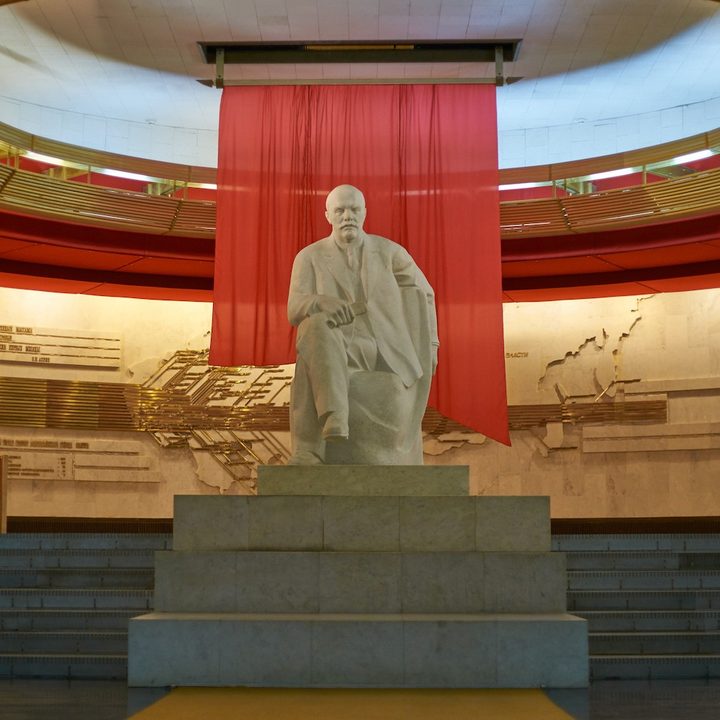
Apple computers can be found all over the world, and plenty wind up in unusual places. But perhaps the one in the strangest place of all is the Apple II that powers the keystone exhibit in Russia’s Lenin Museum, 20 miles south of Moscow.
The museum, still open today, first opened its doors in 1987 during the final years of the USSR and is dedicated to the country’s first leader, Vladimir Lenin. Among its exhibits are a series of moving, three-dimensional presentations, each depicting a period from Lenin’s life.
Back in 1987, the Soviet museum staff needed a way to control these presentations, which required syncing lights, projectors, and motors all down to the second. At the time, a British company called Electrosonic had developed a system called the ES4000 that helped technicians do just that. The computer powering the ES4000 system? The Apple II.
There was a problem, though: Soviet law forbade the museum from dealing with foreign companies, meaning it could not directly import the ES4000 and the Apple II. The Soviets had their own Apple II clone, the Agat-7, but it required a separate card to run Western software. The ES4000 used 50-pin cards that would not fit the 60-pin slots in the Agat-7, so that was a no-go.
Instead, a convoluted arrangement was undertaken to skirt Soviet regulations. A Soviet economic organization, Technointorg, signed the deal and carried it out through Beach Compix, a British front for the Soviet Chamber of Commerce and Industry. Foreign technicians traveled to the USSR to set up the system but a Soviet company, Cascade, took credit for their work. And thus, the workaround was complete.
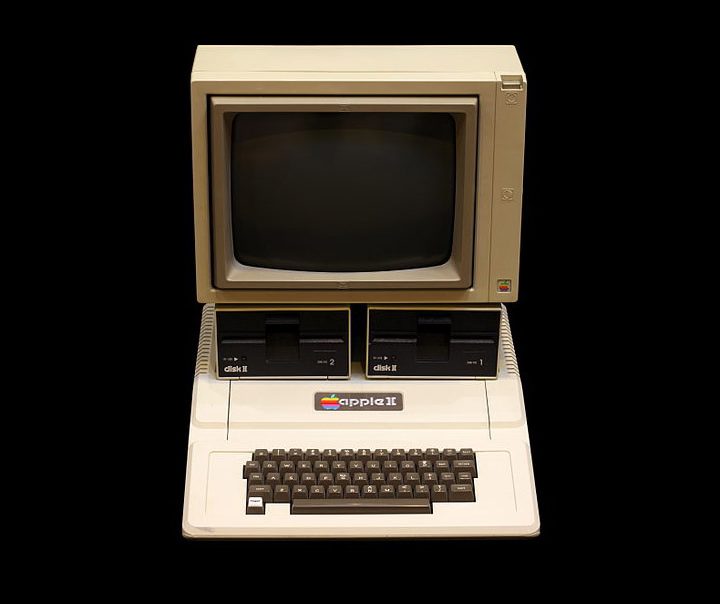
Amazingly, the Apple II computers at the heart of the exhibition are still going strong today. According to the deputy director of research at the museum, Boris Vlasov, it falls to original staff members to come out of retirement and fix up the machines when required. Vlasov insists the computers will not be replaced in order to preserve the original technological setup of the presentations, exactly as they were first envisioned.
And despite the seeming rarity of this setup, it was not the only time Apple technology made an appearance in the USSR. Steve Jobs himself even visited the Academy of Sciences of the Soviet Union in 1985 in a bid to provide Macintoshes to Soviet schools (apparently a careless remark he made about Leon Trotsky, still a touchy subject in the USSR at the time, scuttled the plan). Macs popped up here and there, such as the regional tax office of Bashkortostan, a Russian republic, but otherwise failed to make stronger inroads.
That makes it all the more remarkable that Apple computers were chosen to power the museum dedicated to the country’s first leader — and that they are still going strong today, almost 35 years later.


