
We’ve heard a lot of potentially bad news about the upcoming Apple silicon Mac Pro in recent weeks, but there has always been one looming, unanswered question. Now, that question might have an answer.
Writing on Twitter, Bloomberg journalist Mark Gurman has reported that the next Mac Pro might lack a user-upgradable graphics option. In some ways that’s unsurprising, but it has major implications for the already-precarious state of modularity in the device.
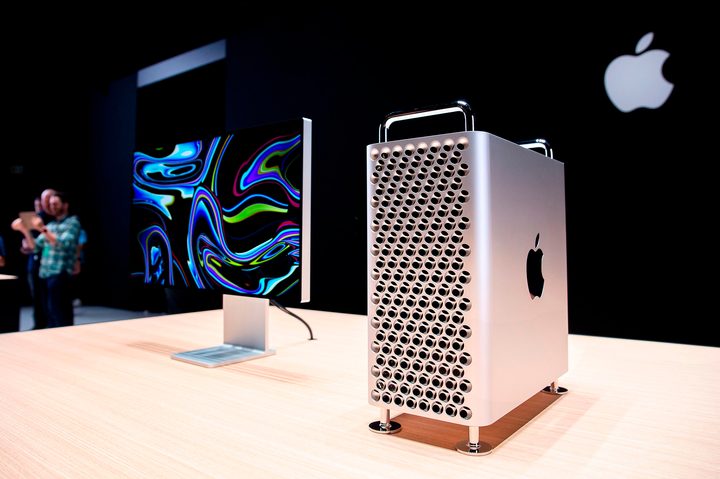
In the current Mac Pro, users can configure it with one of 10 different graphics cards. Those cards can be swapped out and replaced at any time thanks to Apple’s system of MPX Modules, with various choices that slot into ports on the Mac Pro’s motherboard.
Apple silicon poses a major problem to this system because each of Apple’s chips is what’s known as a system-on-a-chip (SoC). In layman’s terms, that means the CPU, memory, and GPU are all integrated into the chip itself.
While that keeps things simpler and vastly improves memory speeds across the chip (thanks to Apple’s unified memory system), it means it’s impossible to upgrade those individual components once you’ve bought the computer.
As Gurman points out, “Apple Silicon Macs don’t support external GPUs and you have to use whatever configuration you buy on Apple’s website.” That could be a huge blow to the modularity of the system.
Will pro users be satisfied?

When Apple introduced the new Mac Pro in 2019, modularity was a key feature of the computer. Indeed, the professional audience the Mac Pro is aimed at needs to be able to upgrade their devices as their workloads change and become more demanding, and Apple recognized that in the form of the MPX Module system, which offered everything from graphics cards to RAID storage arrays.
Without upgradeable graphics, the modularity of the future Mac Pro could be severely hindered. If the machine cannot keep up with challenging tasks like video rendering where powerful graphics cards are vital, it will be far less attractive to its target audience.

Gurman notes that storage will continue to be user-upgradeable in the next Mac Pro, so it appears that MPX Modules will not disappear completely. But a modular system that lacks changeable GPU options will likely lose some of its luster.
It also brings the Mac Pro much closer to the Mac Studio, which Apple also touted as a modular computer yet has far fewer elements that can be changed by the user after purchase. According to Gurman, the main benefit the Apple silicon Mac Pro will have over the Mac Studio will be “performance from more cooling,” as well as the M2 Ultra chip that will be outfitted into the Mac Pro.
Whether that improved cooling and performance will be enough to placate high-end users in the absence of upgradeable graphics options remains to be seen. Recent rumors claim Apple will unveil the new Mac Pro at a special event this spring, so we’ll have to see what promises the company makes — and whether the Mac Pro can live up to them.


