
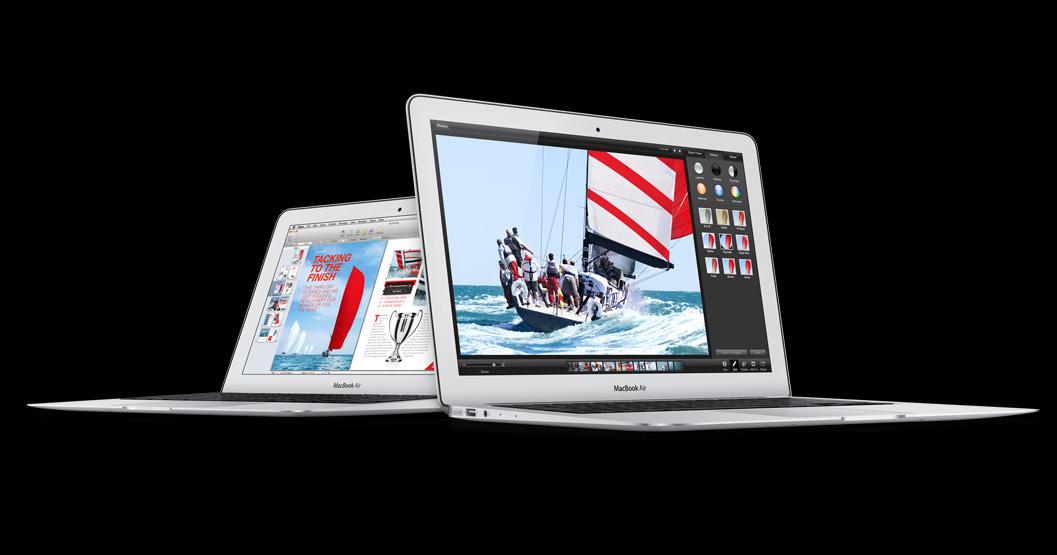
Future MacBooks may include a unique and innovative feature. According to Patently Apple, Apple managed to secure a patent regarding a “dual-sided trackpad” panel for use in its MacBook line of products. The trackpad would take the place of the traditional “mouse.”
 According to the patent document, the dual-sided panel would encompass the entire bottom portion of the notebook. The panel will react to touch from the top or the bottom. The device is also transparent, which means users would be able to close the laptop, flip it upside down, and still view the screen through the transparent trackpad, all while still being able to give touch commands.
The panel would be able to receive commands from a traditional notebook setup, and also from a closed, tablet-like design. Perhaps this is Apple’s way of competing with the flurry of convertible laptop and tablet hybrids that are currently slipping into the market. Although it is still unclear how exactly this technology will be implemented. It’s possible that the closed device could be used to perform nominal tasks like checking email, and that the trackpad could be “drawn on” via a specialized pen, much like a tablet.
The fact that the trackpad consumes the entire bottom of the device also presents questions on where hardware will be placed (presumably behind the display?). Not to mention that it will be practically impossible to include a physical keyboard (at least one that isn’t completely transparent). This suggests that we may see Apple implement a virtual keyboard. The patent also shows that you’ll be able to turn off the bottom side of the trackpad in order to conserve battery life.
This is a very interesting development, and it’ll be interesting to see how Apple uses this newly patented technology in the future.


