  1. Home
  2. Computing
  3. News

Apple’s OLED MacBook Pro could get a touch-sensitive screen, after all

Apparently, it was the iPad that inspired Apple to consider a touchscreen for MacBooks.

Add as a preferred source on Google
A person running Steam on the M4 MacBook Pro. Rocket League is up on the screen
Chris Hagan / Digital Trends

Apple has historically shirked the idea of a touch-sensitive MacBook, even though the company pushed the idea of a button-less smartphone into the mainstream. But it seems the winds have changed course, and the highly anticipated MacBook Pro overhaul with an OLED panel will land a touchscreen, after all.

What’s happening?

The prediction comes courtesy of TFI Securities analyst Ming-Chi Kuo, who reports that Apple will enable touch controls on a future MacBook Pro model to enhance productivity and experience. In the Windows ecosystem, touchscreen has been a staple for years on laptops and continues to grow.

Recommended Videos

“The OLED MacBook Pro, expected to enter mass production by late 2026, will incorporate a touch panel using on-cell touch technology,” Kuo mentioned in a post on X.
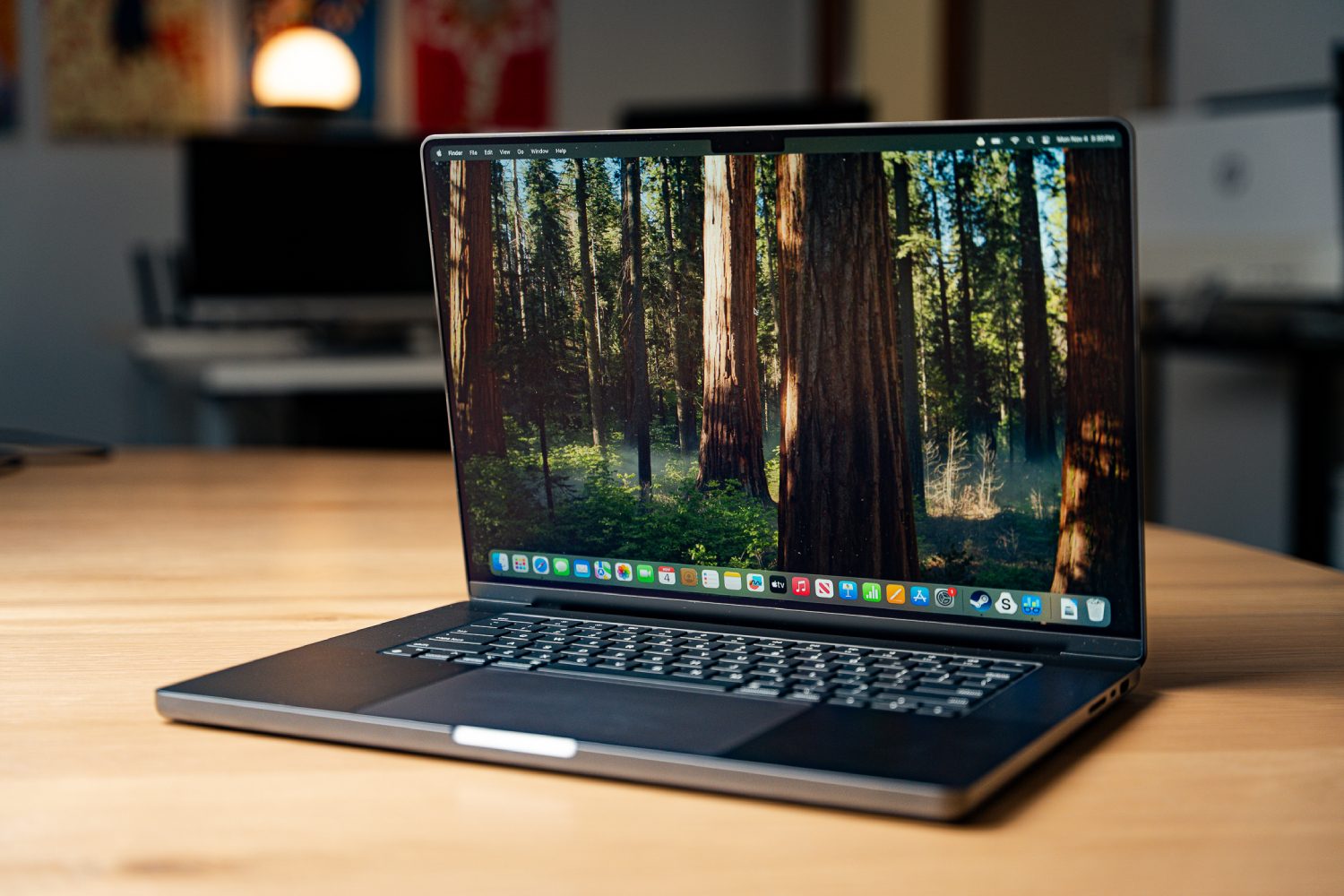
Apparently, Apple was inspired by the behaviour of how iPad users interact with the machine, which offers up to a 13-inch screen and pairs it with a fully decked out keyboard accessory.

Apple’s historical stance

“Touch surfaces don’t want to be vertical. It gives great demo, but after a short period of time, you start to fatigue and after an extended period of time, your arm wants to fall off. It doesn’t work,” Apple co-founder and former CEO Steve Jobs said back in 2010.

Jobs added that touchscreen on laptops is an “ergonomically terrible” idea, and after testing, Apple concluded that it was a terrible idea. Yet, if you look at the iPad Pro and its increasingly macOS-like software approach, you will realize that the idea is not so terrible, after all.

The OLED MacBook Pro is rumored to bring a massive design overhaul, as well. However, it will most likely arrive in 2027, while the M5 generation MacBook Pro models fill the gap next year.

Nadeem Sarwar
Nadeem is the Managing Editor at Digital Trends.
Anthropic launches Claude design to simplify visual creation with AI
Finally, AI that designs your slides so you don’t have to
Claude

Anthropic has introduced a new AI-powered design tool called Claude Design, aimed at helping users create visual content such as prototypes, presentations, and marketing assets through simple conversational inputs. The product, developed under Anthropic Labs, is currently available in research preview for paid Claude subscribers and is being rolled out gradually.

Claude Design is powered by the company’s latest vision model, Claude Opus 4.7, and is positioned as a tool that bridges the gap between technical design expertise and everyday creative needs.

Read more
AI triggered a RAMmageddon so bad that Apple looks like the sensible choice
Laptop prices got so stupid in 2026, that Apple turned into the value king.
Student using MacBook Neo in classroom.

I really didn't want to believe it, but here we are. Apple is now looking like the sensible laptop brand. Not the cool underdog. Not the affordable alternative. Apple, in 2026. The reason is not that the company suddenly became generous, but rather the rest of the competition has suddenly become so deranged that a MacBook lineup starting at $599 feels weirdly grounded.

Apple's MacBook Neo starts at $599, while Microsoft's own 13-inch Surface Laptop now starts at $1,199 after this month's price hikes. This isn't a small gap that you can ignore. Meanwhile, Apple's MacBook Air with M5 starts at $1,099 with 16GB of memory and 512GB of storage, which looks like one of the few premium laptops still priced by human beings.

Read more
AI mode in Chrome gets a big upgrade to save you some tab hopping
Chrome just made tab hopping a thing of the past with its upgraded AI Mode, and it's genuinely useful.
Google AI mode mockup showing new feature

If you have ever gone down a rabbit hole while searching for something online, you know the drill. You open one tab, follow a link, open another, and another, and suddenly you have 14 tabs open and zero answers.

It was one of the reasons that forced me to switch to Arc Browser, which offered easier-to-manage vertical tabs, which, incidentally, Google Chrome also added a week back. But Google is not stopping there, and is adding a meaningful upgrade to AI Mode in Chrome to fix this issue.

Read more