
AMD, Nvidia, and Intel launched new components at CES 2022, and thus, just about every gaming laptop ever made has been “updated.” That includes some of our favorites, including the Razer Blade 14, 15, and 17.
But this is list is for gaming laptops that are doing something new — either with a forward-looking design or some extreme new performance.

Alienware x14

Alienware’s X-series laptops are excellent. They’re thin and powerful without losing what makes Alienware laptops unique. And with all the buzz around 14-inch gaming laptops these days, I wasn’t surprised to see a contribution from Alienware.
But with the Alienware X14, portability has been pushed to a new limit. This is the thinnest of the major 14-inch laptops, including the Razer Blade 14, ROG Zephyrus G14, and the Predator Triton 300 SE. At only 0.57 inches thick, there’s no way you could fit an HDMI port on its profile — which is why the ports are in the rear.
Alienware is starting out fairly modest, though, in terms of performance. The X14 only goes up to an RTX 3060 and only has a 1080p resolution screen. I’m okay with that, as long as it’s priced fairly. My only concern is the palm rests, which have been shrunken down to the point of being uncomfortable. Beyond that, I’m excited to spend more time with this in a full review.
Lenovo Legion 5 Pro
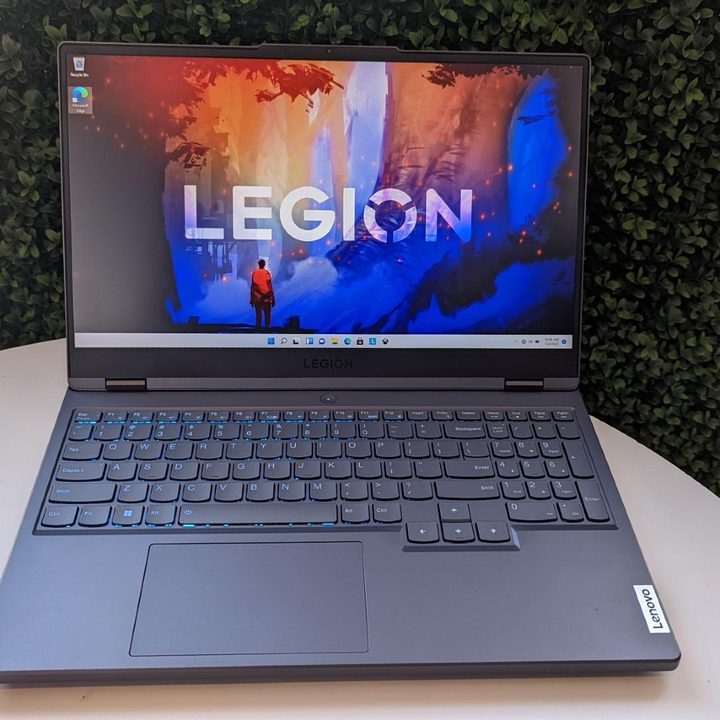
The Legion 5 Pro had quite the year. As many gaming laptops strive for thinner and smaller sizes (see above), the Lenovo Legion 5 Pro has been the go-to option for those who don’t want to compromise performance. Thanks to the appropriate thickness of the chassis and the excellent cooling, the Legion 5 Pro punches above its weight in gaming performance, and the latest model makes some tweaks that people are going to love.
First off, the overly large Legion logo on the lid is gone. That’s good, and the subtler new branding goes a long way toward making the Legion 5 Pro feel like a more cohesive design.
Secondly, the Legion 5 Pro goes from a 165Hz refresh rate up to 240Hz. That makes it the first 16-inch 2560 x 1600 gaming laptop with a 240Hz refresh rate. An awfully specific record, but suffice to say, it’s a screen worthy of the high-end components under the hood. It finally has some decent RGB backlighting on the keyboard too.
Asus ROG Zephyrus Duo 16

The Zephyrus Duo is not a laptop that should work. It’s a gaming laptop with a wonky secondary screen and cramped touchpad. And yet, the Zephyrus Duo keeps coming back year after year with new iterations.
The ScreenPad Plus is as audacious and fascinating as ever, and people keep finding a reason to make use of its extra screen real estate. This year, Asus has brought a number of enhancements this year to the ROG Zephyrus Duo 16, starting with the latest components, the RTX 3080 Ti and a Ryzen 9 6980HX. But that’s only scratching the surface.
On top of that chip, Asus is using liquid metal as a cooling paste, which is something MSI has done with its gaming laptops this time too. But it’s the new display options that really make this update significant. One of the screen options is called a Dual Spec panel, meaning the display can run either at 4K 120Hz or 1080p 240Hz — all depending on what game you’re planning. Asus even has a second screen option that uses a QHD mini-LED display with support for HDR1000.
Alienware M17

AMD has made up a lot of ground in its war against Intel over the past couple of years. But on the graphics front, the progress has been slow. Very few all-AMD systems exist, even though the few that have come out have been promising, such as the ROG Strix G15 AMD Advantage and Dell G5 SE.
The Alienware M17 feels like a victory for AMD. It’s not a brand new laptop no one knows about. It’s not a budget gaming laptop. It’s a high-end, top-of-the-line gaming laptop with nothing but AMD in it, and that’s an exciting proposition given just how good AMD has been recently.
How much of an advantage will an all-AMD Alienware have? And will this model be sold cheaper than the Intel and Nvidia model? We’ll have to wait and see, but this is certainly the most premium all-AMD gaming laptop so far.
There’s even an all-Intel model that uses Arc Graphics — because, why not?
Asus ROG Flow Z13

I was surprised by the ROG Flow X13 when I reviewed it this year. A 13-inch gaming laptop that you could actually play games on? Even without using the funky XG Mobile external GPU, it was a surprisingly powerful little gaming laptop.
The ROG Flow Z13 builds off that same momentum but in an even more extreme way. It’s a 2-in-1 again, but this time in the style of the Surface Pro. That’s right — it’s basically a gaming tablet with a tear-off keyboard and a kickstand. And yet, this little device can handle up to a Core i9-12900H processor and RTX 3050 Ti. And it’s only 0.47 inches thick? Come on — that’s unheard of.
Like the Flow X13, the Z13 can still connect to the XG Mobile and still has a 120Hz refresh rate screen. In other words, it’s a real gaming tablet in every sense of the word — which might be a first.


