Ever since Valve released the original Steam Deck, the PC gaming world has been on the hunt for a Steam Deck killer. Asus went first with its ROG Ally, and Lenovo followed shortly after with the Legion Go. That’s not to mention the swath of smaller brands that have been chipping away at handheld gaming PCs for years, such as Ayaneo and GPD.
You can’t kill the Steam Deck, though, at least not with the current offerings. Valve has a particular advantage with the Steam Deck that it’s been building for years, and it will be hard for a true competitor to emerge in the growing market of handheld gaming PCs.
Priced for everyone

In the most direct way, the Steam Deck stands head and shoulders above other handheld options due to its price. Before the Steam Deck OLED, you could pick up a device for as little as $400. Sure, it came with only 64GB of slow storage, but it offer fundamentally the same experience as the more expensive models.
Now, prices are even lower. You can find a Steam Deck LCD for $350 and even less if you pick up a refurbished device. The price of admission here is low, not much more than a Nintendo Switch and less than an Xbox Series X or PlayStation 5.
That’s in stark contrast to devices like the ROG Ally and Legion Go. The ROG Ally with the Z1 Extreme chip is $700, with no option to reduce the price for less storage. The Legion Go is the same price, and you can spend an extra $50 for more storage. Asus attempted to compete at a lower price with the ROG Ally featuring the base Ryzen Z1 chip, but at $600, it’s still much more expensive than the Steam Deck (and a bit slower, as you can read in our ROG Ally Ryzen Z1 review).
Price goes out the window with more niche brands. The Ayaneo 2S will run you at least $1,000, and the GPD Win 4 costs $850. If you have the money to spare, you could make an argument for one of these other devices. But when the Steam Deck costs so little and storage upgrades are cheap and easy, it’s safe to say that Valve is playing in a league of its own.
The software advantage
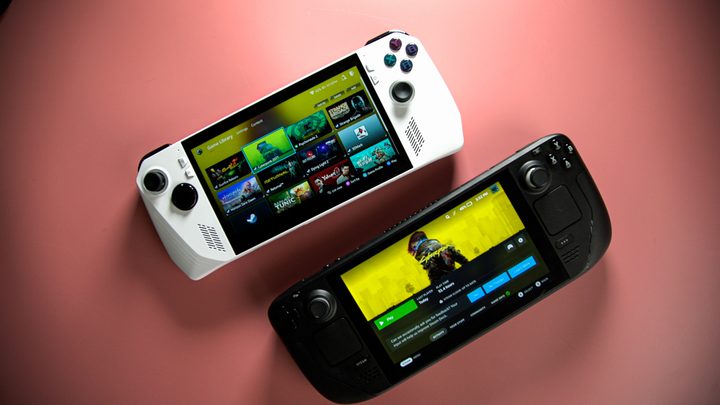
It’s not just price, however. The barrier to entry is low for the Steam Deck compared to other devices, but there’s no denying that Steam Deck competitors hold some advantages. For example, the ROG Ally comes with a much faster processor, and the Legion Go’s massive screen is unmatched.
Valve wins with software. I’ve previously written about the problems with Windows on a handheld gaming PC, but it comes down to this: Windows, for as much flexibility as it offers, just isn’t built for two thumbsticks and some buttons. It’s built for a mouse and keyboard, and that difference makes the Steam Deck feel like a much nicer device compared to its Windows counterparts.
SteamOS provides a mostly seamless handheld experience, but it’s not just about navigation. With SteamOS at the helm, the Steam Deck is able to suspend games when you need to pause, and you’re able to easily select options in overlays without your inputs being mirrored on the game running underneath. It feels like a handheld, not a laptop stripped of its most convenient input methods.
There’s the fact that Windows supports, well, any Windows game, but with Steam as the primary marketplace for PC games and tools like the Heroic Launcher for other storefronts, you can still play the vast majority of PC games on the Steam Deck. In addition, there’s a swath of additional software you can download through Decky Loader, making SteamOS more useful. Those options aren’t available on Windows-based handhelds.
Bring on the killers
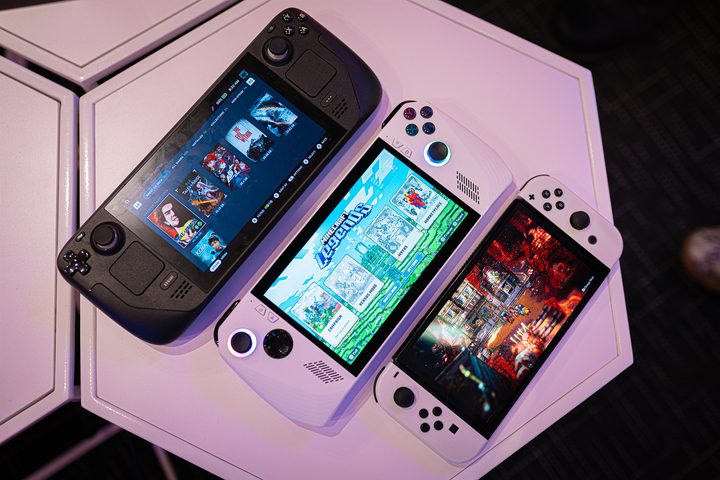
I want to see more supposed Steam Deck killers. That’s good for everyone. With the ROG Ally and Legion Go out, Valve pushed out the Steam Deck OLED, which provides a massive improvement over the original model. If nothing else, handheld competitors ensure that the Steam Deck doesn’t fall behind and become a second-class citizen.
It will be a tough battle for a competitor to truly upend the Steam Deck, though. It has to nail the perfect marriage of performance and software and at a price that’s reasonable enough for a mainstream audience. We’re still in the early days of handheld gaming PCs, so I do not doubt that a device will get there eventually. For now, though, it’s hard to say any new handheld can truly enter the class of a “Steam Deck killer.”