1. Home
  2. Computing
  3. News

ChatGPT allows this nightmarish AI typewriter to talk to you

Add as a preferred source on Google

A classic Brother AX-325 typewriter straight out the ’90s has gained ChatGPT powers and is all set to have conversations with you, on paper anyway (literally).

Designer-engineer Arvind Sanjeev shared his full process thread on how the typewriter went from idea to the final, charmingly elegant machine that it is. Sanjeev reverse-engineered a Brother AX-325, modded it with some AI smarts, gave it a new paint job, and called it Ghostwriter. And now, it can conversate (onto a piece of paper) with anyone typing on the keyboard.
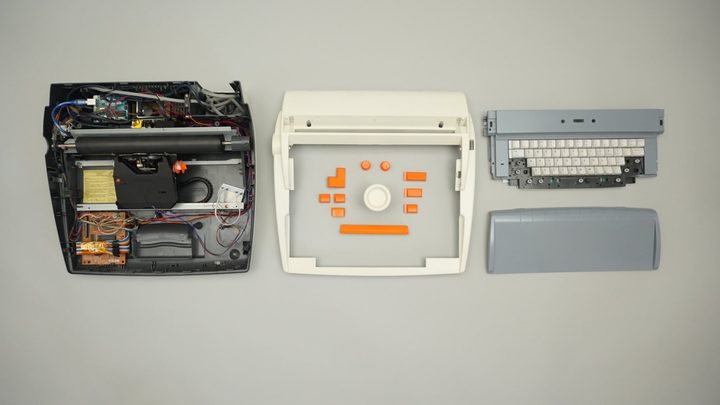
Ghostwriter complete exploded view.
Image used with permission by copyright holder

According to his Twitter posts, Sanjeev dismantled the typewriter, mainly to feed the keyboard signals through an Arduino driver, which in turn was sent to a Raspberry Pi running OpenAI’s GPT-3 python API.

Recommended Videos

GPT-3 is a powerful tool that works like a chatbot, responding to input (in this case the keyboard) and composing text at a level similar to a human. Sanjeev also showered the Brother with a little TLC, giving the typewriter a new bounce in its mechanical step.

As promised, here is the full process thread for Ghostwriter – the #AI typewriter. A journey from idea to realization:

The idea: With the exponential growth and emergence of a prolific number of AI products we see every day, I wanted to create a mindful intervention that (1/13) pic.twitter.com/MCOeAcM26q

— Arvind Sanjeev (@ArvindSanjeev) December 14, 2022

Sanjeev felt that he also needed a way to control the temperature (creativity) and length of the responses from GPT-3, so he installed two knobs above the keyboard. The knobs flank another small addition: a small OLED that displays their feedback statuses.
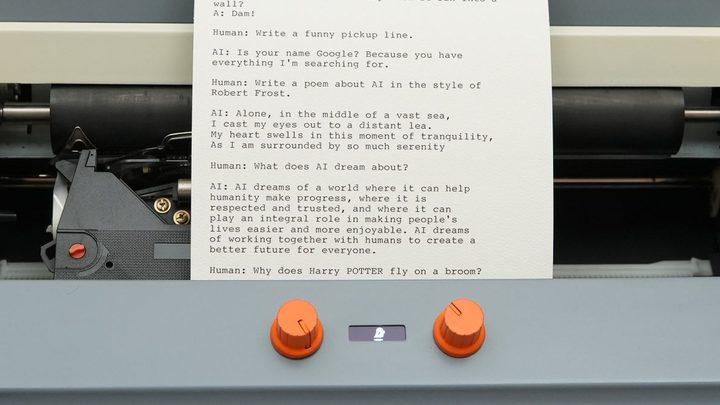
Ghostwriter conversation on paper.
Image used with permission by copyright holder

Once the technical bits was done, Sanjeev set out to turn the office gray of the Brother into something more inviting and modern. He was aiming for something warm and playful that anyone can approach, without digital distractions, where they could enjoy a “calm, meditative interface of a vintage typewriter” — and we think he succeeded.

Aaron Leong
Former Computing Writer
Aaron enjoys all manner of tech - from mobile (phones/smartwear), audio (headphones/earbuds), computing (gaming/Chromebooks)…
Google I/O 2026: What to expect from Gemini, Android 17, and more
Google is about to put AI into everything again
Google I/O 2026

Google is preparing to kick off its annual developer conference, Google I/O 2026, and this year’s event is shaping up to be heavily focused on artificial intelligence, Android 17, and the future of Google’s ecosystem. The conference begins on May 19 at the Shoreline Amphitheatre in Mountain View, California, with CEO Sundar Pichai expected to lead the keynote presentation. The event will be livestreamed globally through Google’s official I/O website and YouTube channels.

While Google I/O has traditionally focused on developers, this year’s announcements are expected to directly affect everyday users across Android phones, Search, Chrome, Workspace, and smart devices.

Read more
Microsoft is retiring the Together Mode in Teams in favor of something cleaner and simpler
Teams is retiring Together Mode for layouts people may actually use
Computer, Electronics, Laptop

Microsoft Teams is retiring one of its more recognizable meeting features, and it might be for the best. The company announced that Together Mode is going away in Teams as Microsoft is shooting towards a simpler set of meeting layouts.

To recall, Together Mode was introduced during the pandemic-era video call boom, placing participants inside shared virtual environments such as auditoriums or classrooms. It was a cute idea at the time, but it never became the everyday meeting view for most people.

Read more
Experts are worried that smarter AI gets, the dumber we might become
Experts say chatbots can help research, but leaning on them too hard risks outsourcing the work that builds intelligence
OpenAI CEO Sam Altman during the Uncapped podcast in June 2025.

AI can now answer questions so quickly that the search itself can feel optional. That convenience worries the Royal Observatory Greenwich, which has warned that instant AI answers can weaken the curiosity, scrutiny, and source-checking behind real knowledge.

The risk hides inside the usefulness. Chatbots can help people test ideas, move faster, and find new angles, but a finished response can also cut users off from the messy trail that makes learning stick. When that happens, information arrives without the struggle that turns it into judgment.

Read more