
Dell launched two fascinating concepts at CES 2020. The Dell Duet is the more conventional of the two with its dual screens, 360 degree hinge, and familiar form factor.
Then there’s the Ori, short for origami.
It’s the more experimental of the two, for sure. Rather than two separate screens, it features one large, foldable display. Yep. The screen itself folds in half just like Samsung’s Galaxy Fold. Unfortunately, it might end up having the same problems that plagued that device.
A Windows tablet that folds
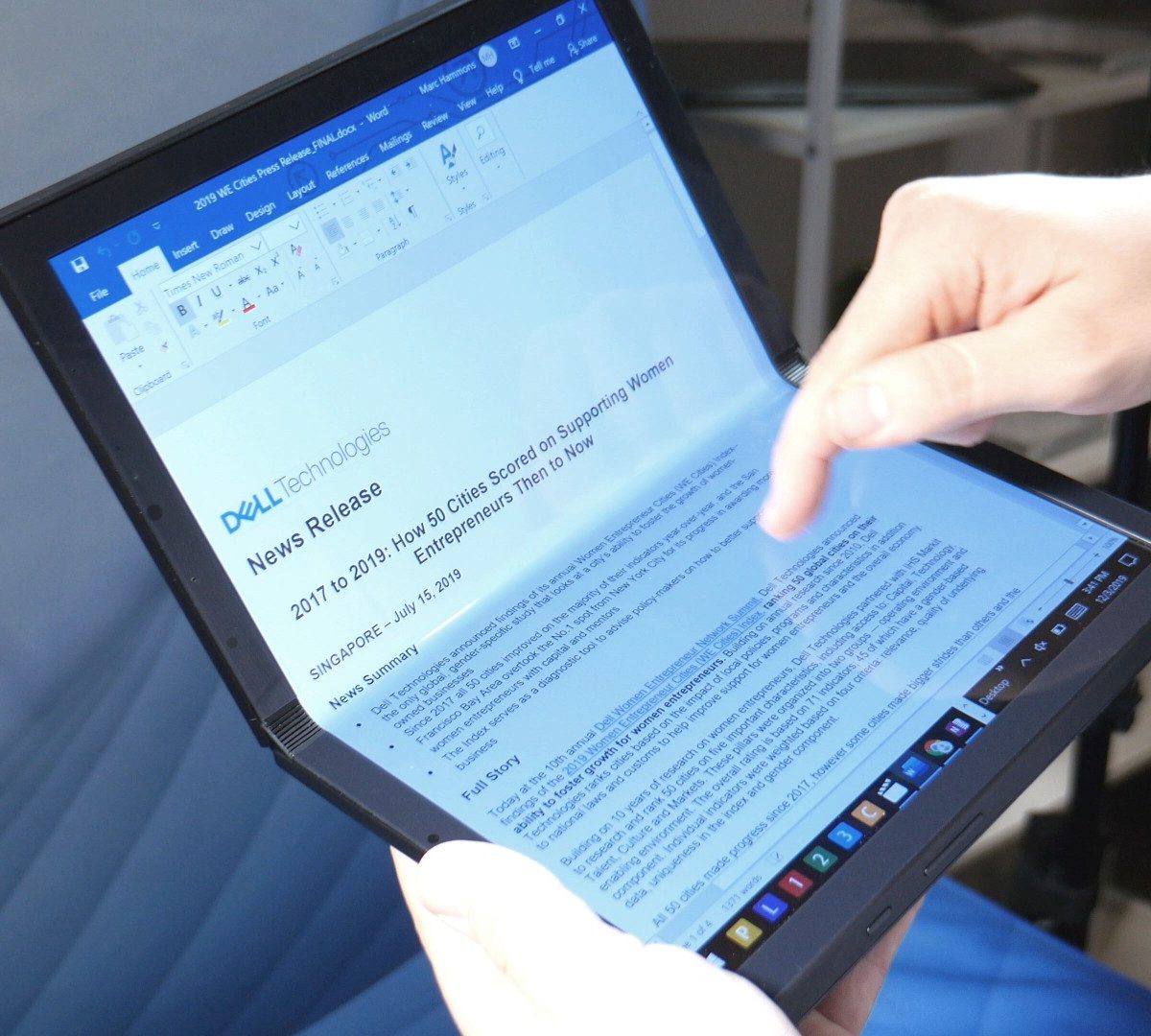
There is, of course, one big difference between the Galaxy Fold and the Dell Ori. It’s a PC, not a phone. It runs Windows instead of Android, though Dell says it tested out an Android version as well. Either way, the Ori isn’t meant to replace the phone in your pocket.
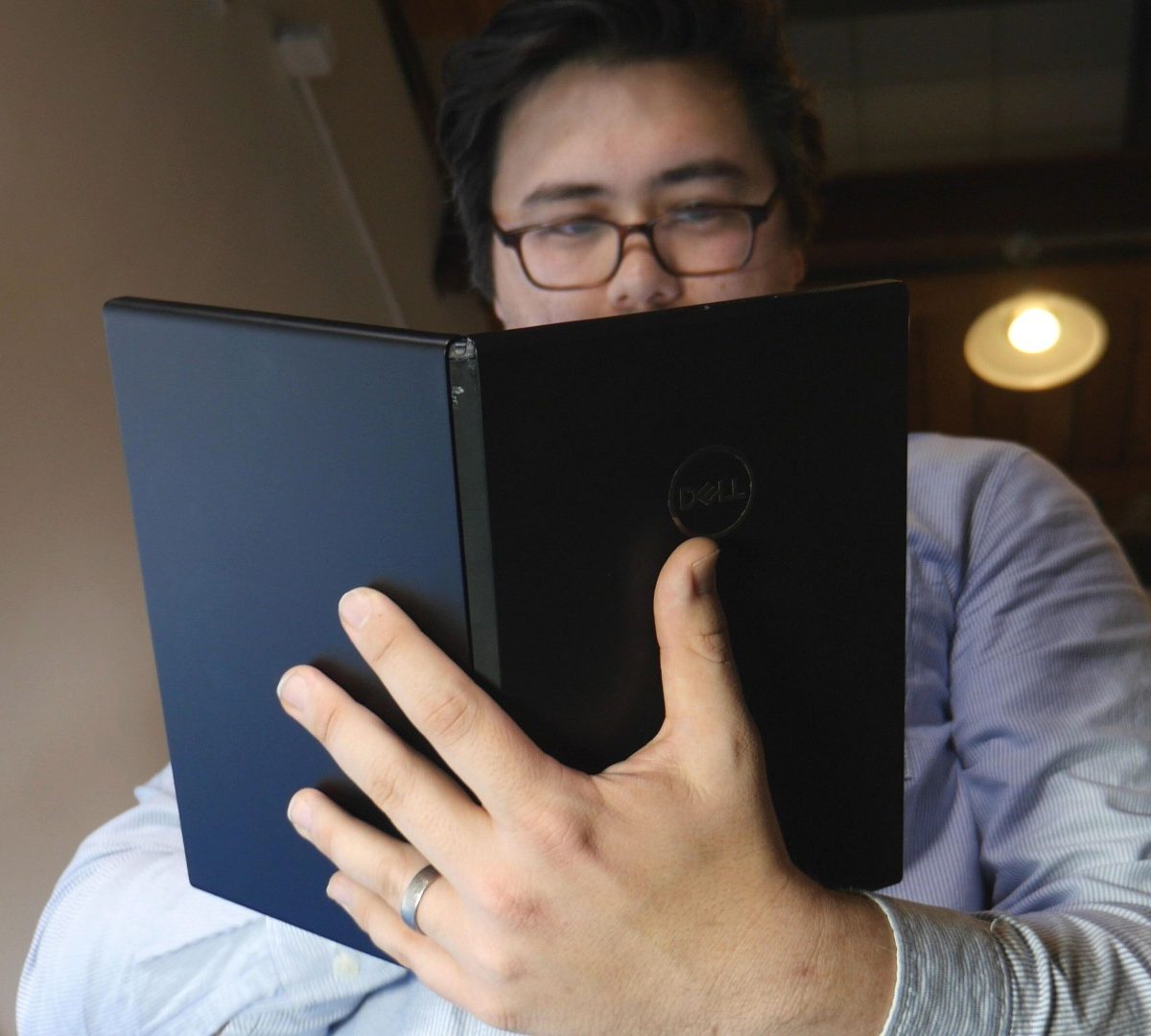
Instead, the Ori is a new kind of device. It’s shaped like a notebook and meant to be held in portrait mode. It’s thin and light enough to use one-handed and then slip into a purse, bag, or even large coat pocket. While it’s similar in size to a typical laptop when unfurled, folding it in half makes it more portable.
Unfold it, and you’ll get a look at the 13.4-inch screen that folds in half like a piece of paper. If you’ve never seen a foldable display, it’s hard not to be impressed. The hinge is stiff enough that it can sit open like a laptop, but without requiring a two-handed pry.
The closest competitor it has right now is the ThinkPad X1 foldable device that Lenovo showed off in mid-2019. It had a 4K OLED display. Dell isn’t divulging details about the Ori’s display yet.
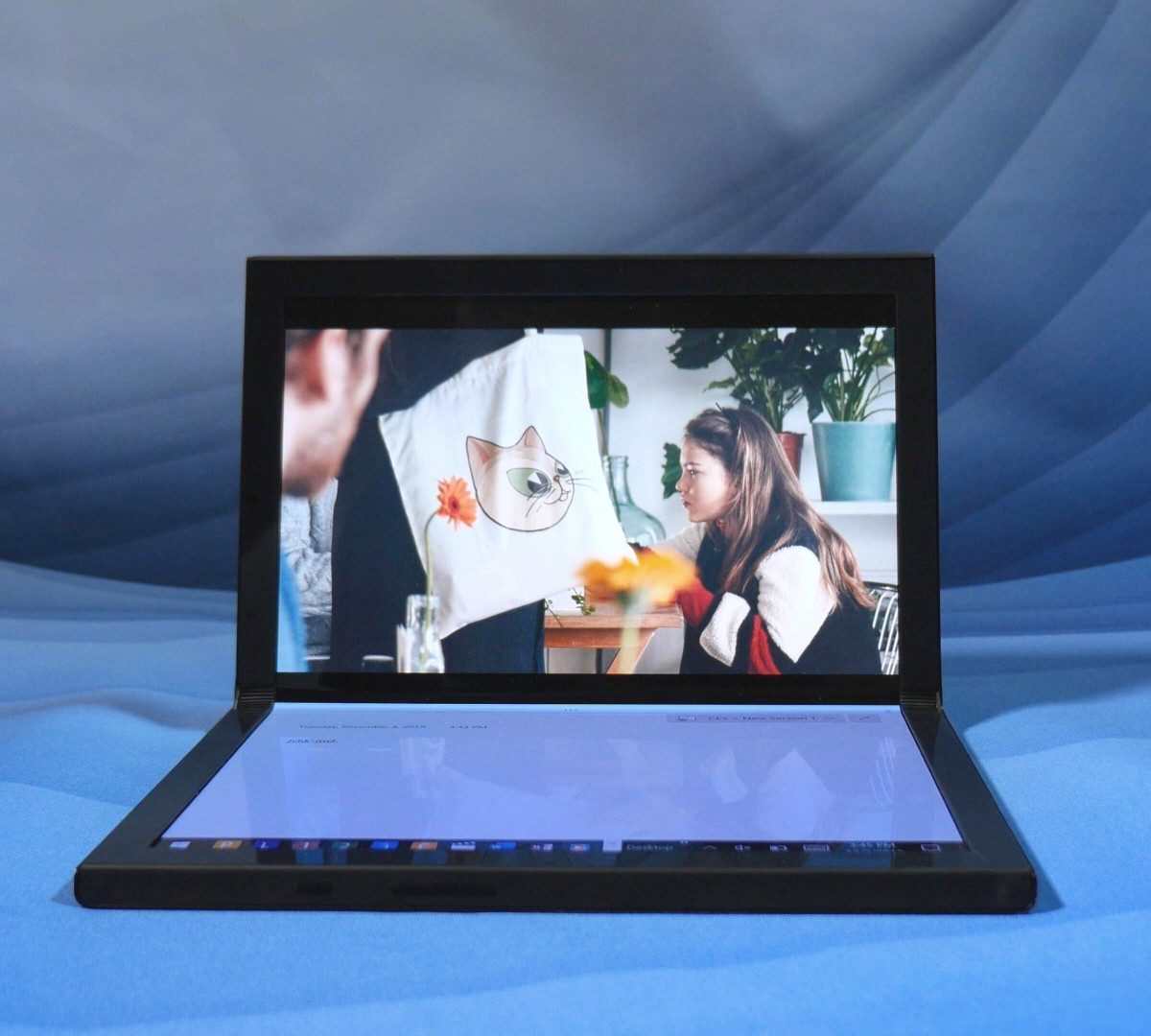
Like the ThinkPad, the Dell Ori does have large, plastic bezels. Compared to the Surface Duo, Galaxy Fold, or iPad Pro, it looks a bit cheap.
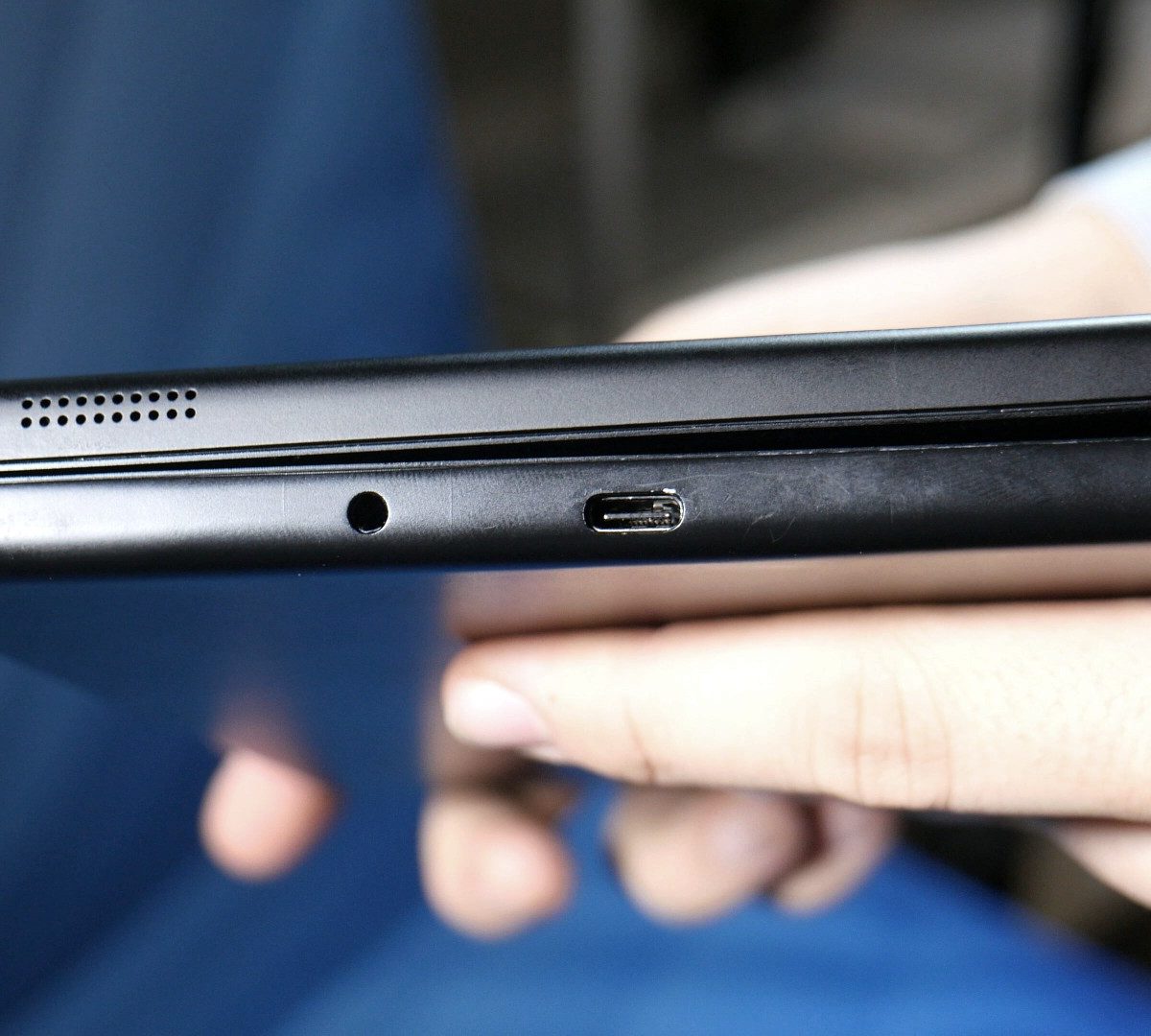
Outside the screen, there’s not much to the device besides a single USB-C port along the bottom. I don’t think it’s a surprise the Ori discards most ports, but it’s worth remembering. A device like the Ori is going to need a dock (or a lot of wireless accessories) if you plan to use it at a desk.
The software problem
What can you actually do with this device?
Anything you’d want to do with a laptop, in theory. There’s one important feature missing, however. The keyboard.
The Duet, Dell’s other dual-screen PC, has a thin, magnetic keyboard that can rest on top of the bottom screen or attach to the back of the device. That means typing when you want it, and tons of screen real estate when you don’t.
The Ori doesn’t include that option. You’re stuck poking around in Windows 10 without a physical keyboard input. It’s excruciating.
The eventual release of Microsoft’s Windows 10X could improve the situation. It’s supposed to be designed with dual-screen devices in mind, making it the perfect fit for the Dell Ori. It’s not hard to imagine having two apps open on each side of the panel, holding it open like a book.
Unfortunately, Dell (and Microsoft) didn’t have Windows 10X running when I had my hands on the Ori. And Dell hasn’t confirmed that will happen in the future. That leaves Ori with the poorly-optimized Windows 10 tablet mode that most people forgot existed. The lack of apps and helpful touch interfaces has always been the primary problem with Windows tablets. A bendable screen won’t change that.
A prototype, through and through
The Ori is just a prototype. A concept. The lack of polish really shows. The version I played with didn’t close shut all the way, and the material along the spine looked like it was homemade. The fold along the screen is quite noticeable as well. There’s no crease you can feel, but there’s definitely a line of light along the fold.
If the Ori does hit store shelves, it might look and feel different than this. There’s no word yet on price or release for the Dell Ori. Microsoft has its own dual-screen devices scheduled for release in the holiday season of 2020, but we don’t yet know if Dell will be aiming for that same window.
In the meantime, Dell will either need to put its hopes in Windows 10X, or include some kind of keyboard attachment. If not, this concept 2-in-1 will suffer the same fate as the rest of the Windows tablets of the past decade.
Follow our live blog for more CES news and announcements.


