
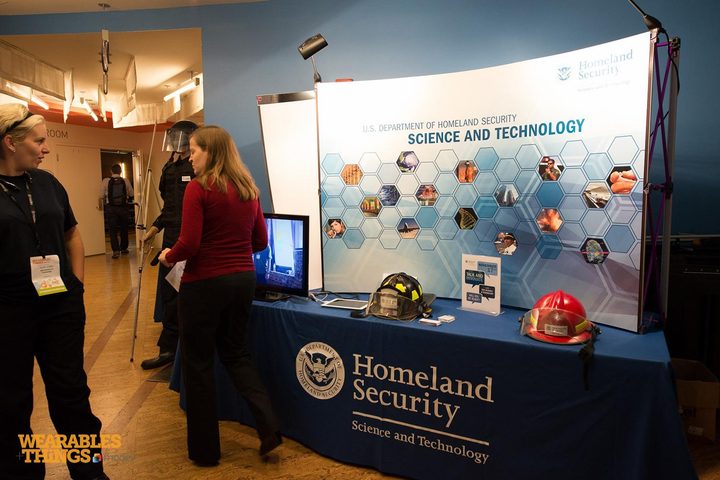
In an effort to prevent and thwart cyberattacks, United States Department of Homeland Security (DHS) Secretary Kirstjen Nielsen announced the creation of a new National Risk Management Center to help protect the nation’s critical infrastructure. The center’s goal of protecting the banking, communications, and energy sectors was outlined at the National Cybersecurity Summit in New York.
Given the rise in cyberthreats against the United States, Nielsen wanted to create a place where private companies can get assistance if they’re experiencing a cyberattack. By creating a central authority where a company experiencing a cyberattack can seek the government’s help early on, the center hopes to be able to learn about the attack to help protect others in the same sector or industry from becoming victims.
“An attack on a single tech company can rapidly spiral into a crisis affecting the financial sector, energy systems, and health care,” Nielsen said, highlighting that the center will serve as a hub that brings together government experts and the private sector. “Our goal is to simplify the process, to provide a single point of access to the full range of government activities to defend against cyberthreats.”
DHS will begin by conducting a number of 90-day “sprints” to identify key priorities and needs. The center will eventually run simulations and cross-sector analyses to identify threats and points of weaknesses in U.S. infrastructure. The vision is to have the center be an emergency response team for public and private organizations undergoing cybersecurity threats.
In essence, the National Risk Management Center is designed to prevent a repeat of the NotPetya and WannaCry ransomware attacks in 2017. Damages from NotPetya are estimated in the billions of dollars, while WannaCry targeted infrastructure, such as airports and hospitals. “Government officials were spurred to create the new measure as security officials have warned that cyberattacks are ongoing and that a hack of key infrastructure could have disastrous effects,” CNN reported.
The center’s announcement comes as Nielsen sided with top U.S. intelligence officials in calling out Russia for meddling in the 2016 presidential elections. “Let me be clear: Our intelligence community had it right,” she said. “It was the Russians. It was directed from the highest levels.” And although the center’s purpose is to protect the financial, telecommunications, and energy industry initially, Nielsen announced that her department will also move forward with an election security task force, Wired reported.
Nielsen is also working with legislators to help expand DHS’ role in combatting cyberthreats.
“I’m working with Congress to pass legislation to establish a cybersecurity and infrastructure security agency within DHS,” Nielsen said. “This would recast what is now the National Protection and Programs Directorate, our cybersecurity arm, into an official, operational agency capable of better confronting digital threats. But we all know that waiting for Congress to act is like waiting for a new Game of Thrones book to come out.”


