Going into CES 2022, I was focused on Intel Arc Alchemist. Since the announcement of Arc and the generations that will make it up, Intel has committed to a release date in the first few months of 2022. But at the start of the show this year, we knew almost nothing about Arc Alchemist outside of its name.
Unfortunately, Intel’s CES 2022 keynote didn’t shed much light. The company confirmed that Arc discrete GPUs will show up in 50 laptops and desktops throughout 2022, but still wouldn’t provide hard performance numbers or even so much as the number of cards in the range. The clock is ticking for Intel Arc Alchemist, and as murmurs of internal struggles mount, that’s a bad sign for the future of the company’s discrete GPUs.
As great as Intel Arc Alchemist may end up being — and I’m hoping it is — some optimistic skepticism is important.
Struggling to get Arc on track

Intel hosted its CES keynote a day before the show floor opened, as it normally does. The company spent six minutes talking about Arc Alchemist, half of which was taken up by an Intel Deep Link demo — a technology Intel launched in 2020.
In that time, we learned that Intel is shipping cards to its manufacturing partners, that over 50 mobile and desktop designs are “coming soon,” and that XeSS, and upscaling tech similar to Nvidia’s Deep Learning Super Sampling (DLSS), is coming to Death Stranding Director’s Cut on PC. Intel also reaffirmed, once again, Arc Alchemist’s launch date of sometime during the first quarter of 2022.
Three days after the keynote, Intel scrubbed this release date from Arc Alchemist’s product page. It wasn’t just in a single spot, either. Anywhere the company mentioned “Q1 2022,” you’ll now see just “2022.” Normally, this wouldn’t be a big deal, but it follows weeks of rumors of internal delays and release date struggles at Intel.
Well-known leaker Moore’s Law is Dead detailed release date issues in a video released in December, with one of the sources saying the release date had changed about a dozen times. Another said something “seems off” about the way Intel graphics is managing and executing the Arc Alchemist launch.
It’s never a good idea to take rumors as law. But given how tight-lipped Intel has been about a product line that should be arriving in a few short weeks, I’m skeptical. Even if the cards launch in the first few months of the year, it’s looking the like the majority of the range will arrive later in the year.
That’s not inherently a bad thing. Delays, in most cases, are a good thing, allowing designers to spend more time to get a product right instead of just releasing it into the wild with flaws. That doesn’t seem like Intel’s approach here, though. Given the reinforcement of the release date, it seems like Intel wants to have its cake and eat it, too — meet the promised release date while delaying most of the range in the background. I’m speculating, but that’s the impression I was left with after Intel’s CES keynote.
If you’ve got it, show it
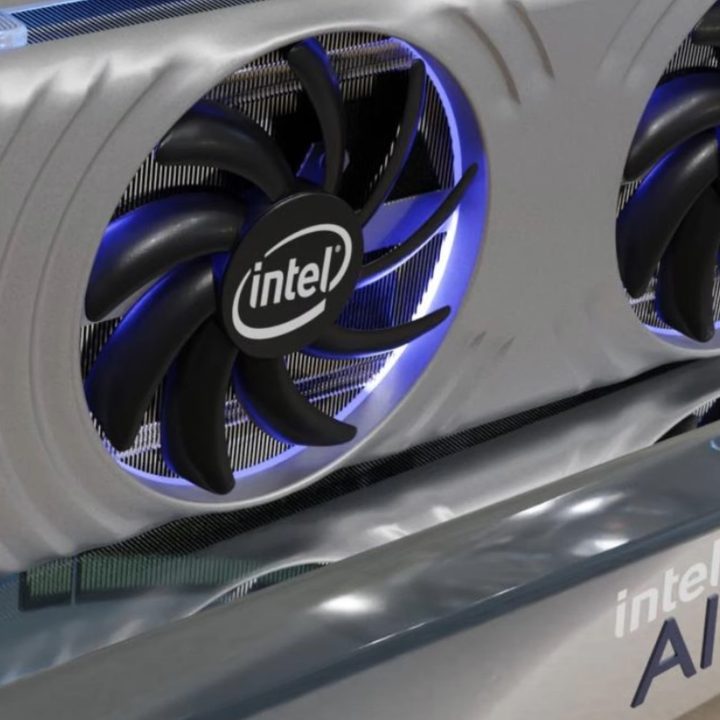
You can try to glean information from cryptic marketing and the telephone game of release date speculation, but you don’t need to go that far. If Intel could show off Arc Alchemist at CES, it would have. Or the very least, it should have.
Intel dumped a load of Arc Alchemist information at Architecture Day in August 2021. We learned about XeSS, the N6 manufacturing process, and the Xe-HPG architecture powering the range. And since then, everything we’ve heard has been piecemeal and drawn out to the point that even minor announcements, like a single game supporting XeSS, seem important.
Even without specs, Intel hasn’t even so much has hinted at what Arc Alchemist is trying to accomplish. Where do the cards fit in the current GPU market? Can buyers expect flagship, midrange, or low-end performance? How many cards are even in the range? I could spend a couple of hundred words just on rhetorical questions, and that’s not good for a product that’s due out at any moment.
Intel isn’t typically shy about sharing performance data. Even if Intel wasn’t ready to share concrete numbers, I still expected info on relative performance — a vague graph showing the competitors to the flagship card, or a line graph showing how the performance scales across the range.
These numbers generally don’t mean anything, and they’re always skewed to favor the brand presenting them. But they set expectations, and they show that a product is making progress toward a goal promised by the company.
Hold your breath

Intel Arc Alchemist aims to shake up the AMD/Nvidia duality that has dominated PC graphics for more than two decades, but CES was a worrying sign for what’s supposed to be a disruptive product. At this point, Intel isn’t disrupting much. The company has thrown its hat in the ring, but that’s it.
I’m not discounting Arc Alchemist, and truth be told, I’m rooting for Intel to bring some much-needed competition to graphics. After CES, though, my enthusiasm has waned. I’m looking forward to Arc Alchemist, but I’m remaining skeptical until Intel will share some more concrete information about the range.
That doesn’t mean I’ve lost all of my enthusiasm about Arc Alchemist. XeSS and hardware-accelerated ray tracing are a winning duo, and Intel has vastly improved its graphics products over the last few years. Arc Alchemist looks great from what we know — but that’s the problem right now; we don’t know much.