Valve and its partners released the official Steam Machines this month, the company’s solution to the ongoing setback for PC gaming — a lack of accessibility. The Steam Machine series comprises a vast lineup of living room PCs produced by a range of manufacturers in any number of hardware configurations. Put simply, it’s not as easy as putting a disc in a tray and booting up your copy of Fallout 4.
Whether it be with friends, co-workers, or in online forums, every conversation I’ve had about the Steam Machine has led to a similar verdict: No one is confident in who the platform is intended for — not even the OEMs themselves.
The gratification of downloading a game and knowing it will play wouldn’t be essential to the Steam Machine’s success had it been the only configurable gaming hardware on the market. But it’s not. Not one of the Steam Machines available are especially unique. They’re clunky desktop computers that boot immediately into SteamOS, Valve’s re-imagining of Linux.
Perhaps the most popular of the crowd, the Alienware Alpha, comes in three different flavors, comprised of an i3, an i5, and an i7 variant. Nothing on the Alienware store website, however, points to what games it can play. Aside from telling us it can run The Witcher 3 at 60 frames per second, there’s no indication of what kind of library it yields.
That makes it hard to draw a direct comparison to the extensive Xbox One, PS4, and Windows PC catalogs of software. You have to be familiar with the capabilities of the included Nvidia GTX GPU, as well as Valve’s custom OS. Most console gamers known little of either, making the Steam Machine’s purpose questionable.
SteamOS, running on empty
Just a few weeks ago, VentureBeat reported that Falcon Northwest had cancelled its Steam Machine just one week before it was supposed to hit store shelves. Falcon Northwest produces high-end gaming rigs, and it turns out that SteamOS doesn’t work well with these such configurations. I spoke with Falcon’s president, Kelt Reeves, to learn more.
“Hardware can be rigidly controlled in a $500 Steam Machine that’s had its components pre-selected and isn’t upgradeable,” Reeves informed me. “But upgradeability is one of the primary things that makes the PC platform superior to consoles. Right now, SteamOS doesn’t support some common functions that you’d expect from an operating system.”
SteamOS doesn’t support some common functions that you’d expect from an operating system.
For instance, SteamOS only allows for one hard disk, which makes it difficult for OEMs like Falcon Northwest to save on SSD storage. Rather than shipping a Steam Machine with a small SSD drive and including extra hard drive bays for additional disk space, the company would have to either bundle a higher capacity drive, raising the cost of the machine, or expect consumers to buy a replacement drive every time they want to upgrade their storage.
Yet in spite of such restrictions, the Steam Machine is often confusing because of the wide variety of configurations it potentially covers. Falcon Northwest’s Tiki Steam Machine, for instance, was used to show off Unreal Tournament running at a 4K resolution during GDC earlier this year. Meanwhile, the Alienware Alpha struggles to handle the same title at 1080p.
This leaves both manufacturers and owners feeling that Valve has no clear vision. In some places, the Machines feel simplified for ease of use, yet in others they remain extremely complex. To top it all off, there’s no system-specific compatible games list for either system. Discovering what works with SteamOS is just as cumbersome as on a regular PC.
Customization is both a blessing and a curse
For a more optimistic view on the Steam Machine, I reached out to Zotac, whose NEN SN 970 launched on November 10. I was curious about why a a small manufacturer like Zotac would feel inclined to build a Steam Machine.
“We feel that our Steam Machine fulfills certain demands that are not fully provided by either a normal desktop PC or console,” the company admitted. “The NEN Steam Machine was meticulously engineered to bridge this gap, providing the highest performance for its form factor while staying whisper quiet.”
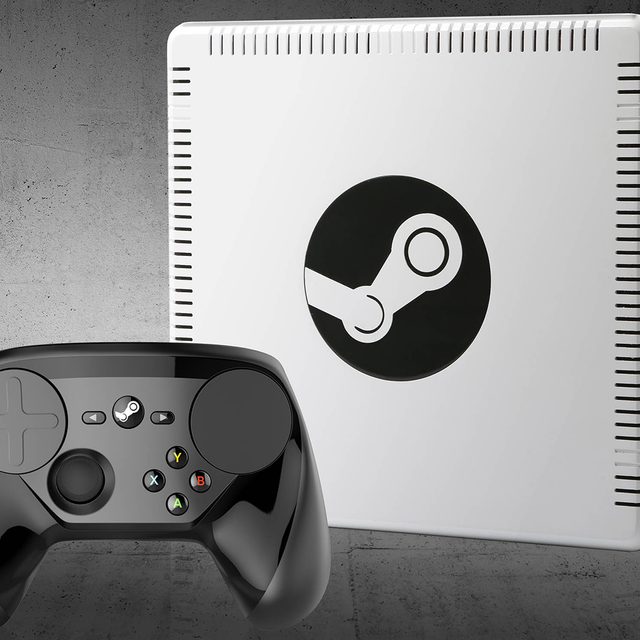
Zotac says DIYers will see the customization as a “blessing,” and that although console gamers might normally find it “daunting,” the NEN makes hardware upgrades second-nature. Using thumbscrews, NEN owners can remove the bottom of cover of their system and add up to 16GB of storage or add a new disk to the M.2 SATA SSD slot. That’s much easier than replacing RAM on a self-built desktop PC, and possibly just as accessible as replacing the hard drive on a PS4.
Steam Machines need a clear vision to succeed, but Valve’s early moves have muddied the waters.
This had me second-thinking some of my earlier critiques. Yes, for the console gamer who owns their machine exclusively for the latest Call of Duty or Assassin’s Creed every year, Steam Machines aren’t worth the time or money. For the console player who wants a little more versatility without going full DIY, the Steam Machine could make for a smooth transition point.
But I’m still not convinced. The same gamer could instead buy a pre-built CyberPower or Alienware desktop. It too can work on the couch with a long HDMI cord or streaming solution, like Valve’s own Steam Link. And unlike a Steam Machine, it’s a fully operational Windows PC in addition to a gaming rig. Zotac’s effort is admirable, but ultimately can’t make up for core problems in the Steam Machine concept.
A stepping stone in migrating to the Steam ecosystem
Valve obviously hopes it can piggyback off the success of Steam, by far the most popular gaming platform on the PC, but gamers seem unwilling to transition from it to the more limited environment of SteamOS. The platform needs a clear vision if it’s to succeed, but Valve’s early moves have only muddied the waters.
Even on a single device, like Zotac’s NEN or Falcon Northwest’s now-defunct Tiki Steam Machine, there’s no telling what settings you’ll be able to run The Witcher 3 on unless you look it up on a third-party service such as System Requirements Lab’s Can You Run It.
The Steam Machine still has a long ways to go. It may find its niche, but even so, its audience — much like the OUYA before it — likely won’t be sizable enough to sustain the support of an entire platform.