If you’ve ever had a company or friend offer to pay you with Bitcoins or another type of digital money, you’ve encountered cryptocurrency, also called crypto-money or cryptoassets.
Cryptocurrency is a digital currency that is created through the use of encryption software. This approach is a solution to security and control issues that prevented a purely digital currency from being successfully developed in the past. If you hear someone talking about one of these currencies, it’s almost certainly in a cryptocurrency format. This type of digitally created and secured money is currently in a period of very cool experimentation, so let’s take a look at how it work, why it’s popular, and where cryptocurrency is heading in the future.
How does cryptocurrency work?

How does a currency exist in a totally digital format? What is it based on? While the process varies a little between different cryptocurrencies, they all follow the same general system.
First, cryptocurrency chooses a base unit and how much that particular unit is worth when compared to other currencies (often, the U.S. dollar is used as a baseline). Some cryptocurrencies are more imaginative than others at this point. They try to represent debt registries, contracts, or the act of currency exchange itself. It can get a little weird, but ultimately the unit in some way relates to the value of other currency, as is true of all currencies in the world.
Units of cryptocurrency are then created, typically when a transaction occurs. The units are carefully formed and preserved through algorithmic encryption, then linked together in vast chains of data, where the currency can be tracked and exchanged.
However, at this point, cryptocurrency is still too vulnerable and too easy to fake. The currency units need to be timestamped and processed to make them more concrete and harder to copy. A third party developer can do this, but most cryptocurrencies prefer to crowdsource the process to those with the right hardware and software to “mine” the currency.
Mining uses algorithms to go through each transaction, encrypt the cryptocurrency, and add it to a digital ledger, essentially verifying it and cementing its position online. This process may also be referred to as “consensus protocols” or “consensus platforms,” depending on the currency. This process is meant to make the currency impossible to duplicate, though whether it’s successful is up for some debate.
Some cryptocurrencies are highly centralized, with someone — usually the organization that created the process/software — making decisions about how much currency is created and how it is used. Other types are very decentralized, controlled only by how and where people are willing to use them.
How is cryptocurrency different from “normal” money?

These currencies are not created by a specific government or government-sanctioned organization. Traditional currencies are created by governments (or related organizations) for legitimacy, trade, competition, and many other reasons. Cryptocurrency tends to be created by private organizations instead, and its purposes tend to be less nation-oriented. A lot of cryptocurrency is created simply to make money. Some are created specifically to fight against traditional physical currencies.
National currencies are protected by banks and a variety of government controls that generally work to control inflation, prevent malicious practices, stamp out counterfeiting, adjust related interest rates, and many other important currency management decisions. Cryptocurrency doesn’t have this kind of support (not yet, anyway). It often depends entirely on miners and the encryption process for protection and control. This naturally comes with its own risks, and those risks can make people less willing to invest.
There’s no physical form to cryptocurrency. This is obvious, but think of the implications. While there are cards and similar vessels for digital wallets, there is no physical money to be stolen, transported, or lost down the couch cushions. There is also no physical way to track a cryptocurrency the way that other currencies can be tracked, and it tends to flow through less familiar international channels (as opposed to bank accounts).
Finally, cryptocurrency can be programmed. We already mentioned that some kinds of cryptocurrency are attempting to represent contracts or debt registries. That’s what people mean when they talk about cryptocurrency being programmable — it allows the currency to take on different roles. For instance, certain exchanges of currency can be programmed to happen automatically when conditions are met, without further user interaction.
Cryptocurrency and Bitcoin

This all sounds a lot like Bitcoin, right? You may even be wondering why we’re calling it “cryptocurrency” when it’s obvious we’re talking about Bitcoin.
It is true, Bitcoin was the first mainstream example of a cryptocurrency, and remains by far the most popular. Created in 2008 by Satoshi Nakamoto (a moniker used for anonymity), Bitcoin showed the world how a relatively stable cryptocurrency could be created. However, many others were quick to jump on board with their own encryption systems.
Today, there are more than a thousand different cryptocurrencies, typically named after the software used to create them. Some, like Bitcoin, are serious ventures into the world of finance, investment, and global currency. Others are more light-hearted or casual attempts. Notable example of non-Bitcoin options include Litecoin, Ripple, Dash, Nxt, Namecoin, Ethereum, BitShares, and yes, Dogecoin.
Is cryptocurrency the Future?
A lot of people think so! The idea of a digital currency that can be used around the world, via high-tech encryption and data mining, is very attractive. However, if cryptocurrency is going to be more than a fad, then it needs to overcome three important challenges.
Use and connotation. Because cryptocurrencies are so flexible, they can be used for…nefarious purposes. The best example of this is the Silk Road takedown involving a massive international drug ring based on Bitcoins. As long as cryptocurrencies are the favorite of black markets, gangs, and other criminal elements, they are going to have an image problem. Cryptocurrencies need to be used more frequently for legitimate business operations.
The pass-through problem. Pass-through refers to people switching to cryptocurrencies to change one currency into another, using the digital version to save money on exchange rates. The exchange rate game is a very common one, not only among investors but among many industries that use crypto money and want to change it into “real” dollars ASAP. This basically demotes cryptocurrency to a go-between. Financially speaking, people need to hold onto and invest these currencies long-term if they are going to stick around. This is a problem with currencies that aren’t technically backed by any government, and there’s no easy solution here.
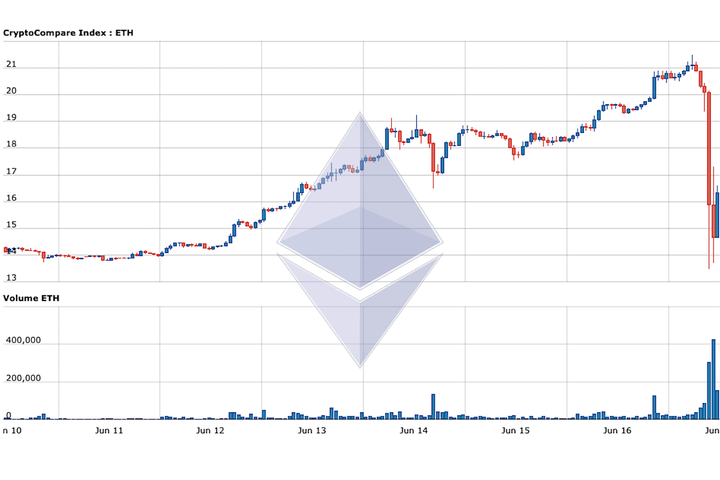
Continued Stability. Although secure in theory, a number of cryptocurrencies of suffered prominent breaches which compromised their stability. A currency called Ethereum, for instance, suffered a hack that compromised an estimated 50 million dollars of currency. This is where the all-digital nature of the currency, and lack of backing by a government, becomes an issue. Cryptocurrency will have to be trusted to see mainstream use, and that trust is not yet present.
Learning and Investing
There are many resources for learning more about cryptocurrencies and getting started mining, investing, etc. The problem is that most of these sources have a bias. They may have useful information, but they’re also generally trying to sell you on a particular currency or technique, which makes them difficult to trust.
We suggest checking out an overview like A Dummies Guide to Cryptocurrencies if you want to learn more details. Reddit also has a surprisingly good sub on cryptocurrency investment, although if you do want to invest, you should look to more than a forum discussion when making any important decisions.