
Unlike most of the PC gaming world, my ears didn’t perk up when Nvidia announced DLSS Multi-Frame Generation alongside its RTX 50-series GPUs. Although the cards themselves look destined for a slot or two among the best graphics cards, the new DLSS 4 and its Multi-Frame Generation feature that’s exclusive to Nvidia’s latest graphics cards didn’t stand out. To me, at least.
That’s because I’ve been using an app called Lossless Scaling for close to a year now, which spent most of the past 12 months laying the groundwork for multi-frame generation. I’ve written about Lossless Scaling too many times to count, but it’s high time to revisit the app once again. Not only is DLSS 4 on the way to show everyone what multi-frame generation is capable of, Lossless Scaling just received the biggest update it’s seen in months.
It’s really, really good
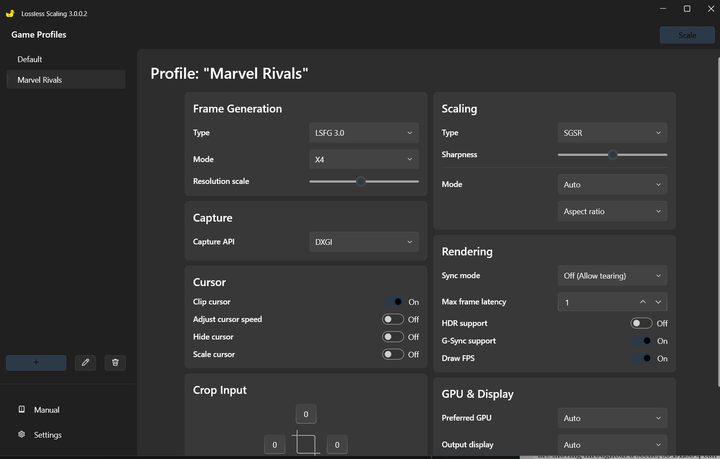
Let me catch you up to speed if you haven’t heard of Lossless Scaling. It’s an upscaling and frame generation utility that’s $7 on Steam. It works with any graphics card, and with any game, and that’s because the frame generation happens at the display step. Unlike DLSS or AMD’s FSR 3, it doesn’t mess with anything in the game engine. That means you can use it with online games and titles that have a frame rate cap, such as Elden Ring.
Lossless Scaling doesn’t tap into any AI hardware on your graphics card, but it’s a bit smarter than standard frame interpolation. It has three algorithms available, all of which have been developed using machine learning. And LSFG 3, the latest algorithm, was just released. It offers standard frame generation, as well as triple and quadruple settings, just like DLSS 4. You can even set your own custom frame generation factor, up to 20X. I wouldn’t recommend that, though.
Assuming you have a decent base frame rate, the 4X frame generation works a treat. With the RTX 4080, for example, I was getting around 50 frames per second (fps) at 4K with the highest graphics preset in Marvel Rivals. Tick on Lossless Scaling, and my frame rate jumped to between 170 fps and 180 fps. That’s without any upscaling or other tricks. And despite how competitive Marvel Rivals is, I didn’t feel like I was dragging my mouse through mud.
The latest LSFG 3 algorithm works really well with multi-frame generation, as well. Previously, I tried out the feature in Elden Ring and found too many visual artifacts to stomach. With the new model, any visual artifacts that were present weren’t enough to distract me. Even my cursor was fine, which is an area where I would expect to see major issues with a tool like Lossless Scaling.
In addition, Lossless Scaling has a feature that even pushes beyond what Nvidia offers with DLSS. Below the frame generation section, you’ll find a resolution slider. This reduces the resolution of frames that are passed through the frame generation algorithm in order to reduce latency and improve overall performance. You still see everything at your monitor’s native resolution, but the scale factor helps tremendously in improving performance.
Some downsides
I just gushed about Lossless Scaling, and for good reason. It’s an app I unironically use in nearly every PC game I play. I’ve gotten so much use out of it that I rarely even think about the price tag — Steam has tracked hundreds of hours of usage time in the app, which is pretty good for only $7. It’s not perfect, though, and I don’t think it’s the same as DLSS 4. It’s just a good compromise.
First, your base frame rate. Like any frame generation feature, Lossless Scaling uses frame interpolation. It renders two frames, compares them, and then the algorithm generates a frame to go in between based on the difference between the two rendered ones. This creates additional latency, as your GPU needs to always have a frame buffered before displaying anything to you. And, the latency is compounded if you have a low base frame rate.
The lower your frame rate, the longer it takes for each frame to be rendered, so there’s far more latency when adding frame generation into the mix. For Lossless Scaling, I recommend at least an average frame rate of 40 fps before engaging frame generation, and ideally close to 60 fps. That way, you’ll still get good responsiveness and a smooth visual experience. In fairness to Lossless Scaling, this is an issue with all frame generation features, and likely something DLSS 4 will struggle with, too.
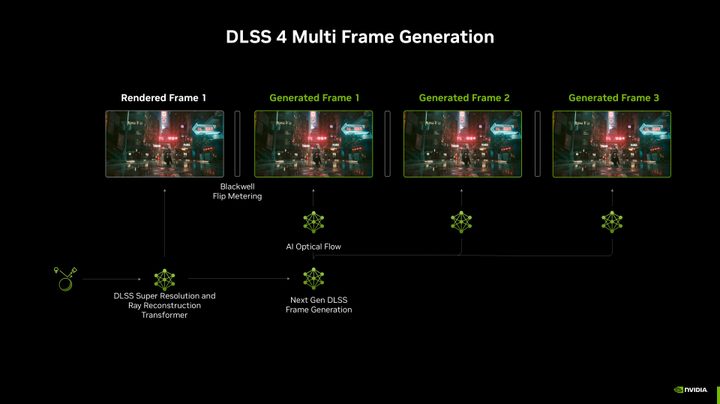
Compared to DLSS 4, the main issue is quality. I haven’t extensively tested DLSS 4 yet. However, it runs within the rendering pipeline, and it has access to data from the game engine like motion vectors. There are a couple of reasons why that gives DLSS 4 an advantage. First, HUD elements. Static elements on your screen like your HUD or crosshair actually aren’t part of the main rendering process — they’re applied after the fact, and the 3D world is still rendered underneath.
DLSS 4 is able to essentially mask out those elements so there aren’t visual artifacts on them. Lossless Scaling, being at the display stage, sees those elements and isn’t able to mask them out.
In addition, Lossless Scaling doesn’t always get the frame interpolation perfect. Motion vectors from the game engine describe how objects are moving throughout a scene, so DLSS 4 can better perform the frame interpolation it needs to. That sometimes means you’ll see visual artifacts with Lossless Scaling that you otherwise wouldn’t see with DLSS 4.
Those are fairly minor complaints in the grand scheme. Nvidia’s upcoming RTX 50-series GPUs may be impressive — I’ll have to wait to test them — but tools like Lossless Scaling are breaking the price dynamic. If you otherwise have a GPU you’re happy with the performance with, give Lossless Scaling a shot. After all, a $7 app is a heck of a lot better than spending $2,000 on a new graphics card.


