1. Home
  2. Computing
  3. Emerging Tech
  4. News

Author Ray Kurzweil develops new chatbot with Google based on one of his characters

Add as a preferred source on Google

Voice assistants are here to stay. Over the years, they’ve become ever more efficient at divulging our intentions and interpreting our internet data profiles to better understand what we want. It also helps that they (usually) know the difference between similar-sounding words like dad and bad. Ray Kurzweil, an author whose subjects include health, artificial intelligence, and transhumanism among others, is working with Google (which has been among the most active proponents in this field), to create chatbots. These bots are said to be more advanced than the norm, enabling more “interesting conversations.”

It remains to be seen how these bots will speak and what function they will fulfill. But Kurzweil specified that at least one of these chatbots would be based off of Danielle, a character from one of his books. Supposedly, these bots “come to life” by being fed humongous volumes of text. Blogs could be one example. The result isn’t anywhere close to human intelligence yet, and while we could have interesting conversations with AI systems, Kurzweil says that we will have to wait until 2029 before we can have meaningful ones. The bots should be able to pass the Turing test by then.

Recommended Videos

Perhaps even more tantalizing is the fact that Danielle was created by feeding the bot all of her dialogue from Kurzweil’s book. This particular AI should be released later this year, with more to follow. Kurzweil also says that the same thing could be applicable to something like a person’s blog. Though there’s no word on a release date, it seems to mean that we will eventually be able to profile ourselves as chatbots. But though our typographical clone war may be coming, it’s probably in a galaxy far, far away.

Let’s imagine the possibilities here for a moment. You could start a conversation with your teenage self to come to terms with what a brat you were, or you could profile a friend and throw the bot into the open, hoping nobody misuses it. There’s a lot of risks involved with being able to somehow profile ourselves via the texts that we write, and it seems fitting the giants sat down to hold an AI ethics meeting at the beginning of this year.

Dan Isacsson
Being a gamer since the age of three, Dan took an interest in mobile gaming back in 2009. Since then he's been digging ever…
Yet another research breaks the hype bubble for AI browsers serving serious security flaws
Four popular AI browsers can be exploited to steal your data from other open tabs.
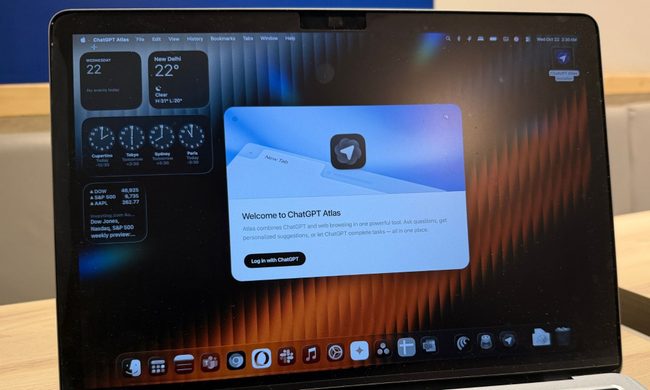
ChatGPT Atlas browser on a MacBook.

AI browsers are being sold as the next big thing. They can summarize pages, book trips, and even make purchases for you. But a new study from the University of Washington found that four of the seven most popular ones come with a security risk serious enough to let malicious websites steal data from other sites you have open. The more capable the browser, the bigger the risk turns out to be.

The 30-year security rule that AI browsers are breaking

Read more
Valve just gave away the blueprint for its coolest Steam Machine mod
Valve giving away the recipe instead of the dish, and honestly, we're okay with it.
Valve Steam Machine Featured Design Coverplate

While Valve’s Steam Machine launched at a higher-than-expected price due to the AI-driven chip shortage, it seems that the company is not sitting on its haunches and is still working hard to make the product more enticing to users. 

One of the coolest features of the Steam Machine is the user-customizable front faceplate, and Valve has just made it better. The company open-sourced its "Inkterface" project, which allows users to build their own e-ink faceplate for the Steam Machine.

Read more
Brave’s new Container feature is a lifesaver for anyone juggling multiple accounts
With this feature, you won't need to open three different browsers
Brave browser 3D logo

Brave has added Containers to its desktop browser, giving users a built-in way to keep different accounts, sessions, and browsing activity separate. The feature is available in Brave 1.92 for Windows, macOS, and Linux, and is rolling out in phases over the next few days.

Containers have been a highly requested feature, especially for users who regularly switch between work, personal, developer, or creator accounts. Once enabled, they let users open tabs in separate spaces where cookies and site storage are not shared outside that container.

Read more