  1. Home
  2. Computing
  3. News

Google reveals where you should focus to supercharge Nano Banana pics

The Gemini app’s viral image model just got official tips for more consistent, precise, and imaginative results.

Add as a preferred source on Google
Google Gemini Nano Banana generated images
Google

What’s happened? Google has published four official tips for using Gemini Nano Banana, the image model that has already powered over 5 billion creations since its debut in late August. These guidelines are meant to help users push creativity further while keeping control of their edits.

  • Now the model can keep the same models and scenes, you can change the consistency, shape or angle of models, while retaining their likeness.
  • It can now control only specific parts of the image, without changing other areas.
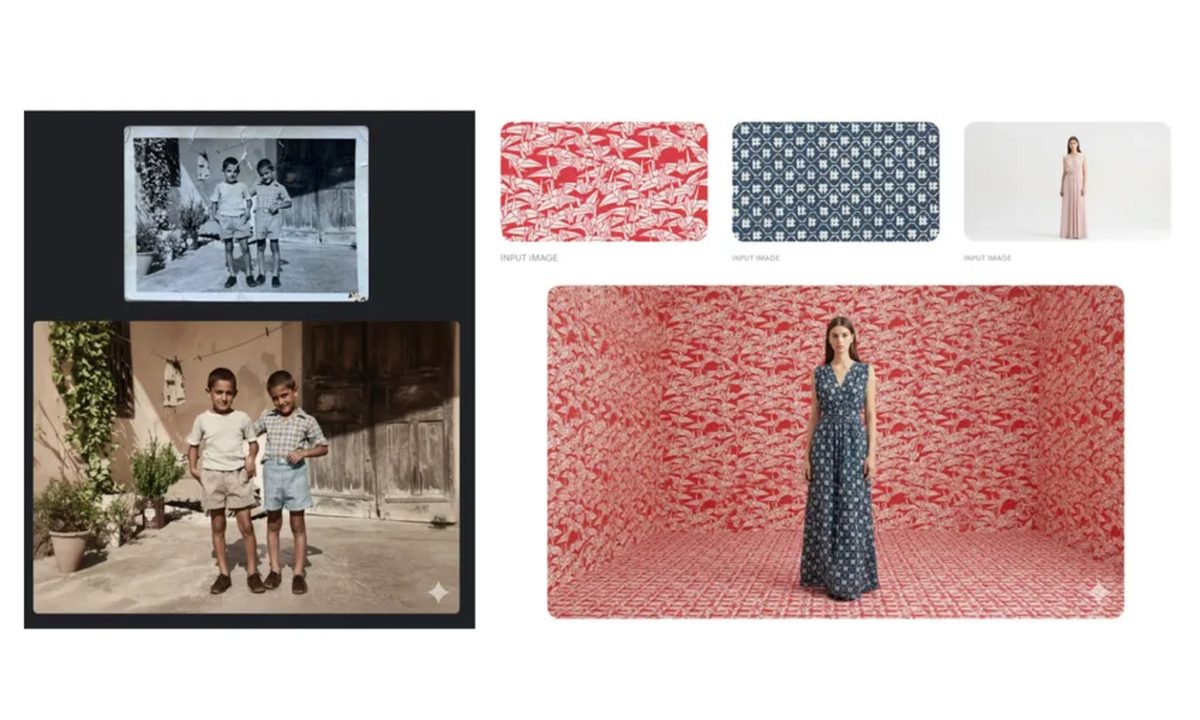
  • You can use natural language to do things like colorize photos as Nano Banana understands the context better. Also, you can combine three images into one.
  • You can now build your own app in Canvas or AI Studio, using the tool’s powerful capabilities.

This is important because: These tips clarify how Nano Banana can be used not just casually but purposefully. The model bridges advanced editing tools and intuitive AI assistance for creators at all levels.

  • Pixel-perfect editing enables you to change a single detail – mimicking real-life photo editing.
  • Consistency tools help maintain likeness across shots, rather than the whole image changing each time you re-edit.
  • Gemini Canvas, the creative workspace built into the app, makes it easy to experiment with edits, templates, and app ideas in one place.
Recommended Videos

Why should I care? If you are into AI art, photo editing, app design, or creative expression, Nano Banana’s strengths help streamline workflows and reduce reliance on multiple tools.

  • You can use simple natural language prompts instead of complicated syntax or tricks.
  • The ability to merge multiple images or sketches opens up remixing and new visual directions.
  • Its contextual memory means you can refine work step by step without starting over.
  • Restoring old family photos or colorizing history becomes easier with world knowledge baked in.

Okay, so what’s next? Google already hints at more updates and expanded creative features. As Nano Banana sees broader use, expect it to become even more central to Google’s AI ecosystem.

  • Look for new templates, context-aware generation, and multimodal expansion over time.
  • Watch for community apps that remix or automate image transformations at scale.
  • Nano Banana is becoming a core tool in Gemini’s future, not just a novelty.
Paulo Vargas
Paulo Vargas is an English major turned reporter turned technical writer, with a career that has always circled back to…
Google’s new desktop mode makes one thing clear: Samsung DeX was onto something
Android 16 finally brings a real desktop mode to Pixel phones, but Google’s long-awaited move mostly proves Samsung spent years getting the hard parts right
File, Webpage, Person

I’ve been waiting for Android to take desktop mode seriously for years. Back in 2019, I bought a OnePlus 7 Pro and wasted an embarrassing amount of time trying to brute-force its half-baked desktop mode into something useful.

The idea made perfect sense to me even then. Phones were already absurdly powerful, and the thought of carrying one real computer in my pocket felt less like science fiction and more like delayed common sense.

Read more
Anthropic launches Claude design to simplify visual creation with AI
Finally, AI that designs your slides so you don’t have to
Claude

Anthropic has introduced a new AI-powered design tool called Claude Design, aimed at helping users create visual content such as prototypes, presentations, and marketing assets through simple conversational inputs. The product, developed under Anthropic Labs, is currently available in research preview for paid Claude subscribers and is being rolled out gradually.

Claude Design is powered by the company’s latest vision model, Claude Opus 4.7, and is positioned as a tool that bridges the gap between technical design expertise and everyday creative needs.

Read more
AI triggered a RAMmageddon so bad that Apple looks like the sensible choice
Laptop prices got so stupid in 2026, that Apple turned into the value king.
Student using MacBook Neo in classroom.

I really didn't want to believe it, but here we are. Apple is now looking like the sensible laptop brand. Not the cool underdog. Not the affordable alternative. Apple, in 2026. The reason is not that the company suddenly became generous, but rather the rest of the competition has suddenly become so deranged that a MacBook lineup starting at $599 feels weirdly grounded.

Apple's MacBook Neo starts at $599, while Microsoft's own 13-inch Surface Laptop now starts at $1,199 after this month's price hikes. This isn't a small gap that you can ignore. Meanwhile, Apple's MacBook Air with M5 starts at $1,099 with 16GB of memory and 512GB of storage, which looks like one of the few premium laptops still priced by human beings.

Read more