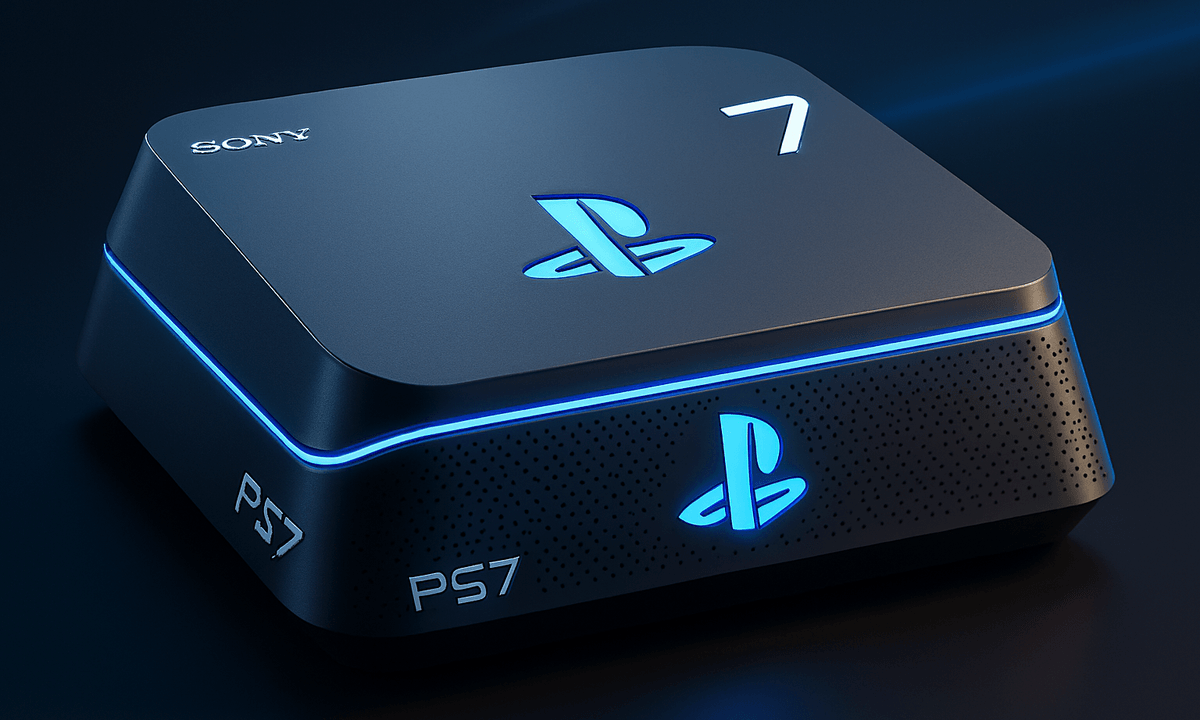
I don’t know about you all, but I am having a super fun time with the various AI programs out there. I think it’s fun to ask questions about things I am curious about, and I truly enjoy comparing the various answers I get from the different chatbots out there.
This week, I wanted to really put Grok to the test, and ask it what it thinks the future PlayStation 7 hardware specifications could be based on the hardware specifications of the PlayStation 4, 5 and the rumored PlayStation 6 hardware specs.
Here’s what it told me. Now, I’ve got some reservations on this one – while the timeframe seems sensible, the concept of a console in 10 years somehow seems impossible – although the idea of full VR immersion seems to fit given the rate of headset tech.
And, come on, are we really going to have a disc drive in a decade? Can’t see it. Then again, this is only a bit of fun, and it’s interesting to see the extrapolations Grok has made based on the way things have gone in the past.
But what do you think – do you agree?
Estimated Release Timeline for PS7
Based on historical patterns, PlayStation console generations typically span 6-8 years. The PS4 launched in 2013, followed by the PS5 in 2020 (7-year gap). Rumors consistently point to the PS6 arriving in late 2027 or 2028, aligning with Sony’s cycle and recent leaks from sources like AMD documents and industry analysts. This suggests the PS7 could launch around 2034-2036, giving the PS6 a similar 7-8 year lifespan.
Sony’s focus on extending current-gen hardware (e.g., via mid-cycle upgrades like the PS5 Pro in 2024) supports this, as it maximizes investment in existing tech before jumping to the next generation. By then, advancements in AI, quantum computing influences, and energy-efficient hardware could drive major leaps, as outlined in AMD’s efficiency roadmaps targeting 20x rack-scale improvements by 2030.
Hardware Trends and Comparisons
PlayStation hardware has evolved with AMD partnerships, emphasizing custom APUs (combined CPU/GPU) for balanced performance, backward compatibility, and developer-friendly tools. Key trends:
- Performance Multipliers: GPU power roughly 5-6x from PS4 to PS5; rumors suggest 2-3x for PS6 over PS5. PS7 could see another 3-5x jump, focusing on AI-accelerated rendering.
- Memory & Storage: RAM doubles each generation; storage shifts from HDD to ultra-fast SSDs with compression for near-instant loads.
- Features: From 1080p focus (PS4) to 4K/ray tracing (PS5) to 8K/AI upscaling (PS6 rumors). PS7 may prioritize immersive tech like advanced VR/AR or dynamic world generation.
Here’s a comparative table of key specs:
| Component | PS4 (2013) | PS5 (2020) | Rumored PS6 (2027-2028) | Estimated PS7 (2034-2036) |
|---|---|---|---|---|
| CPU | 8-core AMD Jaguar @ 1.6 GHz | 8-core AMD Zen 2 @ up to 3.5 GHz (variable) | Custom AMD Zen 6, 8 cores (with stacked cache) | Custom AMD Zen 7/8 equivalent, 12-16 cores @ 5-6 GHz (variable, multi-threaded AI cores for dynamic simulations) |
| GPU | AMD Radeon, 1.84 TFLOPS, 1152 shaders @ 800 MHz | AMD RDNA 2, 10.28 TFLOPS, 2304 shaders @ up to 2.23 GHz | Next-gen AMD RDNA 5, 20-30 TFLOPS, 40-48 compute units (enhanced ray tracing & AI upscaling for 4K/120fps, 8K/60fps) | Advanced AMD RDNA 7/8 or hybrid, 50-100 TFLOPS, full path tracing, AI-driven procedural graphics (8K/120fps, 16K/60fps possible with upscaling) |
| RAM | 8 GB GDDR5 @ 176 GB/s | 16 GB GDDR6 @ 448 GB/s | 32 GB GDDR7 @ 800+ GB/s (estimated based on trends) | 64 GB GDDR8 or next-gen (e.g., HBM3), 1.5-2 TB/s bandwidth for massive open worlds and multitasking |
| Storage | 500 GB HDD (upgradable) | 825 GB custom SSD @ 5.5 GB/s raw (expandable) | 1-2 TB ultra-fast SSD @ 10-14 GB/s (with advanced compression) | 4-8 TB next-gen SSD (PCIe 7.0+ equiv.), 20+ GB/s, hybrid local/cloud for seamless infinite storage |
| Optical Drive | Blu-ray 6x | UHD Blu-ray (base model) | UHD Blu-ray or digital-only variant | Likely digital-only base, optional next-gen optical (e.g., holographic) for premium models |
| Key Features | 1080p output, basic social integration | 4K/120fps, ray tracing, 3D audio, haptic feedback | 8K support, advanced VR/AR, modular design?, backward compatibility with PS4/PS5 | Hyper-realistic VR/AR immersion, AI-generated dynamic content, seamless cloud-hybrid play, energy-efficient (sub-200W), full backward compatibility |
| Power Draw | ~150W | ~200W | ~160-250W (efficient focus) | ~200-300W (advanced cooling, sustainable materials) |
| Price (Launch) | $399 | $499 (base) | $500-600 | $600-700 (inflation-adjusted, potential tiered models) |
Detailed Estimates for PS7 Specs
These projections extrapolate from trends, AMD’s roadmap (e.g., future Zen architectures beyond 2025 and RDNA evolutions), and industry shifts toward AI, sustainability, and immersion. By 2034, tech like quantum-inspired processors and pervasive AI could redefine consoles.
- CPU Reasoning: PS4’s Jaguar was budget x86; PS5’s Zen 2 brought multi-threading efficiency. PS6 rumors favor Zen 6 for power balance. For PS7, expect a jump to Zen 8-equivalent with more cores for AI tasks (e.g., NPC behavior, physics). Variable clocks will optimize for 8K+ rendering without overheating.
- GPU Reasoning: TFLOPS have scaled dramatically (1.84 → 10.28 → 20-30 rumored). PS7 could hit 50-100 TFLOPS via RDNA 8 or custom hybrid, enabling full-scene path tracing (beyond ray tracing) for photorealism. AI will handle upscaling (e.g., from 4K native to 16K) and frame generation for 120+ fps stability.
- RAM Reasoning: Doubling each gen (8GB → 16GB → 32GB) supports larger worlds. PS7’s 64GB GDDR8 would allow seamless multitasking, like running VR while streaming, with bandwidth for AI data processing.
- Storage Reasoning: PS5’s SSD revolutionized loads; PS6 may double speed/capacity. PS7 could use emerging tech like 3D NAND or optical storage hybrids, with 20+ GB/s for “instant” worlds. Cloud integration might make physical limits irrelevant.
- Other Features:
- Display & Immersion: Native 8K/120fps or 16K/60fps with AI. Deeper haptic/3D audio evolution, plus brain-computer interfaces or holographic displays for AR/VR.
- Backward Compatibility: Full support for PS4-PS6 libraries, enhanced via AI remastering (e.g., auto-upscaling old games).
- Design & Sustainability: Slimmer, modular (e.g., upgradable GPU), with eco-friendly materials and low power draw to meet regulations.
- Controller: DualSense evolution with biofeedback (e.g., heart rate sensors) and adaptive AI for personalized haptics.
- Potential Innovations: Hybrid console-handheld mode, AI companions for gameplay, or blockchain for digital ownership. Emphasis on accessibility (e.g., adaptive controls) and cross-play.
These estimates assume continued AMD collaboration and no major disruptions (e.g., supply chains). Sony may prioritize affordability ($600-700) to compete with Xbox/next-gen Nintendo, but premium features could push variants higher. Ultimately, PS7 will likely redefine “next-gen” by blending hardware with AI-driven experiences, making games more personalized and immersive.
So, there you have it (the human is back, by the way). It’s pretty detailed from a simple prompt, but I think it’s pretty clear – there are some pretty unlikely scenarios here (although I would still totally buy that machine…)