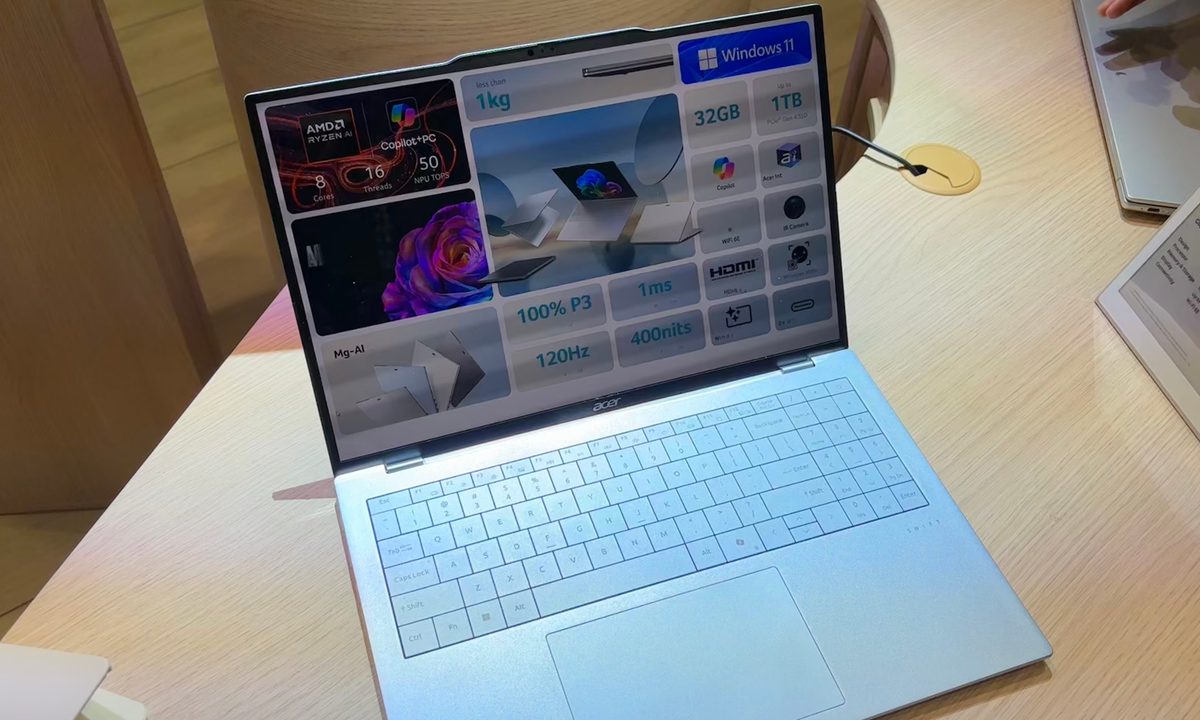

With IFA 2025 in full swing, it only makes sense that we see an influx of brand new laptops being announced. Leading the charge right now is Acer with its range of new AI-focused products and at the forefront is its new flagship model, the Acer Swift Air 16.
I managed to snag some hands-on time with Acer’s latest laptop, which advertises itself as ultra lightweight, and not only does it live up to this promise, but surpasses it ten-fold, being one of the lightest 16-inch devices I’ve ever used.
When picking it up, I genuinely couldn’t believe there were components inside, it felt like an empty case. Weighing in at 999 grams if you opt for an IPS screen or 1099g if you go for an AMOLED panel (or 2.2lbs), this is a device you wont feel in your backpack.
Somehow packed in this device are some pretty meaty specifications including up to an AMD Ryzen AI 7 350 processor. This is a fantastic CPU for productivity, enabling enhanced AI responsiveness.
Alongside this CPU are AMD graphics and up to 32GB of RAM making for a powerhouse of a machine no matter what you plan to use the device for.
Redefining lightweight
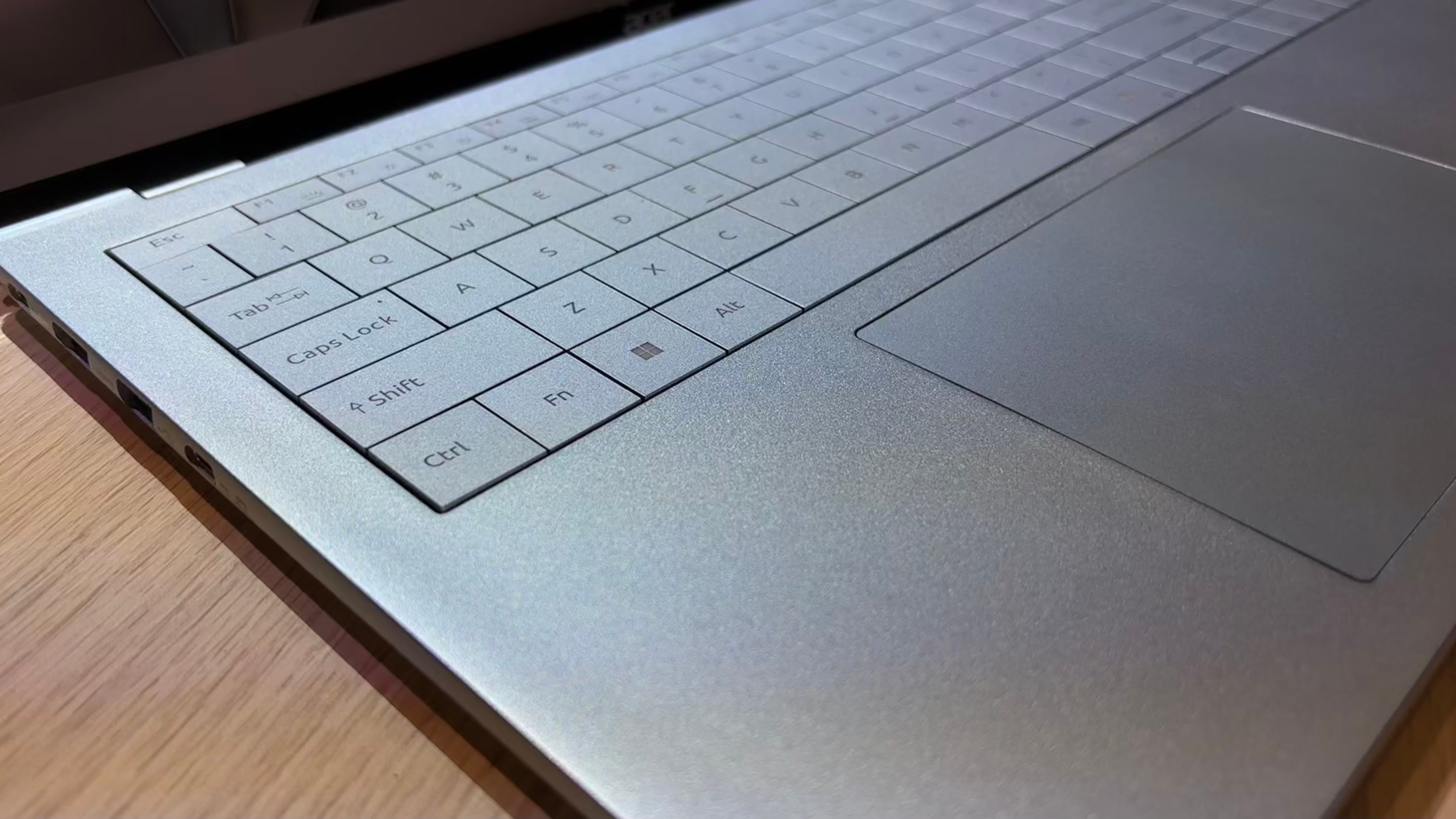
In terms of design, the first thing I noticed about the Acer Swift Air 16 – aside from the weight of course – was the keyboard.
The flat keys have no gaps between them, which is certainly a… style choice for sure. This is something you’ll either love or hate and as someone who has tested countless laptops, I decided I hate it.
It doesn’t feel satisfying to type on, and makes it easy to fat finger keys and make typos.
Aside from the keyboard, the design of this laptop is pretty sleek. You get a smooth silver casing, and a thin bezel around the screen – disturbed only by the webcam at the top of the device which protrudes slightly.
The 16-inch screen is gorgeous, you get the choice between AMOLED (which makes for a heavier device) or IPS which is what I had hands-on with. Despite not being OLED, the IPS panel still looked great. You get a 2880 x 1800 resolution panel as well as 120Hz refresh rate.
I only had a short hands-on session, but I wanted to see what this laptop had to offer in terms of power. I decided to try to generate an image on Microsoft Copilot to see how it would cope with AI tasks.
When asking for an image to be created, it took a while despite the powerful AI processor inside, which was a tad disappointing.
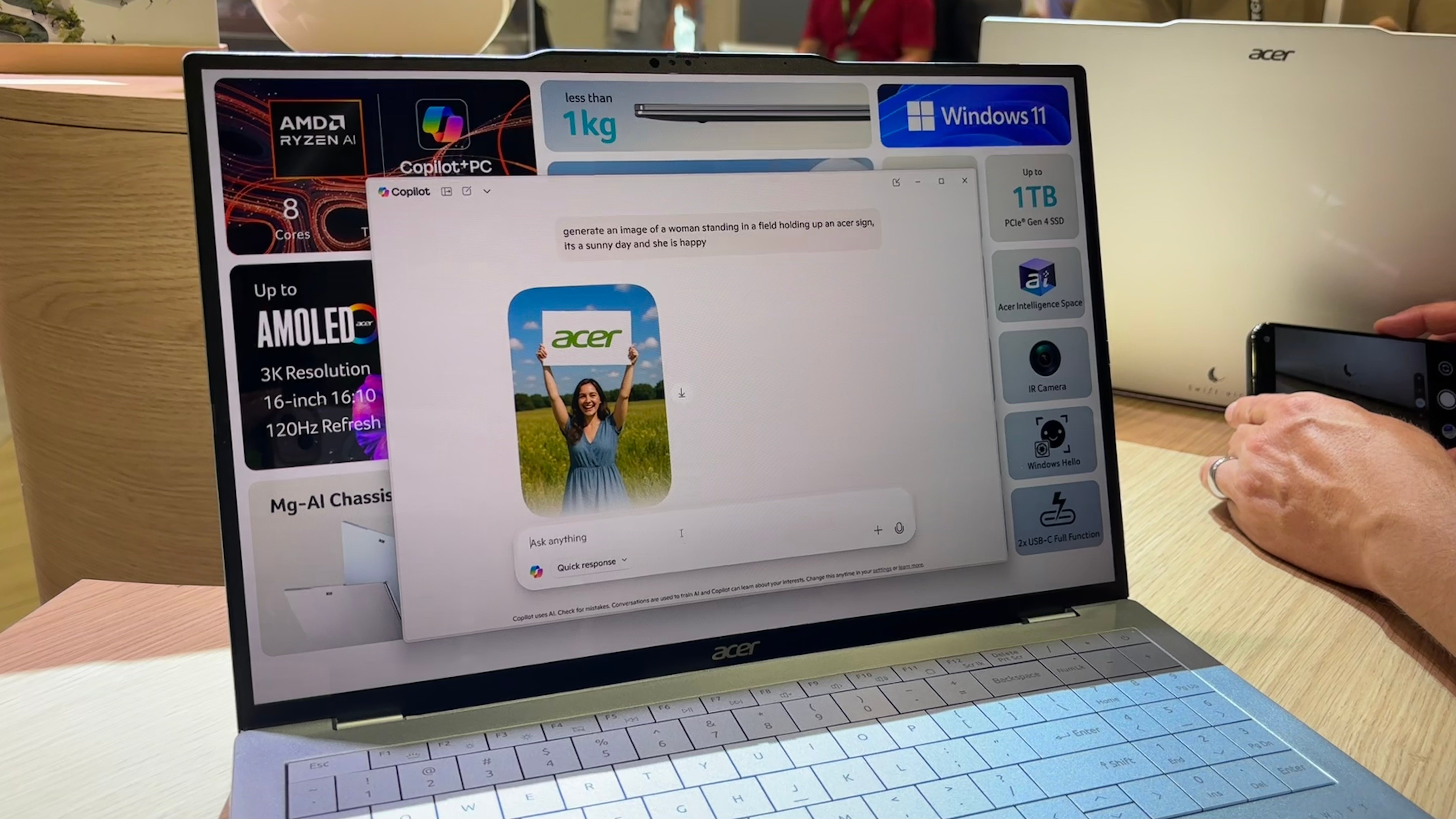
While using the AI features or just general browsing on this laptop, it stayed very cool and very quiet the whole time – making it perfect for using on the go and also being a nod towards the efficiency.
Unfortunately as this was only a hands on demo, I wasn’t able to put the devices through its paces with real world testing or benchmarking. This means I don’t have a true indication of its power levels or battery life but I’m looking forward to testing the device thoroughly for a full review in the future.
Early verdict
Overall, this laptop blew me away. When first picking it up, I genuinely thought that the device was a dummy model put out for the show rather than an actual functioning laptop.
While the Asus Zenbook 14 also weighs less than a kilo, this is the first 16 inch laptop I’ve used which is this light. If you’re looking for a laptop to take on the go with you, this is the one, you won’t even notice its in your bag.
The specifications are quite powerful, but with my limited demo session I wasn’t able to see the true capabilities of this CPU. From what I’ve seen so far, it seems good, but is nothing spectacular.