
Intel will soon release a whole new lineup of hybrid mobility CPUs, dubbed Intel Alder Lake-P, and several of these processors have just been leaked through Geekbench tests.
The processors performed well in benchmarks, beating the previous generation of Intel CPUs and current-gen AMD offerings by more than 30%.

Intel is rumored to release its new lineup at CES 2022 in January. We can expect to see the introduction of the H-series laptops for gamers, as well as the P-series, which seems to be well-rounded in terms of performance versus energy efficiency. The new Intel Alder Lake laptop line will include six segments, although some of them remain a mystery, namely the M-series and S-series processors. We’re not sure when these CPUs are set to release.
The M-series, aimed at tablets and ultrathin laptops, is going to feature extreme power-saving capabilities and a low-power requirement. The S-series seems to be aimed at gaming and other demanding activities, and it reportedly uses the same silicon as the desktop versions of Intel CPUs.
Several CPU configurations have been found through Geekbench and then shared by Videocardz. The midrange lineup includes the 8-core, 12-thread Core i5-12450H as well as the 12-core, 16-thread i5-12500H. We can also expect to see Core i7 processors, such as the Intel Core i7-12650H, Core i7-12700H, and Core i7-12800H. Lastly, Intel also has a high-end processor in the works, the Core i9-12900HK with 14 cores and 20 threads. This would be the mobile counterpart to the already released desktop Core i9-12900K.
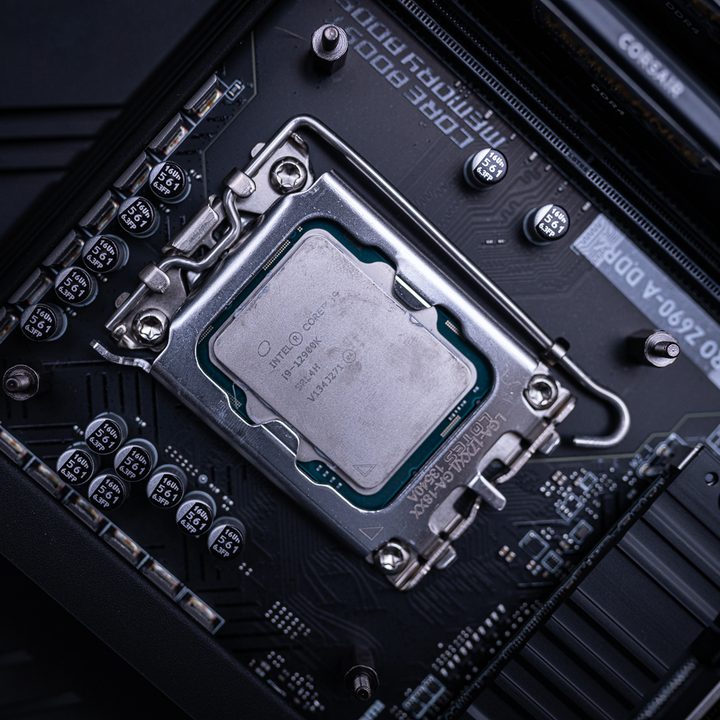
Some of these processors have already been benchmarked and performed excellently. The Core i7-12700H is likely to be found in many of the best gaming laptops, and previous benchmarks proved that it could be almost 50% faster than Apple’s M1 Max chip. It also outperformed its AMD rival, the Ryzen 7 5700H.
The midrange lineup is looking just as promising as the high-end alternatives. The Intel Core i5-12500H CPU outperformed its predecessor, the Core i5-11500H, by over 30% in multi-core testing. It also beat AMD’s current Ryzen 5 5600H by similar numbers.
Aside from the gaming-oriented H-series, we can also expect to see at least three P-series CPUs during CES 2022: The Core i5-1240P with 12 cores and 16 threads, as well as the i7-1260P and i7-1280P, both with 14 cores and 20 threads. According to Videocardz, these units are likely to come without discrete graphics cards and may rely on integrated Intel Xe-LP graphics.
Although these are still early benchmarks, every test with the new Alder Lake processors has gone well for the new line of mobility CPUs. They seem to outperform the previous generation of Intel processors quite consistently. Comparing them to AMD is tricky, as AMD still doesn’t have a comparable line of CPUs. Things may change when AMD’s Rembrandt chips are released next year.


