
Nvidia has been dominating the world of PC graphics for decades. The company hasn’t slowed down the pace either. Year after year, it continues to launch graphics cards for both desktop and laptop that undercut the competition and scoop up the lion’s share of GPU purchases.
But in 2022, among a frustrating GPU shortage and a shake-up in world of CPUs, there’s never been a better opportunity for a healthy dose of competition. And at CES 2022, both Intel and AMD seemed ready to pounce.
Intel and AMD arm up
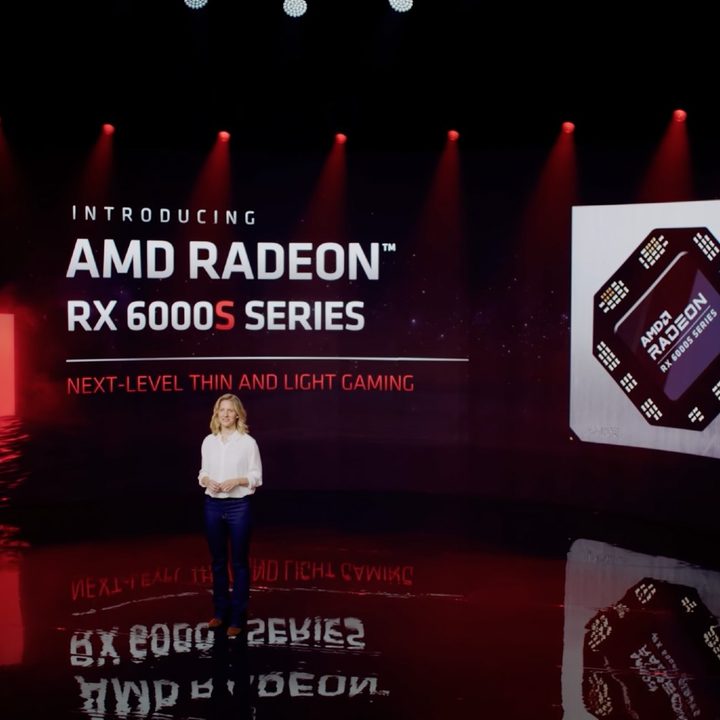
Both Intel and AMD came to CES this year with a sense of determination around graphics.
First, AMD.
It’s a company that already has a substantial investment in PC graphics. Its Radeon platform has been the only legitimate challenger to Nvidia for years, but it’s only the past couple of years that it’s been a worthy rival. The RDNA architecture introduced in 2019 brought AMD’s graphics back into the fold, and the Radeon RX 6000 GPUs followed that up with the kind of performance that could finally compete with the best of Nvidia.
And at CES 2022, among AMD’s press conference littered with announcements, the company extended its graphics lineup with eight new mobile GPUs. Yes, you read that right. Eight new GPUs! They stack up neatly against Nvidia’s offerings, even introducing a new line for thin-and-light gaming laptops, which was previously a hole in its lineup. Even its vastly improved integrated graphics, courtesy of the new Ryzen 6000 chips, are taking shots at Nvidia’s entry-level laptop cards, such as the MX550.
Intel, meanwhile, has been building up to the launch of its Arc Graphics for more than a year now. While the company didn’t formally announce its first line of graphics cards, Intel did say that Arc Graphics would appear in over 50 PC designs, including the Alienware x17 and an unspecified Lenovo Yoga 2-in-1.

That sounds like a great start for Intel Arc. Clearly, the company is using its strength in processors That’s something AMD has struggled to do, with only a handful of systems that use all AMD parts.
But with Intel and AMD’s efforts combined, laptop and PC manufacturers have plenty of options to get away from the Nvidia monopoly on PC graphics. But there’s an uphill battle ahead.
The problem
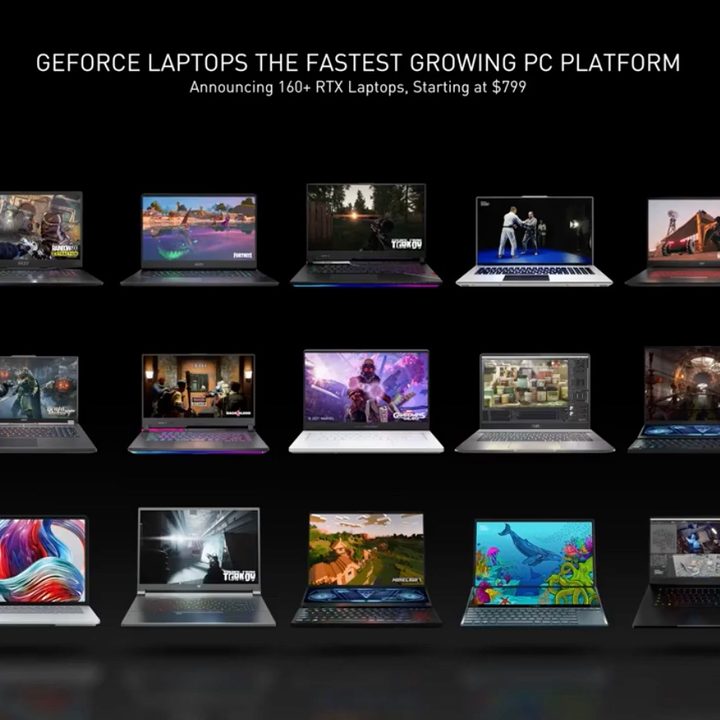
Nvidia has something more than just powerful graphics cards. It has a platform. On the application side of things, there’s the immense strength of the CUDA core. No matter how you slice it, Nvidia’s graphics cards have a significant upper hand in creative application performance over AMD. Right now, if you’re working in an application like Blender, Nvidia’s GPUs will give you better performance.
On the gaming side, things are more balanced. Except when it comes to Nvidia RTX. Between DLSS and ray tracing, Nvidia has its suite of must-have software features that often gives it an edge over both Intel and AMD. Nvidia has been building support behind these offerings for years, and at this point, that multiyear advantage over Intel and AMD is going to be very hard to overcome.
The argument for buying AMD over Nvidia is hard to make in terms of value.DLSS started out very shaky, but in the past year or so, it’s become a crucial element of modern PC gaming. That’s especially true if you don’t have the absolute top-of-the-line graphics card.
In many cases, for example, AMD’s graphics cards line are every bit as powerful as Nvidia’s, but don’t have the ray tracing and upscaling features that Nvidia’s have. When they are priced so close, especially in this market, the argument for buying AMD over Nvidia is hard to make in terms of value.
Intel has a better chance at challenging Nvidia in this department with its background in software and tight engineering partnerships with key applications. XeSS is promising as an alternative to DLSS, too — but adoption of a new technology isn’t going to happen overnight.


