
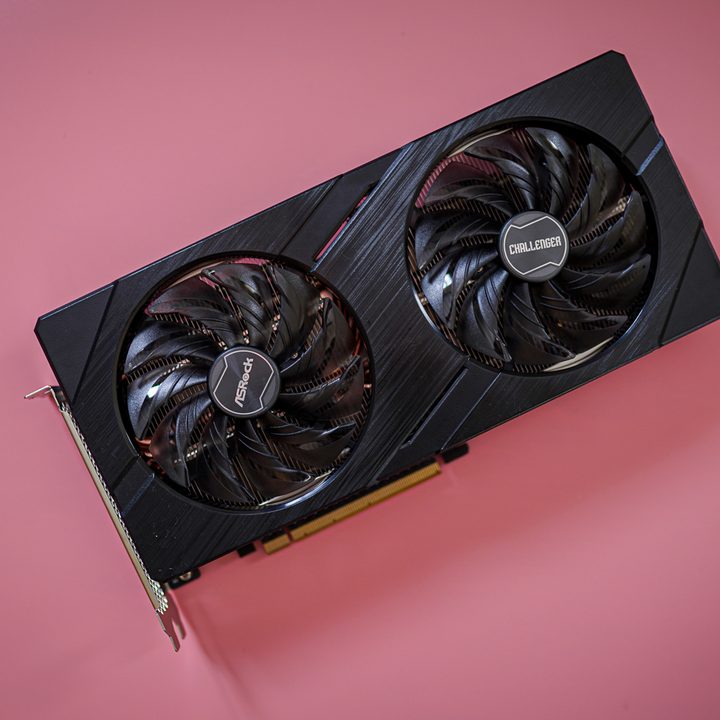
Intel’s Arc Alchemist lineup is ill-prepared to compete against some of the best graphics cards out right now, but things might get better once the next-gen Battlemage cards are released. However, Intel kept quiet about the GPUs during its CES 2024 keynote, focusing on processors. It seems that Project Battlemage is still alive and well, though, and a new interview tells us a little more about the future of Intel’s graphics cards.
The fact that Intel chose not to mention its discrete GPUs during CES 2024 felt pretty weird, but the silence speaks volumes. The lack of an official statement tells us that the GPUs may be quite far off, and PCWorld’s interview with Intel fellow Tom Petersen only serves to confirm that suspicion.
Petersen was careful not to say too much, right off the bat stating that he couldn’t talk about pricing, partner cards, or availability, all the while confirming that Arc Battlemage was still on the agenda and very much in progress.
“It’s coming. I am excited about it,” said Petersen in the interview. “I’d say about 30% of our engineers are working on Battlemage. Mostly on the software side, because our hardware group is on to the next thing. So think of it as, Battlemage has already had its first silicon in the lab, which is very exciting, and there’s more good news which I can’t talk about right now.”
The “next thing” is, of course, Intel Arc Celestial. At this rate, we’re unlikely to see those cards before 2026 or potentially even 2027, but it’s good to hear that Intel is already hard at work on the hardware side. As for the software, that was a real struggle with Arc Alchemist, so let’s hope that the experience will have given Intel’s engineers a bit of a headstart with Battlemage.

If not for the odd leak here and there, one might think that Intel had given up on making graphics cards entirely. Intel Arc Alchemist GPUs, launched after numerous delays and in a very staggered manner, were undoubtedly a bit of an uphill climb for Intel. Not so great at launch, the graphics cards improved a lot as Intel’s devs worked on the drivers long after the cards first hit the shelves. Intel also adopted a pretty aggressive pricing strategy, keeping the flagship Arc A770 and the Arc A750 affordable compared to their AMD and Nvidia counterparts.
At the mention of an announcement at CES 2025, Petersen said that he hopes we might hear more before then, but also advised the interviewers not to take his word for it. This means that, while Arc Battlemage is happening, it probably won’t launch any sooner than late 2024 or early 2025 — just in time to compete against Nvidia’s RTX 50-series.


