
Intel announced plans to discontinue its Kaby Lake-G processors, which pair the company’s 8th-gen processing cores with long-time rival AMD’s discrete Radeon RX Vega M graphics.
When it was launched, the Kaby Lake-G processor raised a few eyebrows because of the unique collaboration between the two competitors. However, in the several years since the CPU has been available, Intel cited weak demand for the component in its decision to cancel the chipset. Intel advised laptop manufacturers still interested in Kaby Lake-G to get their orders in by January 2020, with final shipment to occur in July 31, 2020.
“Market demand for the products listed in the ‘Products Affected/Intel Ordering Codes’ table below have shifted to other Intel products,” the company stated. “The products identified in this notification will be discontinued and unavailable for additional orders after the ‘Last Product Discontinuance Order Date.'”
Affected components include several Intel Core i7 processors — Intel lists the 8706G, 8705G, 8809G, and 8709G — and Intel Core i5-8305G.
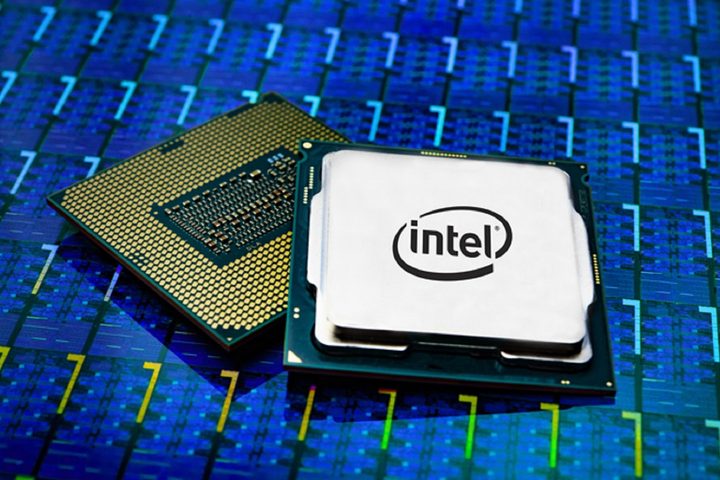
Intel’s collaboration with AMD began before Intel had announced its own plans to enter the discrete GPU market with its own Xe Graphics architecture, which will be targeted at consumer and enterprise use.
At the time, the two companies hoped that their partnership would present a bigger challenge to graphics-maker Nvidia in the mobile space. Since then, Intel had also made great strides in the integrated graphics space, with its 10th-gen graphics on platforms like Ice Lake with Iris Plus.
However, given Intel’s recent confirmation that it will enter the GPU market with its own in-house solution, continuing to partner with rival AMD may not make sense for either company. Intel’s plan to enter the graphics space may have been a large culprit in the Kaby Lake-G platform’s demise, with Tom’s Hardware speculating that OEM partners were less likely willing to spend money to invest in a solution that may become obsolete.
Given the higher thermal design power (TDP) of the Kaby Lake-G processors, these chips were often limited to larger 15-inch laptops. These systems, like Dell’s XPS 15 2-in-1, then required custom cooling solutions. The high power requirements of Kaby Lake-G also go against Intel’s recent shift in strategy with Project Athena and Ice Lake to focus on sustainable performance with all-day battery life and strong graphics.


