1. Home
  2. Computing
  3. News

Intel, North Carolina State researchers develop chip that boosts performance

Add as a preferred source on Google

As much as multithreaded applications can take advantage of much more powerful processors and many more cores than they could a few years ago, there are still a number of constraints that prevent the full power of multiple cores from being utilized. One of those is the software transfer process of data between the cores, but that’s about to change thanks to Intel and North Carolina State University researchers, who have developed a new hardware solution to bridge the cores.

The development is known as the core-to-core communication acceleration framework, or CAF for short. In an interview with TechSpot, Yan Solihin, co-author of the paper that explains its benefits, said CAF can improve the performance in communication between cores by up to 12 times, which can ultimately lead to calculations being performed around twice as fast as before.

Recommended Videos

This sort of effect is likely to be most pronounced in systems with hyperthreading (or the AMD equivalent) and with lots of cores, as well as with applications that can support it.

The reason such gains are said to be possible is because of the new chip design, which incorporates a queue management device (QMD) — essentially a hardware alternative to the software method of sending data between cores. This fast track handles all of the communication between the cores at a much higher pace than can be achieved with conventional processor designs.

Better yet, when not required for heavy multitasking, the queue management device can handle basic computational tasks on its own, potentially giving us a look at how Intel may be able to lower power usage in future chip designs — by letting the QMD handle basic operations and only leveraging the main power of the processor when required.

Of course, much of this is in the very early stages of development, and even though the proof of concept is there, we wouldn’t expect this to show up in retail hardware for years. However, when it does, the university may have additional features in mind, as Solihin and his team have already conceptualized a number of additional processor add-ons that could further improve communication between cores.

Jon Martindale
Jon Martindale covers how to guides, best-of lists, and explainers to help everyone understand the hottest new hardware and…
Apple made Liquid Glass adjustable, which says plenty about Liquid Glass
The new slider is useful, welcome, and mildly hilarious after a year of Apple acting like transparent everything was the obvious future.
Text, Document, Business Card

Apple’s big glassy software future now comes with a way to make it less glassy. In iOS 27, users can adjust the translucency of the Liquid Glass effect, while macOS Golden Gate adds its own Liquid Glass controls under System Settings.

Liquid Glass is still alive across Apple’s platforms, still shimmering through menus and panels, still doing the elegant UI trick Apple clearly likes. The big visual bet has already earned a dimmer switch. After a year of treating translucency like the obvious next step, WWDC’s most revealing design update may be the one that lets people dial it back.

Read more
Windows 11 just fixed one of Search’s dumbest limitations, and you’ll wonder how you lived without it
One less character, one less annoyance every time you search your PC.
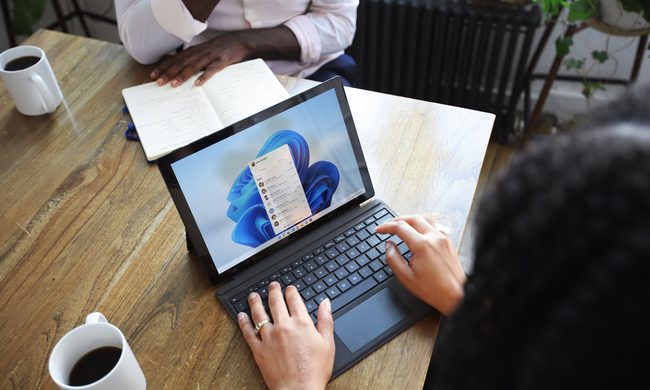
Person sitting and using a Windows Surface computer with Windows 11.

If you have ever typed two letters into the Windows 11 search box, paused, and watched nothing useful happen until you added more characters, you already know exactly why this Windows 11 update matters. 

Microsoft's June 2026 Patch Tuesday update, part of a release Windows Latest calls the biggest of the year (via Windows Latest), quietly fixes that. Windows Search can now find and prioritize files with as few as two characters, down from the old three-character minimum.

Read more
Brazil’s secret World Cup weapon taught the team when to ignore it
The data said he wasn't running enough. The footage said he was always in the “perfect tactical position.”
Soccer ball in net

Brazil has more World Cup titles than anyone, five of them to be precise, but after going through five straight tournaments without adding to that count, the team is leaning hard on data this time. 

Every player wears a sensor-packed "smart vest" tracking field position (via GPS), heart rate, and a stat called "player load," the same kind of numbers that your Whoop band or Apple Watch brags about, but tuned specifically for the sport.

Read more