
  1. Home
  2. Computing
  3. News

Intel is already working on its third generation of graphics cards

Add as a preferred source on Google
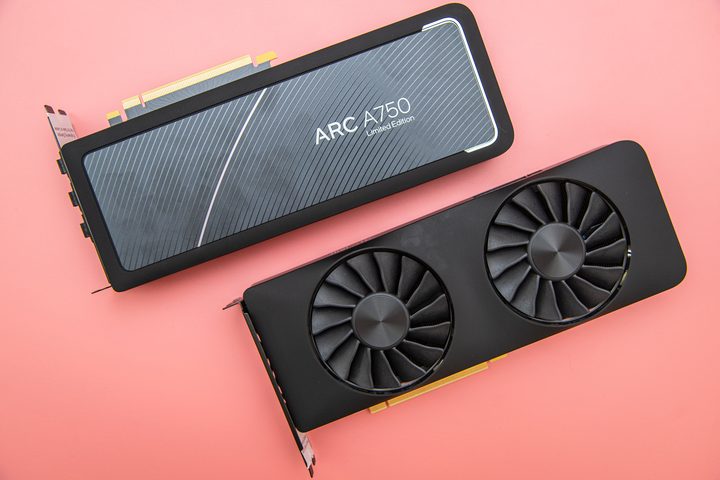
Two intel Arc graphics cards on a pink background.
Jacob Roach / Digital Trends
Computex Logo
This story is part of our coverage of Computex, the world's biggest computing conference.

Intel has officially unveiled its next-generation Lunar Lake mobile chipset in Taiwan ahead of Computex 2024. A refined successor to Meteor Lake, Lunar Lake features a new core architecture, enhanced security, and improved power efficiency as well as Xe2 graphics.

While the new platform focuses on uplifting AI performance and capabilities, the improvements for the GPU seem to be quite captivating. What is even more interesting is that during a session for the updated GPU, a company representative said that Intel is already working on the “next one for Panther Lake generation.”

Recommended Videos

Essentially, Team Blue is preparing the third generation of graphics, which is due to launch with Panther Lake sometime in 2025. While it should naturally bring improvement over Xe2, it is too early to predict what kind of improvements and performance gains Intel has in store for us.
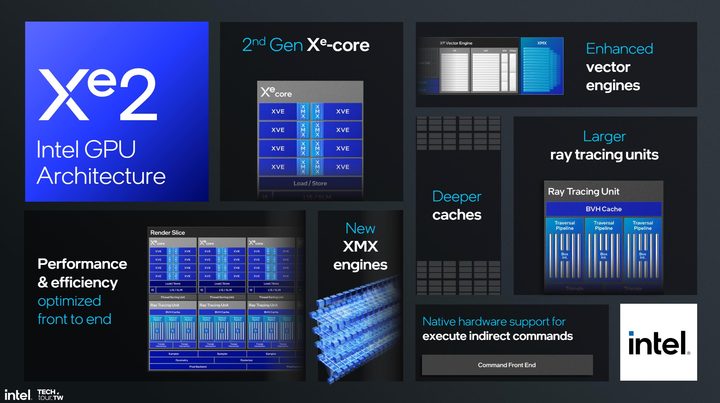
The features for Intel's Xe2 graphics architecture.
Intel

What we do know is that the jump from Meteor Lake to Lunar Lake is impressive, offering up to 1.5x graphics performance at the same power. Considering Xe2 features eight Xe cores for the mobile platform, it wouldn’t be surprising to see Intel increasing that to 12 or even 16 next year.

This is not the first time we are hearing about the third-generation, or Xe3, GPU. Last year harukaze5719 on X (previously Twitter), spotted a LinkedIn profile of an Intel GPU engineer mentioning the third-generation Arc GPUs with the codename “Celestial.” It is expected that Panther Lake would integrate the Xe3-LPG architecture, which could potentially be a scaled-down version of the Celestial Xe3-HPG. At the moment we are not sure if Panther Lake will be targeting the desktop or mobile segment, but it is clear that Xe3 is on its way.

It’s hard to say how far along Celestial is at the moment. At the beginning of the year, Intel confirmed that its Xe2 desktop graphics cards, codenamed Battlemage, were all but done on the hardware front already. At this point, the team is refining software as the architecture gets ready for Lunar Lake. Given how Intel normally releases new generations, we should have much more detail on Xe3 at this point next year.

Kunal Khullar
Kunal Khullar is a computing writer at Digital Trends who contributes to various topics, including CPUs, GPUs, monitors, and…
A simple coding mistake is exposing API keys across thousands of websites
Security gaps that are easier to miss than you think
Computer, Electronics, Laptop

After analyzing 10 million webpages, researchers have found thousands of websites accidentally exposing sensitive API credentials, including keys linked to major services like Amazon Web Services, Stripe, and OpenAI.

This is a serious issue because APIs act as the backbone of the apps we use today. They allow websites to connect to services like payments, cloud storage, and AI tools, but they rely on digital keys to stay secure. Once exposed, API keys can allow anyone to interact with those services with malicious intent.

Read more
AMD’s latest Ryzen 9 9950X3D2 pushes X3D to the limit
Dual 3D V-Cache, higher power, and a focus on enthusiast performance
AMD Ryzen 9 9950X3D2 FEatured

AMD has unveiled what might be its most extreme desktop CPU yet, the Ryzen 9 9950X3D2. And it’s going all-in on one thing: cache.

https://twitter.com/jackhuynh/status/2037159705395491033?s=20

Read more
Next-gen AI breakthrough promises chatbots that can read the room better
Researchers are teaching AI chatbots to read between the lines
Generative AI

Have you ever asked a chatbot something and felt like it completely missed your point? You say something with a bit of nuance, and the AI misses the subtlety entirely. That is exactly the problem researchers are trying to solve.

Even though the emotional connection with AI can feel deeper than human conversation for many users, most AI systems today still treat a sentence as a single block of sentiment. If you mix praise and criticism, the nuance often gets lost.

Read more