
Meta, formerly Facebook, has just announced that it’s working on a supercomputer with unprecedented artificial intelligence powers. A collaboration with Nvidia, the computer is said to one day be able to learn from trillions of examples.
The supercomputer features mind-boggling amounts of power, and this could be a fantastic thing for Meta’s metaverse efforts. But are there any downsides to the creation of this A.I. beast?
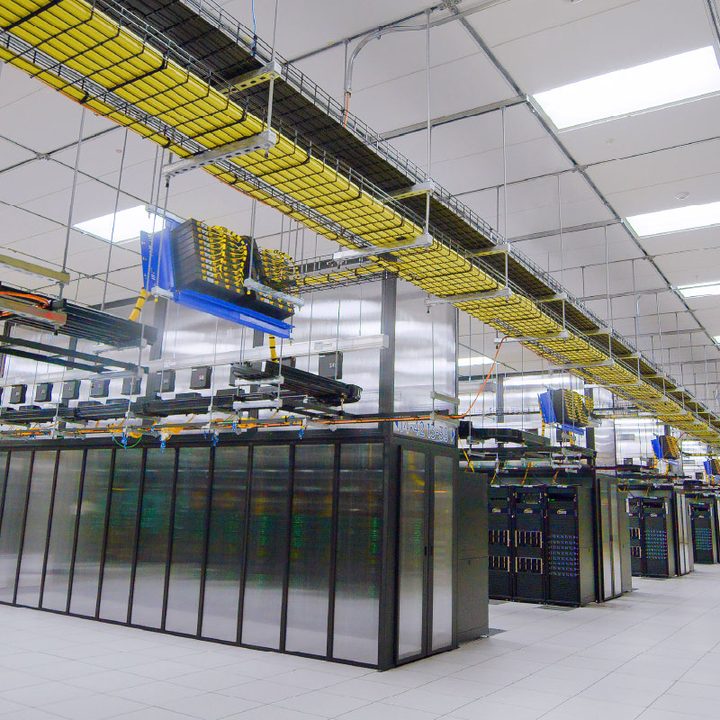
Both Meta and Nvidia announced the ongoing progress on the supercomputer in respective blog posts, dubbed the Air Research SuperCluster or RSC for short. Meta has stated that RSC is among the fastest A.I. supercomputers built to date, but it’s still a work in progress. By the time it’s fully built, which will be around mid-2022, it will become the world’s fastest supercomputer.
Whether RSC will truly be the fastest such machine in the world or not, it’s impossible to deny that it’s equipped with mind-boggling power and potential. According to Meta, the company set out in 2020 with the goal of creating a research computer capable of learning and training models with more than a trillion parameters.
RSC is said to one day be able to work on data sets as large as an exabyte. Most of us have never even heard of exabytes, and no wonder — one exabyte adds up to one billion gigabytes of data, which Meta says is the equivalent of 36,000 years of high-quality video. The best SSDs with 2TB of storage suddenly seem tinier than a grain of sand.
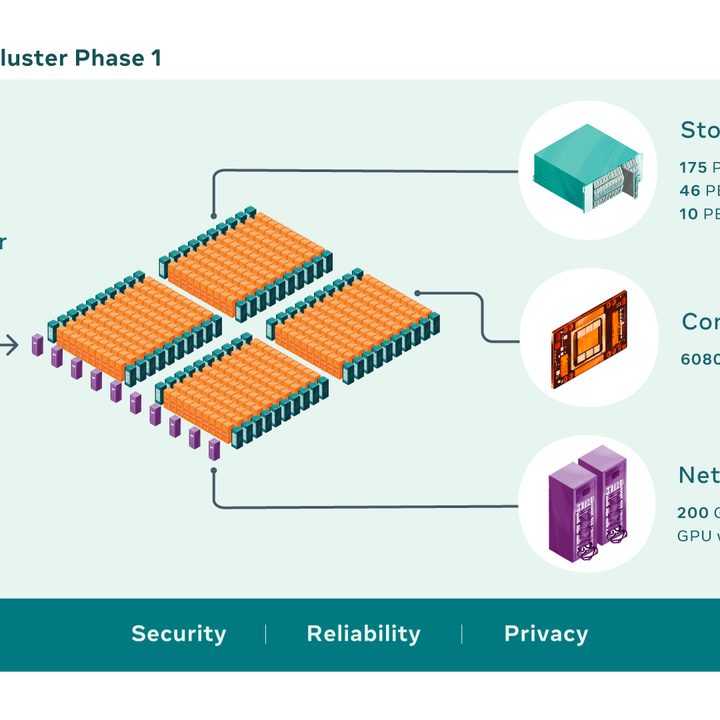
The Meta and Nvidia supercomputer is powered by 760 Nvidia DGX A100 systems which house 6,080 Nvidia A100 graphics cards. According to Nvidia, this supercluster of GPUs is capable of delivering 1,895 petaflops of TensorFloat-32 (TF32) performance.
The computer is not quite ready yet, but it’s getting there. Nvidia has announced that during the course of this year, almost 10,000 GPUs will be added, for a total of 16,000, which may result in up to 5 exaflops of A.I. performance. RSC sounds like a true monster of a computer, but what does Meta really need it for?
The company lists some of the possible use-cases in its blog post. The goal of the supercomputer is to assist Meta’s A.I. team in building new and improved A.I. models. These new models would be able to translate hundreds of languages in real-time, allowing people from all over the globe to seamlessly work or play together. The tools would also be helpful in analyzing various content found across Meta’s family of apps, removing harmful entries without human assistance.
Ultimately, Meta emphasizes its upcoming metaverse efforts as one of the uses for the RSC. There is no doubt that a computer of this size, with this kind of artificial intelligence power, could help Meta fast-track its journey into the metaverse. The potential is nearly boundless, and although Meta doesn’t talk about it at any great length, it’s fairly easy to imagine. A.I. plays a big role in a successful, lifelike metaverse, and Meta’s new supercomputer could be the next step towards that.
There are downsides to the power presented by artificial intelligence of this size. The ability to listen to conversations and translate them in real-time is just one of the things that could open the door for potential privacy concerns. Such power can easily be misused. Meta promises that RSC is being designed with privacy and security in mind, but undoubtedly, some people will feel wary when faced with the potential presented by Meta’s next-level A.I. On the other hand, Meta is definitely making a leap into the future, and a lot of good can come from it if it’s used correctly.


