
Ready for the Meta Quest 4? Considering how big of an upgrade the Quest 3 was when it launched in 2023, Meta’s next release could have amazing new features that end up making it one of the best VR headsets yet.
Meta is still probably a couple of years out from releasing the successor to the Quest 3, but with all the new competition, it’s worth considering what to expect. There haven’t been many rumors yet, but here’s what hope to see in the Meta Quest 4.
Quest 4 launch date
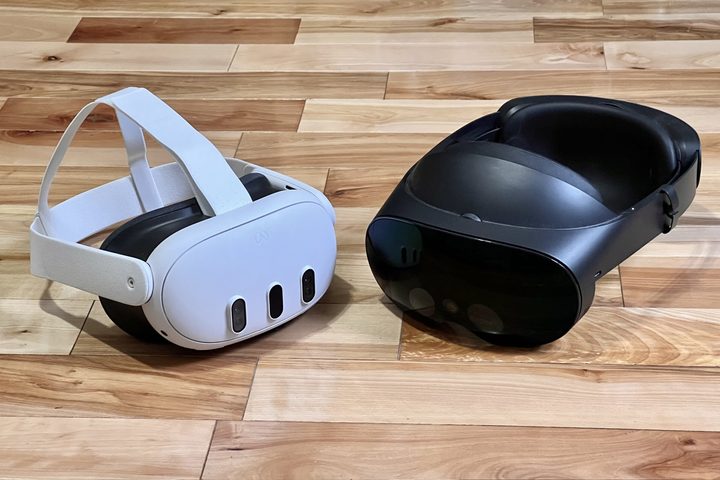
Meta released the original Quest in 2019 and quickly followed with the Quest 2 in 2020. While the Quest Pro arrived in 2022, the Quest 3 didn’t show up until last year.
If Meta launches another work-centric headset like the Quest Pro 2 before its next VR gaming headset launches, we expect the Quest 4 to arrive at Meta Connect in October 2025 or 2026.
There have, however, been rumors that Meta will launch a less expensive Quest 3 Lite or Quest 3S to replace the Quest 2 soon.
Better AI

AI is taking the world by storm, and we expect the next version of the Quest to fully embrace this new technology. To put things in perspective, the Meta Quest 3 currently uses a fast Snapdragon XR2 Gen 2 processor that boasts 2.5 times higher GPU performance and eight times better AI throughput than the Quest 2’s XR2 Gen 1 chip.
Meta is currently using artificial intelligence on the Quest 3 to enhance the color passthrough camera for mixed reality experiences, improved hand-tracking speed and accuracy, to understand voice commands, and more.
If Qualcomm updates is extended reality processor in time, the Quest 4 could get a next-gen Snapdragon XR2 chip. In theory, that could mean that the Meta Quest 4 could have more impressive AI capabilities that can help make virtual worlds look more real and improve interactions with non-playable characters (NPCs) in VR games.
A recent Meta blog post indicated AI breakthroughs will help create realistic avatars on the Quest platform. A Quest 4 with Meta Codec Avatars seems likely. Meta even posted a video on YouTube showing what to expect in the future. Those are good signs.
We’ve also seen how AI upscaling, like Nvidia’s DLSS, can improve graphics quality and frame rates on PC games. Meta’s Super Resolution feature is similar, but doesn’t help in some situations. As the platform’s AI capabilities increase, upscaling will unlock faster, better graphics in more Quest VR games.
There are already several ways to generate 3D graphics with AI, such as neural radiance fields (NeRFs), and Gaussian splatting, which use real-world photos and videos to digitally capture depth and imagery. Here’s an example shared on X by Luma Labs when it announced the Android version of its mobile app to create shareable gaussian splats.
Android users, it’s time to join the party – Luma is now available on @GooglePlay. Capture stunning 3D & create Magic Reveals for FREE with just your phone
➡️ https://t.co/PHOGhGyY7E#LumaAI #Android #PlayStore #GaussianSplatting pic.twitter.com/rgrE6n9fPm— Luma AI (@LumaLabsAI) April 10, 2024
Generative AI can also paint fantastic 360-degree panoramas, as you can see in this X post from Moon VR Home.
🤩Mixed Reality Portal Now Available on Quest 3!#MixedReality #MetaQuest3 #VirtualReality #AI pic.twitter.com/qxhyPCsgJr
— Moon Portal (@MoonPortalVR) October 28, 2023
All that is to say that we expect the Quest 4 to emphasize AI in a big way on its next generation, especially given Meta’s investment in recent years.
Improved mixed reality

The Meta Quest 3 already has the best mixed reality games and good color passthrough quality, but it could be better. Apple’s Vision Pro has higher resolution, less noise, and wider dynamic range.
I’d expect the Quest 4 to bring further improvements to the cameras, sensors, and performance needed to render a view that looks more like your actual surroundings. Realistic graphics are important, but long-term comfort and breathability are critical to everyday use, and these things are almost entirely absent in VR.
Meta’s Quest Pro is the only mass-produced VR headset to ship with an open periphery. That means you can see your room and floor out the sides and bottom while wearing the device. Despite being as heavy as the Apple Vision Pro, most people agree the Quest Pro is more comfortable and less isolating.
Another clever Meta decision moved the Quest Pro’s battery to the rear of the head strap to balance the weight of the front visor more evenly. Comfort and good weight distribution are particularly important for active games and fitness apps, which are of strong interest for Meta as the owner of popular workout app Supernatural.
It would be great if Meta reused aspects of the Quest Pro’s unique design for the Quest 4 and introduced mixed reality upgrades to make its next wearable just that — wearable and enjoyable for hours of gameplay, exploration, movies, or work.
Upgraded displays
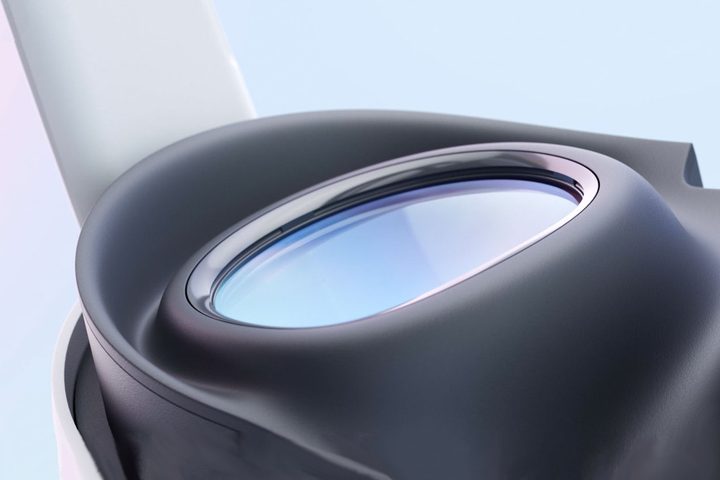
The Meta Quest 3 has 30% higher resolution than the Quest 2, driven by its more powerful processor. Its pancake lenses make focusing comfortable for your eyes and provide good clarity from edge to edge.
While those are significant improvements over the Quest 2, VR headsets needs to be as sharp and clear as possible. Display technology keeps getting better and VR headsets like the Vision Pro are accelerating advances. It’s likely that the Quest 4 will have higher-resolution screens than the Quest 3.
The Snapdragon XR2 Gen 2 supports 3K resolution per eye at 90Hz. Meta opted for a 2K display at 120Hz for the Quest 3. The Quest 4 with a faster chip could increase the display resolution without sacrificing frame rates, meaning that the Quest 4 could feature crisp 3K per eye resolution at 120Hz.


