
Microsoft’s Windows 10 operating system has been warning users about installing the popular PC optimization software, CCleaner. The company’s own built-in Windows 10 Microsoft Defender program now classifies the free version of CCleaner as a potentially unwanted application (PUA,) as first reported by Bleepingcomputer.
Although Microsoft notes the classification only targets the free version of CCleaner, the company does believe this move comes as a way to protect Windows users. In a statement, Microsoft suggested that as a PUA, CCleaner can install other software that is not developed by the same entity (Piriform Ltd.).
“Our potentially unwanted application protection aims to safeguard user productivity. We detect instances anytime software offers to install other software that is not developed by the same entity or not required for the software to run, no matter the third party,” said Microsoft.
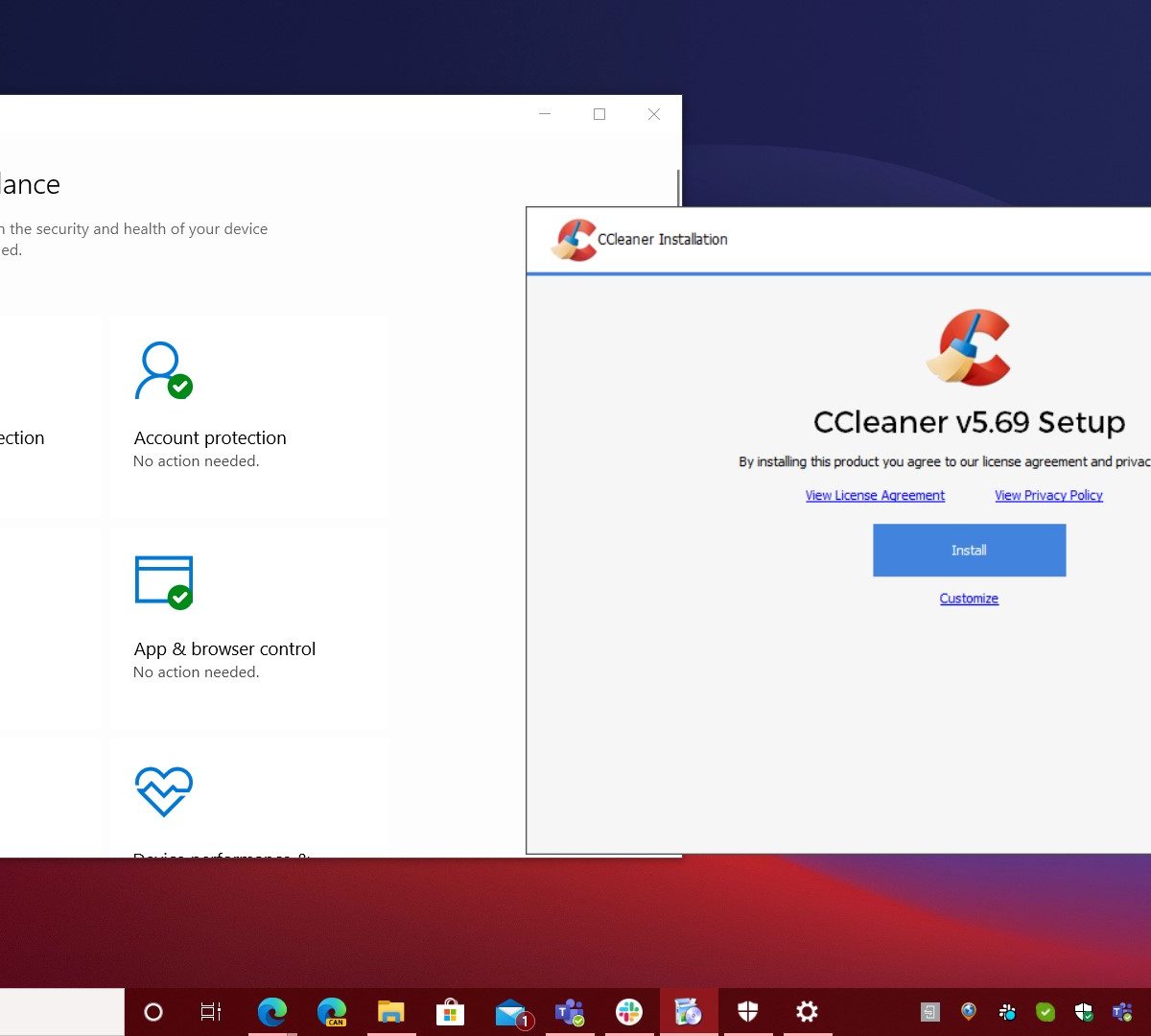
Microsoft also added a new threat entry for CCleaner to the Security Intelligence Center. This entry explains that the bundling of software, especially products from other providers, can result in unexpected software activity that can “negatively impact user experiences.”
While it is true that CCleaner is a legitimate program that is trusted by many, the concern is indeed real. The entry reveals that in its testing, Microsoft apparently found that Google Chrome, Google Toolbar, Avast Free Antivirus, and AVG Antivirus Free are all bundled with the free version of CCleaner.
“While the CCleaner installers do provide an option to opt-out, some users can easily inadvertently install these bundled applications,” notes Microsoft.
Digital Trends attempted to verify that CCleaner is blocked by Microsoft Defender, but the program successfully installed on our computer, running the Windows 10 May 2020 Update. We also received no prompts to install free software, as part of the setup. However, there have been reports that the program is still blocked on some systems.
In a statement, CCleaner noted it was engaged with Microsoft on the issue.
“We are in the process of engaging with Microsoft to understand why CCleaner was recently detected as PUA. We surmise the issue appears to be around bundling, and we believe we have addressed this so that our product is now no longer flagged” said the company.
While a legitimate cleaning application, CCleaner has been the center of controversy. In 2017, hackers managed to insert malicious code into an older version of CCleaner to spread a virus, but the company was quick to resolve it. The damage was done, though, and a second wave of the virus targeted some of the largest tech companies in the world, including Microsoft.
Microsoft’s Defender, meanwhile, has been rated by some as decent enough for basic cybersecurity and virus protection. There are free alternatives, but Microsoft notes that Microsoft Defender “delivers the comprehensive, ongoing, and real-time protection you expect against software threats like viruses, malware, and spyware across email, apps, the cloud, and the web.


