  1. Home
  2. Computing
  3. News

Microsoft’s new Designer app offers DALL-E-like AI art creation for all

Add as a preferred source on Google

Among the new creator tools announced for Microsoft 365, Microsoft Edge, and Bing on Wednesday is Microsoft Designer, an AI-powered app that allows you to start with a concept and let the technology do most of the work in developing a creative project.

Microsoft Designer is based on an AI technology similar to DALL-E 2, which was created by OpenAI. The text-to-art generator recently became available to the public after a popular waitlist period following its April 2022 launch.
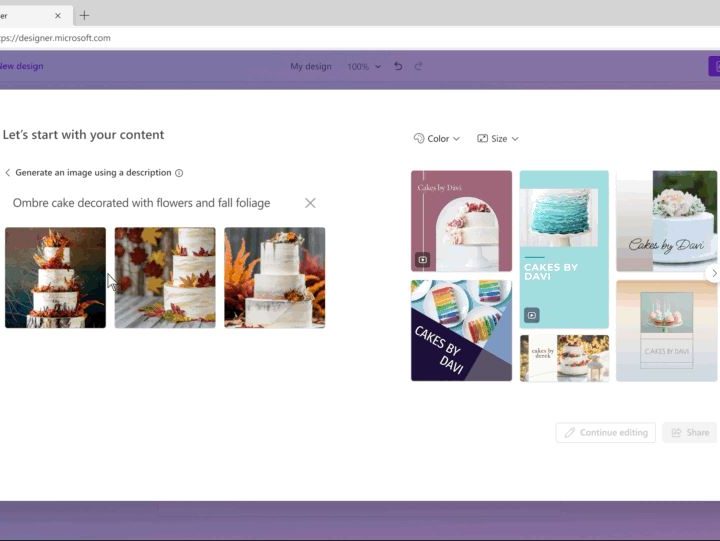
Screenshot of Microsoft Designer interface.
Microsoft

Microsoft Designer will work for more than developing images. You will be able to create social media posts, invitations, digital postcards, or graphics, among other creative projects with the AI-powered app. Similar to DALL-E, you can describe in text the project you want to make and the Microsoft Designer app will generate a result that is “totally unique … consistent, aligned, properly scaled,” Microsoft said in a statement.

Recommended Videos

Microsoft Designer also allows you to add more design ideas, such as images or text to the AI-generated content with a single click. From there you can share designs as you like in-app, whether it be directly to social media platforms or to friends, downloading for later use.

Also inspired by PowerPoint, the Microsoft Designer app is reminiscent of how you build out a presentation. The app will give you design options based on the type of content you’re trying to develop, and Microsoft claims to have over eight billion slide designs saved by customers already using PowerPoint, with more to come.

You can sign up for a free web preview of Microsoft Designer starting Wednesday. Microsoft is offering users a chance to try the app out and give the brand feedback. At this time Microsoft Designer preview will not include all of the features planned for the app.

Microsoft has not shared when the app will release for general availability, but when it does it will come in free and premium versions. The premium features will be available to Microsoft 365 Personal and Family subscribers.

Fionna Agomuoh
Fionna Agomuoh is a Computing Writer at Digital Trends. She covers a range of topics in the computing space, including…
Apple’s next wave of Macs might keep you waiting for longer, and you can thank AI for that
Supply chain pressure hits Apple’s upcoming lineup.
macbook

Having recently launched the MacBook Neo as well as the M5 MacBook Air, Apple’s next-gen Macs were supposed to ride the company’s recent momentum. But now, there’s a new roadblock. And surprisingly, it’s not design, chips, or software. It’s memory. And yes, AI is a big reason why.

Apple’s next Macs might be delayed

Read more
AI has blocked out Windows laptops in the race against the MacBook
The AI PC push did not help Windows catch the MacBook. It made the gap look worse
Copilot

The Windows laptop market has never looked busier. There are more brands, more chips, more AI labels, and more “next-gen” promises than ever. But somehow, for all that noise, the category feels more boxed in than it has in years.

That is the irony of the AI PC moment. AI is supposed to be the big upgrade cycle that gives Windows laptops fresh relevance. Instead, it is quietly making them harder to buy into, especially if you are shopping anywhere below the premium tier. And in the middle of all that confusion, Apple’s MacBook lineup suddenly looks like the cleanest, easiest laptop story in the market.

Read more
A Google Pixel laptop might be on its way, but does anyone actually want one?
A new Google laptop might be coming, and I hate to be the bearer of bad news, but the odds are not in its favor.
Google Pixelbook in silver.

It looks like a new member is joining the Pixel family, adding to its resurgent smartphone lineup. Code analysis of the latest Android beta points toward a new Pixel laptop that Google might be planning to launch in the near future. Google last launched a laptop, the Pixelbook Go, in 2019, an affordable version of the Pixelbook it put on the shelves back in 2017.

Both the Pixelbook and Pixelbook Go, along with the earlier Chromebook Pixel models, were not what you would call a smash hit with the audience or a runaway commercial success. Ultimately, they triggered Big G's departure from the laptop segment and a shift in focus toward Pixel smartphones.

Read more