1. Home
  2. Computing
  3. News

MSI unveils a barrage of laptops with up to RTX 5090 graphics and Intel Arrow Lake chips

MSI's biggest laptop launch of the year covers five product families, Intel's sharpest new mobile processors, and Nvidia's most powerful gaming GPUs yet.

Add as a preferred source on Google
MSI new gaming laptops.
MSI

Subtlety is overrated, and MSI just proved that. The Taiwanese laptop maker has rolled out a sweeping refresh, unveiling more than a dozen new gaming laptops spread across its Cyborg, Crosshair, Raider, Stealth, and Titan lineups. 

The models cover 15-inch, 16-inch, and 18-inch form factors, ensuring there’s something for every gamer or professional user, making it hard for buyers to run out of excuses for not upgrading this year. 

So, what’s actually new inside these machines?

It is Intel’s newly announced Arrow Lake-HX Plus chips, specifically the Core Ultra 9 290HZ Plus, that acts as a catalyst for MSI’s new lineup. Other manufacturers, such as Acer, Asus, and Dell, have already launched laptops powered by these chips. MSI is late, but it’s here fully loaded. 

Recommended Videos

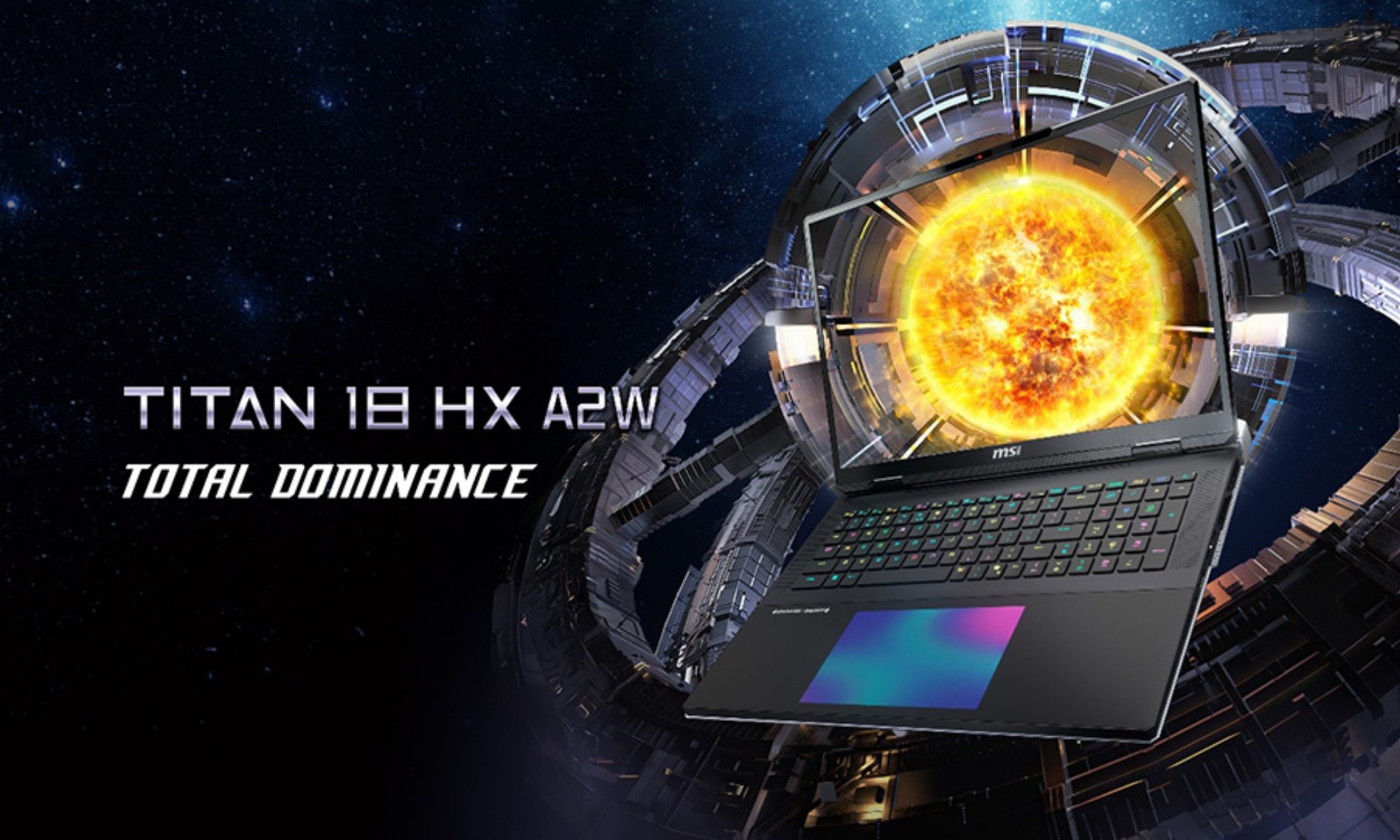
Eight of the new MSI laptops, including the Raider 16 Max HX, Raider 18 Max HX, Stealth 18 HX, and Titan 18 HX, run on the Core Ultra 9 290HX Plus chipset. Further, they feature a wide variety of powerful GPUs, ranging from the RTX 5070 Ti and RTX 5080 to the RTX 5090. 

Out of all, the Crosshair 16 Max HX is the first laptop to ship with Nvidia’s yet-to-launch 12GB RTX 5070 laptop GPU. Meanwhile, the Raider 16 Max HX, which was present at the CES 2026, delivers a combined system power of 300W, out of which 175W comes from the GPU alone. 
Should budget gamers even care?

Yes, absolutely, MSI has also refreshed the Crosshair 16 HX with relatively older Intel 14th-gen processors and RTX 5050/5060/5070 GPUs. The entry-level Cyborg 15 series returns with quite accessible specs. 

Although MSI hasn’t revealed pricing yet, the lineup spans multiple segments, likely from mid-range to premium laptops. To me, the lineup looks like it was launched under some sort of pressure (from competition), as even I’m having trouble keeping a count of the models and their specifications. 

Shikhar Mehrotra
For more than five years, Shikhar has consistently simplified developments in the field of consumer tech and presented them…
Apple could go back to Intel for chips, but not how you would expect (or dread)
Apple MacBook

Apple and Intel are reportedly exploring a manufacturing partnership that could reshape how future Apple chips are produced. But despite the headline, this does not mean Apple is abandoning Apple Silicon or returning to Intel-powered Macs.

According to a new Wall Street Journal report, Apple and Intel have reached a preliminary agreement for Intel to manufacture some chips designed by Apple. Bloomberg’s Mark Gurman later clarified on X that there is still no finalized production agreement in place and discussions remain at an early stage. His post also noted that Apple continues to have concerns about Intel’s manufacturing technology and long-term competitiveness.

Read more
Apple wants you to verify your identity before you get Education discount on products
Apple moving the US Education Store off the honor system also seems about making a globally consistent verification infrastructure that could eventually support more aggressive Education Store expansion.
Computer, Electronics, Laptop

Getting an Apple Education discount in the United States used to be as simple as claiming you’re a student or a teacher; it didn’t need a formal verification. That era is officially over. 

Starting May 8, 2026, Apple now requires formal identity verification for all Education Store purchases in the US, ending the informal honor system that was in place for years (via MacRumors). 

Read more
OpenAI’s Codex just moved into Chrome, where the useful work and the risks live
The new extension lets Codex move beyond coding and handle real browser tasks across signed-in sites
Page, Text, File

OpenAI is giving Codex a larger stage than the coding window. Its new Chrome extension lets the agent use an authenticated web session, so it can help with work that already lives inside Gmail, Salesforce, LinkedIn, dashboards, and internal apps.

That pushes Codex out of the developer sandbox and into the web apps where daily work already happens. With Chrome access, it can step into research, CRM updates, dashboard checks, and browser-based debugging, which is where plenty of work gets stuck across tabs.

Read more