  1. Home
  2. Computing
  3. News

Nvidia just dropped a big hint about the RTX 50-series release date

Add as a preferred source on Google
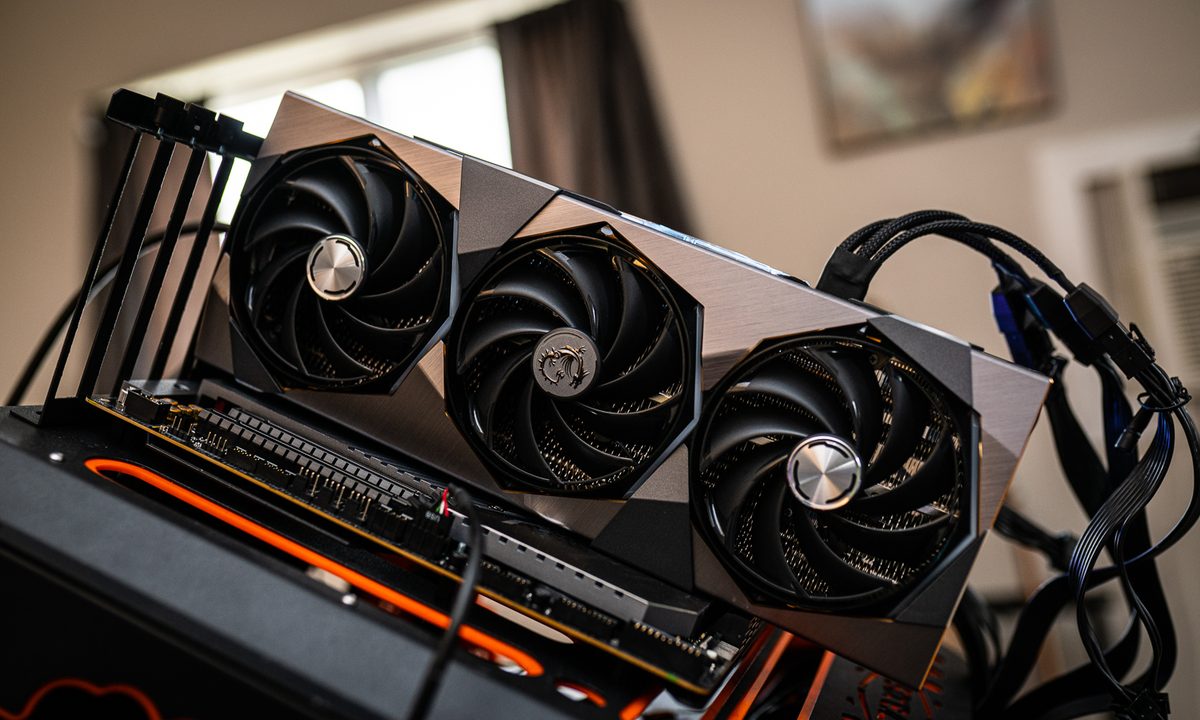
nvidia rtx 4080 review 12
Jacob Roach / Digital Trends

Speculation has been running rampant about Nvidia’s launch of next-gen RTX 50-series GPUs, but the company itself just dropped a big hint about when they may show up. Nvidia CEO Jensen Huang is set to take the stage as the keynote speaker of CES 2025 on January 6, where there’s a good chance we’ll hear about Nvidia’s next generation of graphics cards.

Although Nvidia is at the annual tech show each year, Huang — who recently surpassed the worth of all of Intel — hasn’t made an appearance in five years. The executive will likely focus heavily on AI, as it has catapulted Nvidia to become one of the world’s wealthiest companies. But RTX 50-series GPUs should make an appearance, too. Nvidia usually takes advantage of CES to launch new graphics cards.

Recommended Videos

Last year, Nvidia introduced its RTX 40-series Super refresh, and in 2023, we got the RTX 4070 Ti. We don’t typically see the launch of an entirely new generation on the CES stage, but it’s not out of the question. Nvidia’s Blackwell architecture, which is what the RTX 50-series cards use, was reportedly delayed due to a design flaw, pushing back the launch date.

It hasn’t been clear up to this point if Nvidia would launch its RTX 50-series GPUs this year or wait for early 2025. However, recent reports claim Nvidia is targeting an early 2025 release for the RTX 5090, with some leakers pointing specifically to a launch at CES 2025. This speculation came before Nvidia revealed it would be hosting the keynote at CES, lending some credibility to the claims. Although the release date remains a mystery, most reports suggest Nvidia will launch the RTX 5090 first, followed by the RTX 5080 at a later date.

The release date is up in the air, but one thing is certain — the RTX 5090 won’t be for the faint of heart. Credible leakers say that the flagship GPU will require upwards of 600 watts of power, as well as come strapped with 32GB of next-gen GDDR7 memory. Despite that, leakers say that the card will use a dual-slot cooler, potentially making it smaller than the RTX 4090 while drawing significantly more power.

Jacob Roach
Former Lead Reporter, PC Hardware
Jacob Roach is the lead reporter for PC hardware at Digital Trends. In addition to covering the latest PC components, from…
In a market where Mac has been aspirational, it’s somehow a better deal than windows machines now
Windows Laptops became so expensive that MacBooks look sensible now
Computer, Electronics, Laptop

For a long time, the laptop buying advice was simple enough. Windows had a more versatile portfolio that brought you affordable, mid-range, high-end, and even gaming options, while MacBooks were known as the easy premium recommendation.

But owing to the pricing circus caused by memory shortages and component price hikes, the equation makes no sense anymore.

Read more
HP’s new RTX 5070 laptop feels like the sweet spot between thin and bulky
The new HyperX Omen 15 combines AMD and Intel and targets portability without fully sacrificing performance.
HP HyperX OMEN 15 Gaming Laptop

Modern gaming laptops have largely drifted toward two extremes lately: massive 16-inch and 18-inch desktop replacements, or ultra-compact 14-inch machines that still feel slightly cramped for serious gaming sessions. That’s exactly why HP’s new HyperX Omen 15 feels refreshing, because it brings back the familiar 15-inch gaming laptop formula with a chassis that still feels portable without sacrificing proper gaming hardware underneath.

HP’s compact HyperX Omen 15 packs RTX 5070 graphics with AMD and Intel options

Read more
Corsair is putting Chinese RAM in mainstream market. It won’t quite end the crisis though
A cheaper DDR5 supplier could shake up the market, but it is not a magic fix
Samsung DDR4 RAM in hand

After months of painfully expensive RAM and SSD prices, the memory market may finally be showing signs of pressure from an unexpected direction: China. New reports suggest that Chinese memory manufacturers are rapidly expanding production of DRAM and NAND chips, and that major hardware brands are starting to take notice. The most notable example so far is Corsair, which has reportedly tested DDR5 memory modules using chips from Chinese DRAM giant ChangXin Memory Technologies, better known as CXMT.

This feels inevitable. Memory prices have remained frustratingly high across PCs, laptops, and storage devices for months. So when Chinese suppliers began offering RAM at nearly half the cost of some global competitors, manufacturers were always going to at least explore the option. According to market reports, some CXMT DDR5 modules are reportedly being sold near the $150 range, while equivalent products from larger global suppliers can hover between $300 and $400.

Read more