
Historically, Nvidia’s graphics cards, particularly from the popular RTX 30-series, have commanded a much larger market share compared to AMD’s Radeon range.
Curiously, even with GPU prices now approaching or dropping below the suggested retail prices, coupled with the fact that Team Green cards are generally more expensive than Team Red’s boards in certain segments, it seems the aforementioned state of affairs has remained unchanged.

As reported by Tom’s Hardware, the bestsellers list for one of the most popular computing online retailers, Newegg, shows that Nvidia GPUs are still the go-to choice for those looking to upgrade or build a new gaming setup.
In fact, apart from Nvidia’s last-gen RTX 2060 making an appearance, the entire list is exclusively made up of GeForce RTX 30 graphics cards.
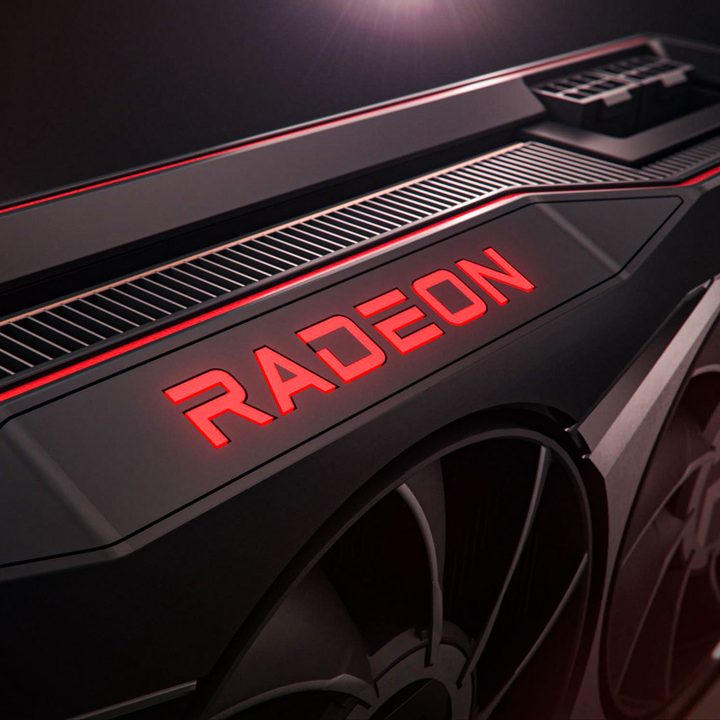
As for AMD’s Radeon lineup of graphics cards, these products are absent from the list entirely.
Tom’s Hardware highlights how this tidbit is fairly perplexing, at least when it comes to pricing. Within both the ultra high-end and lower mid-range segments of the market, AMD offers more affordable products.
For example, the Radeon RX 6600 has a more attractive price point when compared to Nvidia’s RTX 3060 12GB model, which is still currently one of the most popular and in-demand gaming boards on the market. The RX 6900XT, meanwhile, is cheaper than the powerful RTX 3090 and RTX 3080 Ti.
Still, perhaps it’s down to the fact that Nvidia revealed it has replenished its stock levels for the RTX 30 range, which has seen pent-up demand largely driven toward Team Green’s cards. AMD has yet to unveil a similar announcement.
Taking a closer look at the list itself reveals that the bestseller position at the moment in Newegg’s list is occupied by Asus’ TUF Gaming RTX 3070 Ti GPU, with a price tag of $911, which is followed by Gigabyte’s more affordable $699 GeForce RTX 3070 Ti.
Among the graphics cards included in the bestseller list are the following:
- Asus TUF Gaming GeForce RTX 3070 Ti – $911
- Gigabyte Gaming GeForce RTX 3070 Ti – $700
- EVGA GeForce RTX 3070 Ti FTW3 – $760
- Gigabyte Gaming OC PRO GeForce RTX 3060 Ti 8GB – $705
- MSI Ventus GeForce RTX 3050 – $330
- Gigabyte Gaming GeForce RTX 3080 Ti – $1,200
- EVGA GeForce RTX 3060 XC Gaming – $430
- Asus ROG Strix GeForce RTX 3060 – $490
- Gigabyte Aorus GeForce RTX 3070 Ti – $900
Interestingly, some of the above-mentioned cards have seen their original prices reduced. For example, the Gigabyte Gaming GeForce RTX 3080 Ti was subjected to a 21% price drop from $1,530 to $1,200. These decreases follow a general trend of falling prices across the GPU industry.
AMD not sitting idly by
Although the appetite for RTX 30 cards still remains extremely strong among customers looking to upgrade or build a new system with a new video card, it’s worth stressing that next-gen is only a few months away.
AMD obviously isn’t happy with its current standing in the GPU industry. Nvidia has long dominated the GPU market, which has propelled the company’s fortunes to heights that are unheard of for a graphics card manufacturer.
By all accounts, Team Red has therefore diverted a great deal of attention to the impending arrival of its next-gen GPUs. From everything we’ve heard, AMD should make the race a much tighter battle when compared to the current generation.
The general consensus seems to be that AMD will have the upper hand in terms of efficiency, which is an area that is becoming increasingly important for potential consumers amid rumors suggesting extremely power-hungry Nvidia RTX 40 boards.
It may also reportedly offer superior performance levels over Team Green’s upcoming GPUs, although we’ll have to patiently wait until the products from both companies become available in order to truly gauge which GPU titan ends up delivering the better video cards.


