  1. Home
  2. Computing
  3. News

Nvidia says melting power connectors are a thing of the past

Add as a preferred source on Google
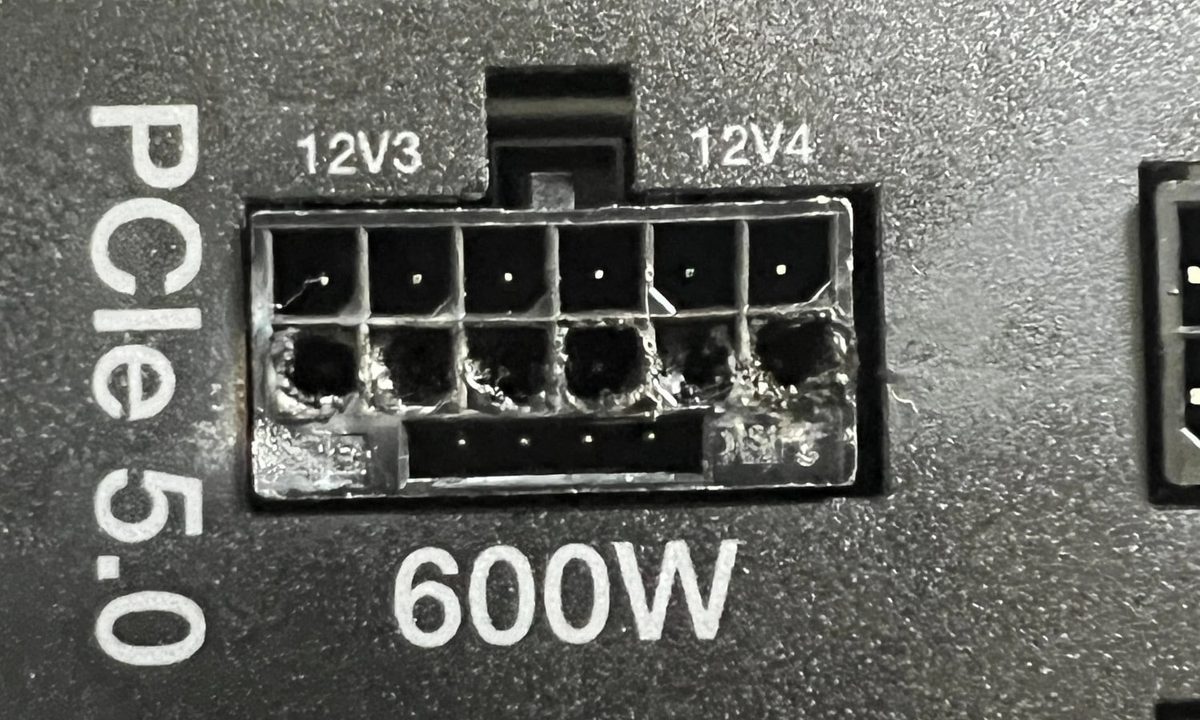
The graphics card connectors on a power supply. The connectors are burned and melted from where an Nvidia 12VHPWR cable from an RTX 4090 graphics card has been plugged in and overheated.
Shiftyeyes67k on Reddit

Nvidia has expressed confidence that the infamous melting issues with the 12VHPWR power connectors, which plagued some RTX 40-series GPUs, will not recur with its next-generation RTX 50-series lineup.

As reported by QuasarZone, during the Nvidia RTX AI Day 2025 event in South Korea, Nvidia representatives assured attendees that the overheating and melting issues experienced with the RTX 4090’s 12VHPWR connector have been resolved in the RTX 50 series. “We don’t expect that to happen with the RTX 50 series. We made some changes to the connector to respond to the issue at the time, and we know that it is not happening now, about two years later,” said an Nvidia representative.

Recommended Videos

The 12VHPWR connector, also known as the PCIe 5.0 16-pin power connector, first debuted with the RTX 4090 and RTX 4080 GPUs. While it offered compactness and support for high power delivery of up to 600W, it quickly became controversial due to reports of overheating and melting GPUs. Investigations revealed that improper connector seating was a primary cause of these issues. Nvidia and its partners implemented guidelines to ensure proper usage, but user concerns persisted.

Eventually, minor tweaks were implemented to introduce the 12V-2×6 connector. The new connector has the same layout and design as the 12VHPWR, but the smaller sensing pins were shortened by 0.1mm, while the conducting terminals extended by 0.15mm. These adjustments are said to enhance the cable’s ability to establish a secure connection, ensuring a safe and reliable power delivery. It is also backwards compatible with 12VHPWR, which mitigates the need for newer cables.

For the upcoming RTX 50-series GPUs, which have increased TGPs of up to 575W for the RTX 5090, Nvidia claims to have taken proactive steps to eliminate these issues. While we take Nvidia’s word on that, we would suggest using modern PSUs compliant with the ATX 3.1 standard, which includes native support for the newer 12V-2×6 connector.

Kunal Khullar
Kunal Khullar is a computing writer at Digital Trends who contributes to various topics, including CPUs, GPUs, monitors, and…
Google Photos is finally making backups and exports a tad less vexing
Incremental exports can save time and storage, though setup requires a Photos-only Takeout schedule.
Art, Collage, Plant

Google Photos backups are getting a little less wasteful for people who use Takeout to keep their own copy of a photo library.

This is aimed at Google Photos users who don’t want Google to be the only place their photos live, especially anyone keeping a second archive on an external drive, NAS, or another cloud service. Google says Incremental Takeout for Photos will make recurring downloads faster and more efficient once the initial archive is complete.

Read more
Asus V700 Mini desktop serves a wood-grain finish and it’s a design trend that must stay
Asus’ V700 Mini Tower wraps AI PC hardware in a wood-grain design made for actual living rooms.
Computer Hardware, Electronics, Hardware

Asus’ V700 Mini Tower, announced at Computex 2026 gives the home desktop a rare design win. The new mini desktop keeps the practical shape of a tower PC, but swaps the usual cold box look for clean lines, soft contours, and a wood-grain finish meant to sit where people can actually see it.

That visual shift does real work. A mini desktop doesn’t have to be hidden under a desk, tucked behind a monitor, or parked beside a router because it looks too harsh for the room. Asus introduced the V700 Mini Tower as part of its Computex 2026 AI PC lineup, and the warmer design is the detail that gives it a sharper identity.

Read more
Asus Zenbook 14 gets a splash of new colors, and hopefully, a MacBook Neo-tier price, too
Asus’ refreshed 14-inch laptop pairs new colors with AI PC hardware, but its real appeal may come down to value.
Furniture, Table, Tabletop

Asus has a new Zenbook 14 announced at Computex 2026 with the kind of color range most AI laptops still avoid. Arctic Blue, Komodo Coral, and Zabriskie Beige give this 14-inch ultraportable a livelier hook than another argument about neural processors.

The refreshed Zenbook 14 wraps those finishes around a 1.1kg Ceraluminum and metal chassis. It also checks the premium laptop boxes, with Copilot+ PC support, OLED display options, and processor choices spanning Intel, AMD, and Snapdragon. For a MacBook Neo rival, though, one unanswered detail matters most, price.

Read more