After a number of development kit iterations, Oculus finally unveiled the consumer version of the Rift that will hit shelves in the first quarter of 2016. The final version boasts a tasteful fabric exerior, redesigned sensor and tracking system, and will include an Xbox One controller.
Even though you can’t see it, underneath the front cover of the Rift is an array of dots that Oculus calls the Constellation Tracking system. The dots’ location and angle are tracked by the sensor, an understated cylinder on a pole that looks a bit like a webcam. It’s designed to disappear completely once in place, and will do a good job of blending in next to your monitor and speakers.
Audio is managed by headphones that are attached to the sides of the headset. It’s important with VR that in-game noise seems to be coming from where you see it, so Oculus developed special VR Audio tech to manage the task. If you’d rather use your own headphones, the attached pair easily detach from the sides.
The redesigned consumer version of the Rift has been tuned for a more ergonomic fit. The weight distribution is now more centered, so you won’t feel like anything is hanging off the front of your face. It’s even lighter than before too, so it’s more comfortable to wear for long sessions. For a distinct new look, the Rift is wrapped in a soft, fabric exterior, which helps keep weight down.
Some common issues from previous iterations have also been addressed with the consumer version of the Rift. Everyone’s eyes are a little different, so there’s now a switch that lets you adjust the lens angle for a perfect fit. It also has enough room for you to wear a pair of glasses underneath now.
When you put the headset on, you’ll be greeted with the Oculus Home screen. This 3D room contains links to games you own, or games you might want to buy. You can see what your friends are playing, and even join them in their game if you want. No more taking the headset off just to change the game or chat with other users.
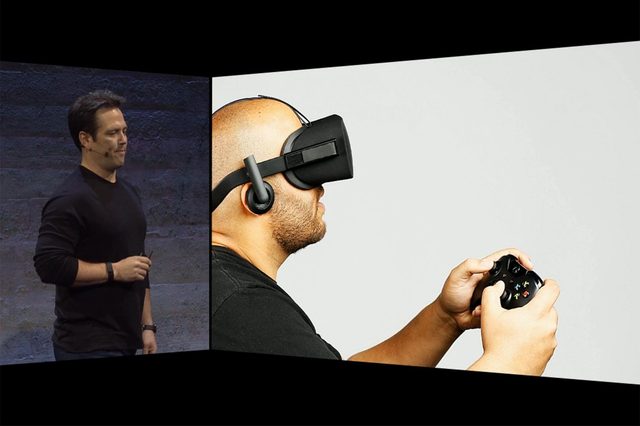
Of course a great VR headset requires a great input method, and for that, Oculus has chosen to partner with Microsoft. Each Rift includes an Xbox One controller, with an adapter for connecting it to your computer. The partnership isn’t just about the gamepad, though; it also means that Windows 10 will support the Rift right out of the box, with all the power of DirectX 12.
Apple isn’t the only company who likes to announce “one more thing,” and at the end of the conference. Oculus founder Palmer Luckey came out to show off the other input option for the Rift. The Oculus Touch, also known by its codename “half-moon” is a pair of mirrored controllers with a number of special features.
Although they include the traditional joystick and button setup, the Oculus Touch controls also make use of the same low latency location tracking technology that determines the relative position of the headset. The whole goal is to make your in-game hands feel like your real hands. To achieve that they have internal tracking sensors that allow you to move your fingers to point, wave, or give a thumbs up. Haptic feedback allows developers to let you feel objects you pick up, or let you know when you’ve put your hand on something.

Any discussions of price or pre-order date were left out of today’s press conference, unfortunately. A lot of users are chomping at the bit to now how much the device will cost, with rumors swirling that it may be as high as $600, and as low as free. Oculus will have the new hardware on hand at E3, and hopefully some more details about when you’ll be able to get your hands on one.