
It’s been a grim week for the world of computers. If you aren’t up-to-date on financial statements (and I can’t blame you for that), let me catch you up to speed. Microsoft started the week by posting a 39% decline in its Windows revenue, followed shortly by Intel recording a 36% drop for its Client Computing Group (consumer products). AMD and Apple are announcing their earnings next week, with dire predictions as the demand for PCs comes to a standstill.
PCs are dying, or that’s how the story usually goes for these types of drops. In 2015, a 5% drop was enough for Wired to declare, “no, really, the PC is dying.” And in 2009, when PC sales dropped by 8%, John Herrman at Gizmodo wrote: “I just can’t go on pretending there’s a future for [desktop PCs].” Those single-digit drops were enough to ruffle feathers, so between a 35% and 40% decline? That looks like certain death.
But there’s a much broader context here, and for everyone holding tight to their beloved computer (myself included), fret not — PCs aren’t going anywhere.
It’s pretty bad out here

Intel is down, and AMD, Apple, and Nvidia are expected to follow suit, but the glaring signpost is Microsoft. The 39% drop comes from Windows manufacturer revenue, which is the money Microsoft receives from brands shipping Windows computers. It’s not entirely representative of the PC market, but it’s close.
In early January, Gartner reported that PC sales had fallen off globally by 28.5% compared to the previous year, with multiple brands including Lenovo, HP, and Dell experiencing historic lows. Mikako Kitagawa at Gartner summed it up: “A decline of this magnitude only happens when market demand effectively comes to a halt.”
It has halted, but not because PCs are dying. Kitagawa points out that “since many consumers already have relatively new PCs that were purchased during the pandemic, a lack of affordability is superseding any motion to buy.” Record PC sales across the industry occurred in 2021 due to the pandemic, and that is falling off. After all, if you buy a new PC ever few years, why upgrade the model you just bought in 2021?

That’s the logic pointed out by Canalys’ analysis of the PC market. In fact, its report shows 7% growth in PC shipments in 2022 compared to 2019, with the massive decline only evident compared to the boom in 2020 and 2021. Ishan Dutt at Canalys recognized this current slump, but said it was only a short-term problem:
“… total volumes will remain higher than in the prepandemic era of 2019. Once businesses and consumers ride out the storm, we expect delayed purchases to begin boosting the market in late 2023, with momentum picking up in 2024.”
Canalys also points out the difference between laptops and desktops. Laptops dropped by 19% for the year in 2022, but desktops only dropped by 7%. And that difference is the critical element to the long-term life of PCs.
But what about my PC games?
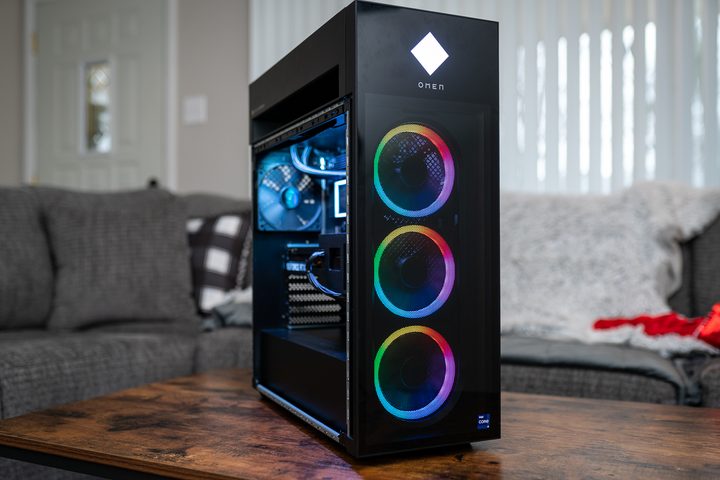
Industrywide analysis generally focuses on the largest vendors, but a rising tide has been growing in a different segment of PCs: PC gaming. In October 2022, Steam reached an all-time-high player count of over 30 million, building on already high momentum from 2020 to 2021.
In addition, companies continue to see growth in gaming. In AMD’s November 2022 financial disclosure, it showed nearly a 40% drop in its client (consumer) revenue. Gaming, however, saw 14% growth. Similarly, Nvidia posted a 51% drop in its gaming revenue compared to 2021, but cash is still at the levels of revenue before the GPU shortage (and Nvidia’s massive gaming growth) hit.
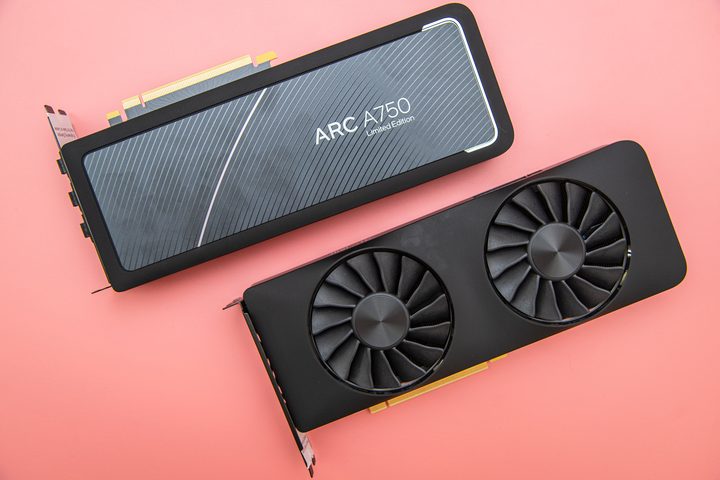
Intel, despite showing a massive decline in consumer sales overall, also posted an 8% growth in 2022 for its Accelerated Computing Systems and Graphics group (the group behind the Arc Alchemist A770 and A750).
Much of the decline we’re seeing now comes on the back of “overly enthusiastic production commitments,” according to Jon Peddie of Jon Peddie Research, with hardware vendors rushing to produce more supply during the chip shortage. “There was a serious loss of common sense and historical perspective exhibited by many suppliers that has come home to roost. We see a slow growth ahead, but growth nonetheless.”
There’s no doubt that economic factors like massive layoffs at companies like Google are doubling down on a slump that was already expected coming out of the pandemic. But that doesn’t mean PCs are going away. We’ve seen this story a dozen times over the past decade, and PCs are still kicking.


